
You’re looking for outdoor lighting that lasts through rain, snow, and heat. This case study by HANGCHI Solar New Energy Co., Ltd. shows how they make a waterproof solar garden light. It’s designed for durability, efficiency, and real-world use.
HANGCHI’s solar garden lights use advanced photovoltaic cells and lithium batteries. They also have smart controllers for up to 12 hours of light. These lights are IP67 rated, meaning they’re waterproof and resistant to corrosion. They come with dusk-to-dawn sensors, motion detection, and adjustable brightness for safety at night.
LED technology is key to these lights. LEDs last long, use less energy, and stay bright. Tests in U.S. yards show these lights can last 6–14+ hours. They need 6–8 hours of sun to work best.
Key Takeaways
- HANGCHI solar garden light series emphasizes waterproofing and long runtime with IP67-rated options.
- IP67 solar lights resist immersion and corrosion, improving reliability in harsh weather.
- LEDs deliver energy-efficient illumination and long service life for outdoor applications.
- Proper placement with 6–8 hours of sun is critical to reach up to 12 hours of runtime.
- This outdoor solar lighting case study highlights measurable benefits: durability, low maintenance, and consistent performance.
Why waterproof performance matters for outdoor solar lighting
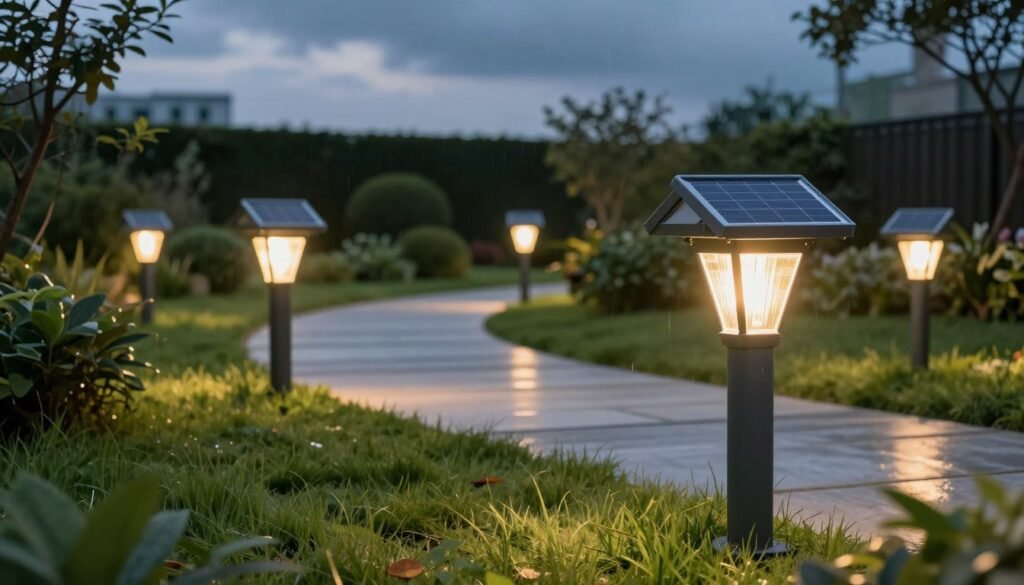
Outdoor solar lights face rain, dew, snow, and dust. They also might get wet. Good lights keep these parts dry. This makes them work well even in bad weather.
Look at where your lights will be. Near water or where water collects after rain? Choose lights that can handle this. They won’t short circuit or corrode, keeping them working longer.
Exposure risks in year-round outdoor environments
Outdoor lights get wet from dew, rain, and snow. Wind can push water into them if they’re not sealed well.
Freezing temperatures and humidity can harm batteries and cause corrosion. Pick lights made for these conditions. They’ll last longer and need less upkeep.
IP ratings explained: IP65 vs IP67 and what they mean for durability
IP codes show how well a light can handle dust and water. The first digit is for solids, the second for liquids.
IP65 means it can handle water jets and dust. But IP67 is better. It’s dustproof and can handle being underwater briefly.
Choose IP67 for areas with lots of water. Brands like HANGCHI make lights with these ratings. They last longer.
Costs of poor waterproofing: maintenance, replacements, and safety
Poorly sealed lights need more upkeep. They fail more often, have shorter battery life, and need to be replaced sooner. You’ll spend a lot on cleaning, repairs, and new parts.
Water damage can make batteries swell or leak. This is dangerous and costly to fix. Better-rated lights save you money in the long run.
For more info on durable designs and products, check out this guide: best-selling solar garden light.
Solar garden light: product profile and technical specifications
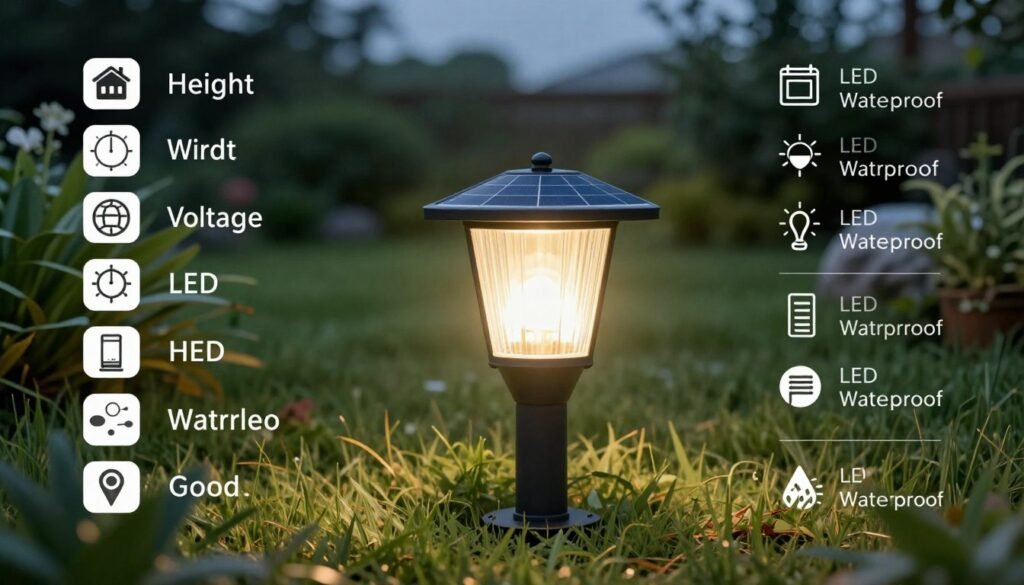
Before picking solar lights for your outdoor spaces, know the key specs. Look at the solar panel type and photovoltaic cells. These determine how much energy the panel can capture. HANGCHI lights use advanced cells and bigger panels for better energy capture in any light.
The type of battery is key for how long the light lasts. Modern lights use lithium batteries, which hold more energy and last longer than old types. With smart charge controllers, these lights can run up to 12 hours on a full charge.
How well a light can handle the weather is important. Check the IP67 rating for protection against water and dust. IP67 lights are sealed well and made to resist corrosion, keeping the light working longer.
Smart features make lights more reliable. Look for lights with smart controllers, sensors, and charging systems. These features help the light last longer and work better in different seasons.
The light’s brightness and color matter for how it looks. Think about lumens, color temperature, and charging time when choosing. Lights range from small pathway lights to bright spotlights. You can choose from warm white to cool daylight colors.
How long it takes to charge the light depends on the sun and the panel size. Most lights charge in 6–8 hours in full sun. But, cloudy days or shade can make it take longer, up to 10 hours. Consider the panel size, battery capacity, and how long you want the light to run when picking a system.
Here’s a quick guide to help you compare different options.
| Feature | Typical Range | Implication for You |
|---|---|---|
| Photovoltaic cells | Monocrystalline 15–25% efficiency | Higher efficiency panels improve charging in low sun |
| Battery type | Lithium iron phosphate / Li-ion, 5–20 Ah | Choose capacity to meet desired solar light runtime |
| Ingress rating | IP65–IP67 | IP67 solar garden light specs suit flood-prone sites |
| Runtime | 6–14+ hours | Expect 6–12 hours for most balanced setups |
| Lumens and color | 60–1,000 lm; 3000K–6500K | Match lumens color temperature charging time to use case |
| Charging time | 6–24 hours depending on conditions | Plan panel size for your local insolation |
When comparing brands, look at real-world performance, not just specs. Brands like Frontgate and Lerekam show how important panel placement and LED choice are. Choose lights with efficient panels, lithium batteries, and strong IP67 ratings for reliable, easy-to-maintain outdoor lighting.
Testing methodology and real-world field trials
Every lab and yard test follows a clear, repeatable solar light testing method. First, lab tests stress seals, electronics, and batteries in controlled cycles. A solar meter and light meter are used to measure baseline output for comparison.
Simulated harsh-environment lab tests
In the lab, IP immersion tests check the casing’s integrity. For IP67, the casing must be dust-tight and withstand temporary immersion. Seals are tested with immersion and nozzle-jet trials.
Corrosion tests on aluminum or stainless parts simulate decades of exposure. Temperature and freeze/thaw cycles stress batteries and LEDs. Shock and vibration tests ensure mounts, stakes, and wiring can handle transport and high winds.
Record lumen output before and after tests to track any light level drops.
Long-term backyard and site testing across multiple U.S. climates
Field trials expose solar garden lights to real conditions for months. Test arrays are set up in different climates to see seasonal changes. Tests include rain, hail, and wildlife to mimic real use.
Monitor charging, battery state, and on/off timing across sites. Remote logging is used to compare data daily without disturbing the array. For more on testing, see this resource.
Performance metrics recorded
Focus on user-important metrics. Runtime testing shows how long the light stays on each night and how it changes over months. Time-to-first-light and shutdown thresholds are recorded to show performance under low sun.
Brightness retention testing tracks lumen loss over time and after stress events. Task-based checks, like reading distance or path coverage, show practical impact. Mechanical durability logs failures during storms and freeze/thaw cycles.
| Metric | Test method | Why it matters |
|---|---|---|
| Runtime testing | Continuous night recording for 30–180 days with battery SOC logs | Shows nightly autonomy and decline with battery aging |
| Brightness retention testing | Periodic lumen readings and task performance checks after stress events | Measures perceived light loss and long-term visibility |
| IP immersion tests | Controlled immersion and jet spray per rating standards | Validates waterproof claims and seal longevity |
| Mechanical durability | Impact, vibration, stake pull, and corrosion cycles | Predicts field survivability and maintenance needs |
| Field trials solar garden lights | Multi-site, multi-season deployment with environmental logging | Confirms lab results under real weather and use patterns |
- Collect standardized logs for model comparison over time.
- Run both lab cycles and long-term backyard trials to cover failure modes.
- Use combined data to refine installation guidance and warranty terms.
Comparative analysis versus market alternatives
Choosing the right outdoor solar light is all about making smart comparisons. We’ll dive into waterproofing, runtime, features, and value. This will help you decide between HANGCHI and other brands for long-term savings.
Let’s compare waterproof ratings and runtime
When it comes to weather resistance, IP67 is better than IP65. HANGCHI’s IP67 models can handle being underwater, unlike IP65 ones. This means they work well even after heavy rain or flooding.
They can run for up to 12 hours, while IP65 lights usually last 6 to 8 hours. Plus, they’re less likely to fail in wet conditions.
Now, let’s look at features like motion sensors and remote controls
HANGCHI lights come with smart sensors, remote control, and durable materials. Many other brands only offer basic motion detection and plastic housings. Comparing brands like Frontgate and Lerekam shows that HANGCHI offers more for less.
Assessing value means looking at both cost and long-term savings
Investing in HANGCHI’s IP67 lights means fewer replacements and service calls. This can save you money in the long run. It’s a smart choice for those who want to save on energy and maintenance.
Here’s a quick table comparing key specs
| Model Type | Ingress Rating | Typical Runtime | Key Features | Expected Trade-off |
|---|---|---|---|---|
| HANGCHI IP67 | IP67 | Up to 12 hours | Smart sensors, remote control, anti-corrosion aluminum | Higher upfront cost, lower replacement rate |
| Premium competitors (Frontgate/Lerekam) | IP65–IP66 | 8–12 hours (varies) | High lumens, metal housings, premium batteries | Higher price, good performance, mixed waterproofing |
| Mass-market (Hampton Bay style) | IP44–IP65 | 4–8 hours | Basic motion detection, aesthetic focus | Low cost, more frequent replacements |
Use this analysis to compare HANGCHI with other brands. Consider IP67 vs IP65, and look at features before you buy. Your choice should be based on long-term savings and maintenance costs.
Customer results and application recommendations
Many solar garden light customer stories talk about how well they work in rain, storms, and snow. HANGCHI lights stayed bright for months outside. Users loved how easy they were to keep up with thanks to their waterproof seals.
People also shared how motion features added security while saving energy. In places with lots of rain or snow, these lights kept paths lit with little effort. These stories help guide your choices.
Follow tips for placing solar lights to get the most charge. Point panels south and get 6–8 hours of sun when you can. For shaded areas, pick lights with remote or corded panels to keep them bright.
For even lighting, space lights 8–10 feet apart. Use stakes or mount to concrete for busy areas. Choose durable materials from Frontgate or INCX for long-lasting use.
Keep your solar lights working well with simple care. Clean them monthly and check the switches and seals seasonally. Replace batteries when they’re no longer working to keep your lights bright.
| Use Case | Placement | Panel Recommendation | Maintenance Interval |
|---|---|---|---|
| Residential pathway | 8–10 ft spacing, southern exposure | Integrated panel with 6–8 hours sun | Clean monthly; battery every 2–4 years |
| Shaded yard / under trees | Panel offset on pole or corded panel | Separate larger panel (T-SUNNUS style) | Clean monthly; inspect seals quarterly |
| Driveway & high-traffic | Mount to posts or concrete anchors | Robust panel with higher wattage | Clean monthly; check mounts quarterly |
| Public space / commercial | Fixed mounts with vandal-resistant hardware | Hybrid or wired-solar hybrid setups | Professional service annually; battery replacement as needed |
Use these tips and guidelines to plan your solar light projects. Follow the upkeep steps to keep your lights working well all year.
Conclusion
When you need outdoor lighting, waterproofing is key. This waterproof solar garden light conclusion shows that IP-rated protection and corrosion-resistant housing are essential. They help reduce maintenance and extend the light’s life.
HANGCHI recommends IP67-rated lights for their ability to withstand heavy rain and salt-air corrosion. These lights are better than lower-rated ones.
When choosing an IP67 solar light, focus on LED efficiency, battery capacity, and smart controllers. Look for lights that run for 8–14+ hours. They should have the right lumens and color temperatures for your space.
Field tests show that these features, along with 6–8 hours of sun, ensure consistent performance in all weather.
For a light that lasts all seasons, choose products that are waterproof, energy-smart, and durable. This saves money and ensures reliable lighting at night. HANGCHI’s IP67 lineup is a great choice for both public spaces and homes.