Many people today want to cut down on utility bills. Using a solar panel kit is a smart way to save money and help the planet. Learning how to install it can make your project go smoothly and avoid mistakes.
Are you into DIY projects or do you want professionals to do it? Knowing the steps helps you decide what’s best for your home and wallet.
Getting it right means planning well and using the right parts. You might also want a portable solar generator for backup during outages. This guide will help you switch to clean energy easily and efficiently.
Key Takeaways
- Check your property for the best sun spots for panels.
- Plan a layout that fits your energy needs.
- Get all the necessary permits and approvals.
- Choose between doing it yourself or hiring pros.
- Turn on the system to start saving on bills right away.
- Keep an eye on how it’s doing to ensure it works well for years.
1. Understanding Solar Energy Systems and Their Benefits
Solar energy systems use the sun’s power, a cleaner choice than traditional energy. As we move towards renewable energy, knowing about these systems is important for everyone.
What Is a Solar Energy System?
Solar energy systems turn sunlight into electricity with PV panels or solar panels. They can serve different needs, from homes to big businesses.
Key Benefits of Solar Power Installation
Installing solar power has many advantages. It can lower your electricity bills and carbon footprint. It also makes you more energy independent. By using solar energy, you can save money and help the planet.
Grid-Tied vs. Off-Grid vs. Hybrid Systems
Solar energy systems are mainly grid-tied, off-grid, or hybrid. Grid-tied systems sell extra energy to the grid. Off-grid systems store energy in batteries. Hybrid systems offer the best of both, being flexible and reliable.
Knowing the differences helps choose the right system for you. Whether you want to cut down on grid use or just save on bills, there’s a solar option.
2. Assessing Your Home’s Solar Power Suitability
Checking if your home is right for solar power is key. You need to look at a few things to see if your home can use solar energy well.
Evaluating Roof Condition and Structural Integrity
Your roof’s shape and strength are important for solar panels. Make sure your roof is strong enough to hold the panels. A pro can check your roof’s condition for you.
Analyzing Sun Exposure and Shading Patterns
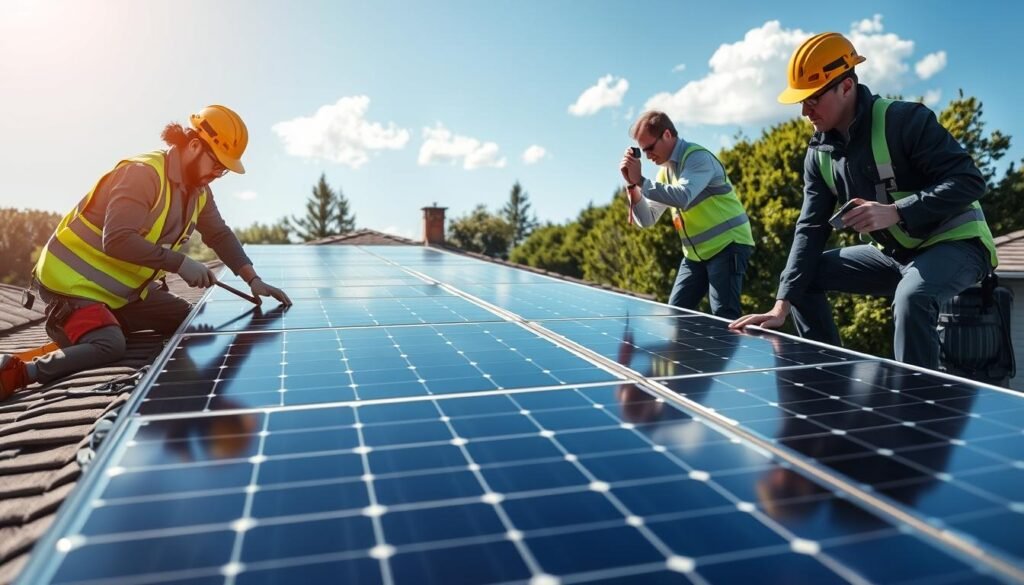
Your solar panels need lots of sunlight to work well. Look at how much sun your roof gets and if there’s any shade. Solar path calculators can help figure out sun patterns and shading.
Measuring Available Roof Space
Check how much room you have on your roof for panels. Think about the size of the panels and any things like chimneys or skylights that might get in the way.
Determining Optimal Panel Placement
Where you put your solar panels matters a lot. In the Northern Hemisphere, facing south is best. Here’s a table to help find the right tilt angle for your location:
| Latitude | Optimal Tilt Angle |
|---|---|
| 0-15° | 15° |
| 15-30° | Latitude + 5° |
| 30-45° | Latitude + 10° |
By looking at these things, you can see if your home is good for solar power. This helps you make smart choices for your solar system.
3. Calculating Your Energy Requirements
To get the most out of solar energy, you need to know how much power you use. Figuring out your energy needs is key to setting up a solar system that fits your home.
Analyzing Your Current Electricity Usage
Start by looking at your past electricity bills. This will show you how much power you use each month. You can also use smart meters or energy monitors for up-to-date info.
- Check your bills from the last year to spot trends and high usage months.
- Think about things that might change how much power you use, like the seasons, new gadgets, or family size.
Determining System Size in Kilowatts
After you know how much power you use, figure out how big your solar system should be. A good starting point is to match your system size to your daily energy use.
Accounting for Seasonal Variations
Seasonal changes in sunlight and energy use are important to consider. In places with big seasonal changes, your energy needs can shift a lot.

Planning for Future Energy Growth
Think about how your energy needs might change in the future. This could be due to new appliances or electric cars. Planning ahead ensures your solar system stays useful for years to come.
- Look at your current and future energy needs.
- Make sure your system size can handle any expected increases in power use.
4. Understanding Solar Installation Costs and Financial Incentives
Getting into solar energy means knowing the costs and benefits. The price of solar systems changes based on size, equipment, and installation complexity.
Average Installation Costs in the United States
Solar panel costs in the U.S. vary a lot. A typical home system can cost between $15,000 and $30,000 or more.
In Canada, costs are similar. They range from $10,000 to $20,000, depending on system size and location. It’s key to check local prices.
Federal Investment Tax Credit (ITC)
The Federal Investment Tax Credit (ITC) is a big help for solar buyers. It lets you deduct a big part of your solar costs from taxes.
- The ITC currently offers a 26% tax credit for solar installations.
- This credit can greatly lower your solar system’s upfront cost.
- It’s wise to talk to a tax expert to claim this credit.
State and Local Rebate Programs
Many states and local governments offer rebates and incentives for solar energy.
These programs differ, so it’s important to find out what’s available in your area.
Solar Financing Options
There are many ways to pay for solar installations.
Solar Loans
Solar loans let you pay for your system over time. They often have good interest rates.
Solar Leases and Power Purchase Agreements
Solar leases and PPAs mean you can use solar energy without buying it. A third party owns and maintains the system.
Calculating Your Payback Period
Knowing your payback period is key to seeing if solar is worth it.
This means figuring out how long it takes for your savings to cover the system’s cost.
5. Selecting the Right Solar Equipment
Choosing the right solar equipment is key to getting the most energy and making your system last longer. The right parts make your solar system work better and last longer. They also meet local rules.
Choosing Solar Panels for Your System
There are many types of solar panels to pick from, each with its own benefits.
Monocrystalline Solar Panels
Monocrystalline panels are very efficient and look sleek. They are made from one crystal, which means they produce more power per square foot.
Polycrystalline Solar Panels
Polycrystalline panels are a good mix of efficiency and cost. They are made from many crystals, so they’re not as efficient as monocrystalline. But they’re often cheaper.
Thin-Film Solar Panels
Thin-film panels are not as common for homes but have special uses. They have a thin layer of photovoltaic material on a base.
Recommended Manufacturers: LG, SunPower, and Canadian Solar
Top solar panel makers include LG, SunPower, and Canadian Solar. They are known for their quality and dependability.
| Panel Type | Efficiency | Cost |
|---|---|---|
| Monocrystalline | High (18-22%) | Higher |
| Polycrystalline | Medium (15-18%) | Moderate |
| Thin-Film | Lower (10-12%) | Lower |
Selecting the Appropriate Inverter
The inverter is key. It changes DC power from the panels to AC power for your home.
String Inverters
String inverters are a cost-effective choice for homes with little shade.
Microinverters
Microinverters optimize each panel, boosting system performance, even in shade.
Power Optimizers
Power optimizers work with string inverters to increase energy production.
Battery Storage Systems
Battery storage lets you save extra energy for night use or power outages.
Tesla Powerwall
Tesla Powerwall is a top battery storage option. It has high capacity and works well with solar systems.
LG Chem RESU
LG Chem RESU is known for its compact design and high performance.
Enphase IQ Battery
Enphase IQ Battery has advanced tech and flexibility. It’s good for many solar system setups.
Mounting Hardware and Racking Systems
The mounting hardware holds the panels on your roof. It makes sure they’re at the right angle for best energy.
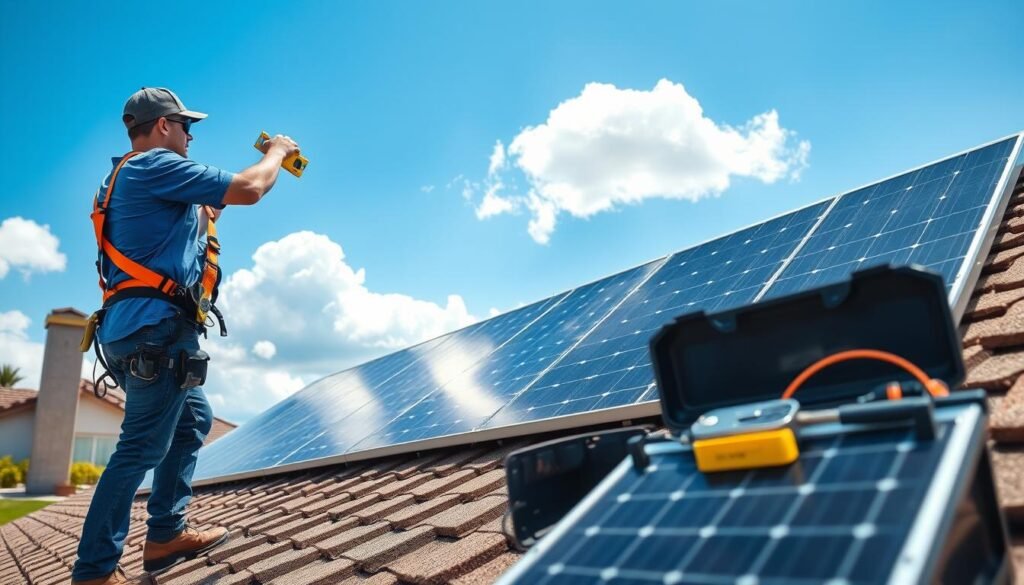
When picking solar equipment, think about efficiency, cost, durability, and fit. Choosing top-quality parts from trusted makers ensures a reliable and efficient solar system.
6. Obtaining Permits and Meeting Regulatory Requirements
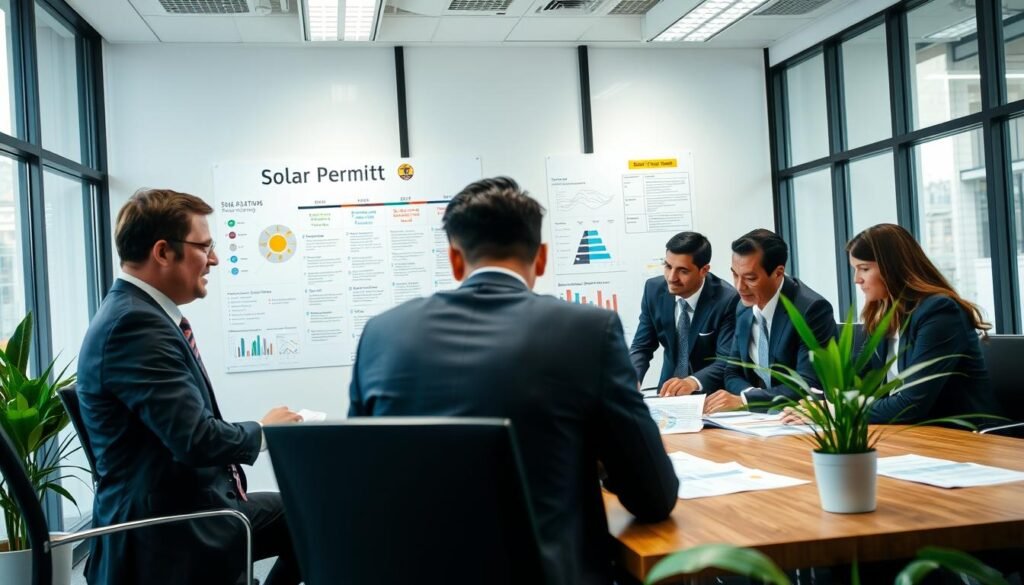
To ensure a smooth solar installation process, it’s key to understand and comply with local permits and regulations. Solar installations face various regulations that differ by location. Homeowners must familiarize themselves with the specific requirements in their area.
Applying for Building Permits
Building permits are needed for solar installations. They ensure the structure can handle the solar panels’ weight and meets local building codes. Homeowners should contact their local building department to learn the specific requirements.
Securing Electrical Permits
Electrical permits are required to check if the solar installation meets local electrical codes and safety standards. Inspections are done to ensure the work is correct and safe.
Utility Company Interconnection Applications
Before connecting a solar energy system to the grid, homeowners must submit an interconnection application to their utility company. This ensures the solar system meets the utility’s technical and safety requirements.
For more information on solar energy systems and to explore available options, visit Aisen Solar Energy.
| Permit/Approval Type | Description | Issuing Authority |
|---|---|---|
| Building Permit | Ensures structural integrity and compliance with building codes | Local Building Department |
| Electrical Permit | Verifies compliance with electrical codes and safety standards | Local Electrical Inspection Authority |
| Utility Interconnection Approval | Allows connection to the grid, ensuring technical and safety compliance | Utility Company |
Navigating Homeowners Association Approval
For homes in developments with a homeowners association (HOA), extra approvals may be needed. It’s important to review the HOA’s CC&Rs and submit the necessary documents.
Understanding Local Zoning Regulations
Local zoning regulations may have rules on the size, location, and look of solar installations. Homeowners should talk to their local zoning office to understand these rules and ensure they follow them.
7. Preparing Your Property for Installation
A well-prepared property is key for a successful solar installation. This is true whether you choose DIY solar or professional installation. Good preparation makes the installation smoother and boosts the solar energy benefits you’ll get.
Deciding Between Professional Installation and DIY
First, decide if you’ll hire pros or do it yourself. DIY solar can cut down on labor costs but needs a lot of technical know-how and time. Professional installation, though, brings expertise and warranties but costs more upfront.
Clearing the Installation Area
Clear the area around your home of any debris or obstacles. This means trimming trees and removing outdoor furniture or fixtures near the site.
Ensuring Roof Repairs Are Complete
Make sure your roof is in good shape before starting. Any repairs needed should be done before the installation to avoid problems.
Gathering Necessary Safety Equipment
If you’re doing DIY solar, get all the safety gear you need. This includes harnesses and scaffolding for a safe work area.
By following these steps, you’ll be ready for a successful solar installation. You’ll be set to enjoy the solar energy benefits.
8. Step-by-Step Solar Energy Installation Process
To make sure the installation goes smoothly, it’s important to follow a detailed guide. The solar energy installation process includes several key steps. These range from setting up the mounting racking system to linking the system to your electrical panel. Knowing these steps helps homeowners get ready for the installation and might lower the cost of the solar system.
Step 1: Install the Mounting Racking System
The first step is to set up the mounting racking system. This means finding the roof rafters and attaching the mounting rails securely.
Locating Roof Rafters
To start, you need to find the roof rafters. You can do this by checking the attic or using a stud finder. Marking the rafters helps align the mounting rails correctly.
Attaching Mounting Rails
After finding the rafters, the next step is to attach the mounting rails. These rails support the solar panels and must be securely fastened to handle different weather conditions.
Step 2: Mount the Solar Panels
With the mounting racking system ready, it’s time to mount the solar panels. This involves placing the panels on the rails and securing them with clamps.
Positioning Panels on Rails
Position the solar panels on the mounting rails carefully. Make sure they are aligned properly and evenly spaced.
Securing Panels with Clamps
Use clamps to secure the solar panels to the mounting rails. This keeps the panels in place and ready to face wind and other environmental factors.
Step 3: Wire the Solar Panels Together
Wiring the solar panels together is a critical step. It involves making series and parallel connections and running conduit to the inverter.
Creating Series and Parallel Connections
The solar panels need to be connected in a way that meets the system’s voltage and current needs. This means creating series and parallel connections as needed.
Running Conduit to the Inverter
After connecting the panels, run the conduit from the solar array to the inverter location. This conduit carries the DC power from the panels to the inverter.
Step 4: Install and Connect the Inverter
The inverter is key for converting DC power from the solar panels to AC power for homes. Mounting the inverter and connecting the DC wiring from the panels are important tasks.
Mounting the Inverter
Choose a good spot for the inverter, usually near the electrical panel, and mount it securely.
Connecting DC Wiring from Panels
Connect the DC wiring from the solar panels to the inverter. Make sure all connections are secure and meet electrical standards.
Step 5: Connect the System to Your Electrical Panel
Connecting the solar energy system to your electrical panel involves installing a production meter and linking to the main service panel.
Installing a Production Meter
A production meter measures the electricity your solar system generates. Installing this meter is key for tracking system performance.
Connecting to the Main Service Panel
Lastly, connect the AC output from the inverter to your main electrical service panel. This step requires careful attention to ensure safe and proper integration with your home’s electrical system.
Step 6: Install Battery Storage (Optional)
If your solar system includes battery storage, this is the stage for installation. Battery storage systems store excess energy for use at night or during power outages.
Step 7: Schedule Final Inspection and Utility Approval
The final step is to schedule an inspection with local authorities and get approval from your utility company. This confirms your solar system is installed correctly and safely, meeting all regulations. Regular maintenance of solar panels is also vital to keep the system running efficiently over its lifespan.
Maximizing Your Solar Energy System’s Potential
To keep your solar energy system running well, regular maintenance is key. Clean the panels often and check for damage. This helps your system work better and last longer.
Installing a solar system is a big step. It starts with checking your home’s solar readiness and picking the right gear. By choosing solar, you cut down on traditional energy use and help the planet.
For more on solar energy and its perks, check out Aisen Solar Energy. Going solar means you’re moving towards energy freedom and a greener future.
6 Responses