Choosing a power system for your home is a smart move to cut down on monthly bills. Many in the United States are turning to renewable energy for their daily needs. This change helps you break free from traditional grids and is better for the planet.
Reports show that federal investments have made home solar energy cheaper for Americans. To find the right setup, consider your roof size and local weather. Also, look for state rebates to save on your initial cost.
High-quality photovoltaic units offer a long-term solution to rising utility costs. It’s important to compare brands and their warranties before committing. Doing your research ensures you get a reliable and efficient system for your home.
Every house has its own needs based on size and daily electricity use. Professional installers can help figure out how many units your roof can hold. Making this switch is a wise financial choice for your future.
Key Takeaways
- Evaluate your home’s average electricity consumption before buying.
- Inspect your roof’s orientation and structural integrity for equipment.
- Research local incentives and federal tax credits to lower costs.
- Compare performance ratings and durability of different hardware brands.
- Consult with certified installers to get accurate production estimates.
- Review the terms of long-term equipment warranties for peace of mind.
Understanding Your Home’s Solar Energy Potentia
Knowing how much solar energy your home can use is important. This helps you decide if solar panels are right for you. You need to look at several things that affect how well solar panels work.
Assessing Your Current Energy Consumption Patterns
To figure out the right size for your solar panels, start by looking at how much energy you use. The average American home uses about 10,500 kWh a year. Check your past electricity bills to see how much you use.
| Annual Energy Consumption (kWh) | Typical Solar Panel System Size (kW) |
|---|---|
| 0 – 5,000 | 2 – 4 |
| 5,000 – 10,500 | 4 – 8 |
| 10,500 – 15,000 | 8 – 12 |
Evaluating Your Roof’s Size, Orientation, and Condition
Your roof’s size, direction, and shape matter a lot for solar panels. It should face south and have little to no shade. For more info, check out solar resource maps.
Analyzing Sun Exposure and Identifying Shading Issues
How much sun your roof gets is key for solar panel efficiency. Look at your roof’s sun exposure and find any shading problems. This helps place your solar panels for the best results.
By looking at these factors, you can understand your home’s solar energy possibilities. This helps you make a smart choice about solar panels.
Types of Solar Panel Technologies
The type of solar panel technology used can greatly affect a solar energy system’s efficiency and cost. Homeowners looking to switch to solar need to know about the different types. This knowledge helps in making a well-informed decision.
Monocrystalline Solar Panels
Monocrystalline solar panels are very efficient, with rates between 18% and 22%. This high efficiency comes from the single-crystal silicon they’re made of.
Performance Characteristics
These panels work well in many conditions, including hot temperatures and low light. They need less space to produce the same electricity as other panels.
Best Use Cases
They’re perfect for homes with little roof space or those aiming to produce a lot of energy. Though pricier, their efficiency can save money in the long run.
Polycrystalline Solar Panels
Polycrystalline panels strike a balance between cost and efficiency. They’re made from multiple silicon crystals, making them cheaper than monocrystalline panels.
Efficiency and Cost Balance
These panels have efficiency rates of 15% to 17%. They’re not as efficient as monocrystalline but are more affordable. This makes them a favorite among homeowners.
Ideal Applications
They’re great for homes with plenty of roof space. They offer a budget-friendly option for those wanting to go solar without the high costs of monocrystalline panels.
Thin-Film Solar Panels
Thin-film panels are made by applying a thin layer of photovoltaic material on a substrate. This process is cheaper and makes them more flexible than traditional panels.
Flexibility and Installation Options
These panels are light and versatile. They’re perfect for unique installations where traditional panels won’t fit. Their flexibility is a big plus.
Solar Panel Efficiency Ratings and Performance Metrics
To choose the right solar panels, you need to understand efficiency ratings and performance metrics. These factors greatly affect how well your solar system works.
Solar panel efficiency shows how much sunlight a panel can turn into electricity. A higher rating means more electricity from the same sunlight. Commercial panels usually have ratings from 15% to 22%. Knowing these numbers helps you pick the best panel for your needs.
What Efficiency Percentages Mean for Your System
Efficiency percentages affect how much electricity your system can make. For example, a 20% efficient panel makes more electricity than an 18% one under the same conditions. Here are important points:
- Higher efficiency panels make more electricity per square foot.
- More efficient panels might save money over time, even if they cost more upfront.
- Real-world efficiency can change due to temperature and shading.
Temperature Coefficient and Real-World Performance
The temperature coefficient shows how efficiency drops as temperature rises. A lower coefficient means better performance in hot weather. For instance, a panel with a -0.3% per degree Celsius coefficient works better in heat than one with -0.5%.
Degradation Rates Over Time
Solar panels lose efficiency over time. The degradation rate is how much efficiency drops each year. Most panels lose 0.5% to 1% efficiency yearly. After 25 years, a panel might be 80% to 90% as efficient as new.
- Choose panels with lower degradation rates for better long-term performance.
- Understanding degradation helps predict your system’s long-term energy output.
Cost Considerations and Budget Planning
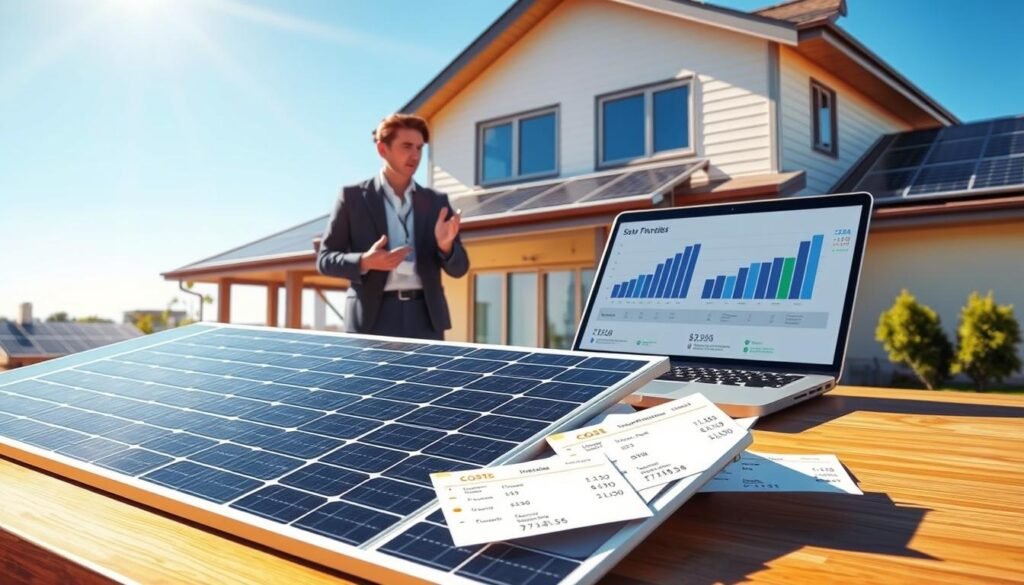
The cost of a solar panel system is more than just the panels. It includes equipment, installation, and other expenses. These costs can change a lot from one installation to another.
It’s important for homeowners to understand these costs. This helps them make smart choices about solar energy.
Breaking Down Total System Costs
System costs include several key parts. These are the solar panels, inverters, mounting hardware, and labor for installation.
Other costs might be for permits, inspections, and upgrades to your electrical panel.
Understanding Price Per Watt
The price per watt is a way to compare solar systems. It’s found by dividing the total cost by the system’s wattage.
This helps homeowners see how different systems and companies compare in cost.
Financing Options and Payment Plans
There are many ways to finance solar energy for homeowners.
Solar Loans
Solar loans let homeowners borrow to buy a system. These loans have good interest rates and flexible payback plans.
Solar Leases and PPAs
Solar leases and PPAs let homeowners use solar energy without buying a system. They pay a monthly fee for the electricity.
| Financing Option | Upfront Cost | Monthly Payments | Ownership |
|---|---|---|---|
| Solar Loans | High | Variable | Homeowner |
| Solar Leases | Low | Fixed | Third-party |
| PPAs | Low | Variable | Third-party |
Federal Tax Credits and State Incentives for Solar Energy
Homeowners thinking about solar panels have many incentives to consider. These can lower the cost of getting solar energy systems.
Federal Solar Investment Tax Credit Details
The federal solar investment tax credit gives homeowners a tax break. They can get up to 30% of the cost of solar panels back. This is a big help in covering the initial cost of solar energy.
This tax credit is for the year the solar panels are put in. It works for homes and businesses. It’s wise to talk to a tax expert to learn more about it.
State-Specific Rebate Programs
States have their own rebate programs for solar energy. These rebates can be quite different, with some being very generous.
Some states give rebates based on the size of the solar system. Others offer a set amount per watt. Homeowners should check with their state’s energy office for details.
Net Metering Policies and Benefits
Net metering lets homeowners make their own electricity. They can send extra to the grid and get credits on their bills.
This policy can make solar energy cheaper. It helps homeowners use less energy from the grid. The rules for net metering vary by state and utility.
Local Utility Company Incentives
Local utility companies also offer incentives for solar energy. These can include rebates, special rates, and more.
Homeowners should reach out to their local utility to see what’s available. This can help them save even more on solar energy.
Warranty Coverage and Expected Product Lifespan
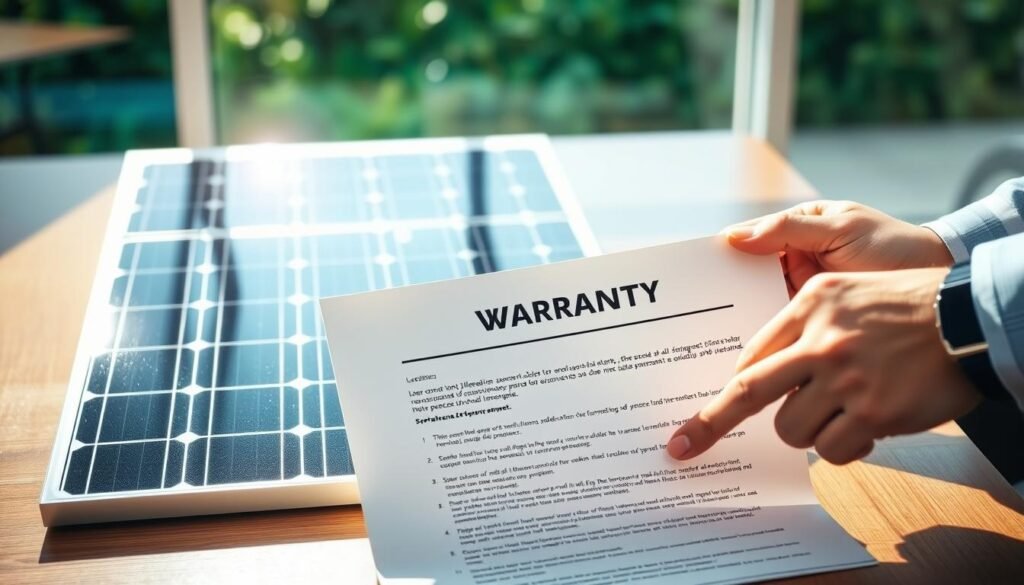
When you think about solar panels, the warranty and lifespan are key. Most panels have a 25-year warranty. But, they can last even longer. It’s important to know what’s covered and how the manufacturer supports you.
Performance Warranties Explained
Performance warranties ensure solar panels keep working well over time. They promise panels will keep at least 80% of their power after 25 years.
Product Warranties and Workmanship Guarantees
Product warranties protect against defects in materials and workmanship. They last from 10 to 25 years, depending on the maker. Workmanship guarantees, from the installer, focus on the installation’s quality.
Evaluating Manufacturer Stability and Support
Choosing a solar panel maker means looking at their financial health and support. A reliable manufacturer offers peace of mind and safeguards your investment.
| Warranty Type | Typical Duration | Description |
|---|---|---|
| Performance Warranty | 25 years | Guarantees a certain percentage of original power output over time |
| Product Warranty | 10-25 years | Covers defects in materials and workmanship |
| Workmanship Guarantee | Varies | Covers the quality of the installation |
Leading Solar Panel Manufacturers and Brands
There are many solar panel makers out there. Sorting them out can help you choose wisely. The solar market is wide, with products that differ in quality, efficiency, and cost.
Premium Tier Manufacturers
Premium makers focus on top-notch products and performance. They use the latest tech to ensure their panels work well and last long.
SunPower Maxeon Series
SunPower is famous for its top solar panels. The Maxeon Series stands out for its great performance and long life.
LG NeON Series
LG’s NeON Series has high-performance solar panels with cool designs. They’re known for being tough and efficient.
Panasonic EverVolt
Panasonic’s EverVolt series is known for its quality solar panels. They offer great performance and last a long time.
Mid-Range Quality Options
Mid-range makers aim for a balance between quality and price. They provide solid products with good performance.
Canadian Solar HiKu Series
Canadian Solar’s HiKu Series has high power output and reliable performance.
Trina Solar Vertex
Trina Solar’s Vertex series is efficient and reliable. It’s a favorite among homeowners.
REC Alpha Pure Series
REC’s Alpha Pure Series has high-quality solar panels. They offer great performance and look good too.
Budget-Friendly Alternatives
If you’re on a tight budget, there are affordable solar panels out there. They don’t skimp on quality too much.
Hanwha Q CELLS
Hanwha Q CELLS has a range of affordable solar panels. They’re reliable and perform well.
JinkoSolar Tiger Pro Series
JinkoSolar’s Tiger Pro Series is a budget-friendly option. It offers good performance at a lower price.
Installation Requirements and Professional Considerations
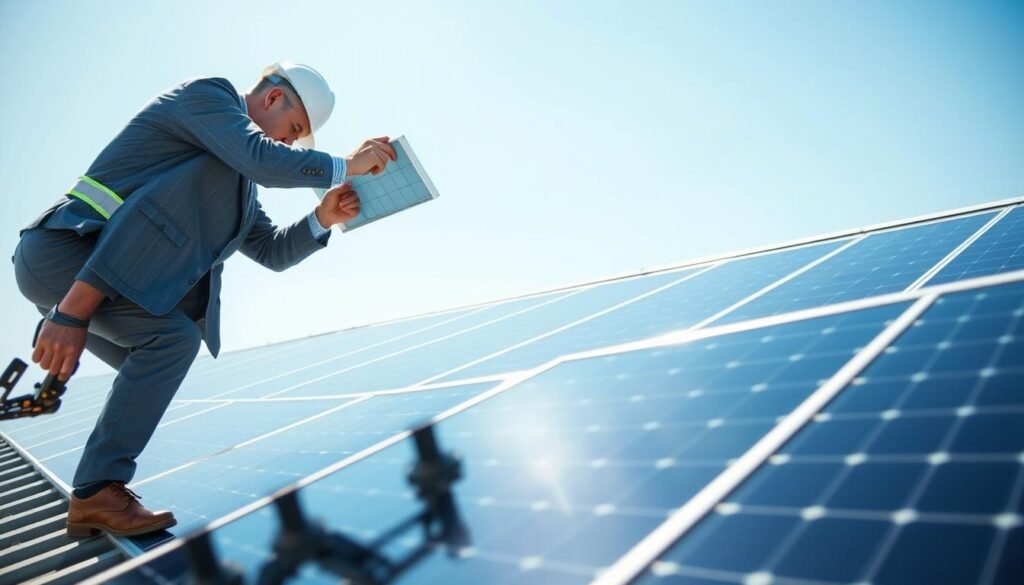
For a successful solar panel installation, several key factors must be considered. Choosing a certified and licensed solar installer is essential. A professional installation ensures energy efficiency, safety, and system performance.
Selecting a Certified and Licensed Solar Installer
It’s vital to pick a certified and licensed solar installer for a safe and efficient setup. Look for NABCEP certification. It shows the installer’s professional competence in the solar field.
NABCEP Certification Importance
NABCEP (North American Board of Certified Energy Practitioners) certification is a top standard in the solar industry. It means the installer has the skills to design and install solar systems well.
Checking References and Reviews
Checking the installer’s references and reviews is also key. This helps gauge their reputation, work quality, and customer satisfaction. A good installer will have positive feedback and be ready to provide references.
Navigating Permits and Homeowner Association Rules
Before starting, it’s important to get the necessary permits and follow homeowner association (HOA) rules. A professional solar installer can help with this, ensuring all rules are followed.
Roof Structural Integrity Assessment
Assessing the roof’s structural integrity is also critical. It must support the solar panels’ weight. A qualified professional should do this to spot any issues and fix them before installation.
| Assessment Criteria | Description | Importance Level |
|---|---|---|
| NABCEP Certification | Signifies professional competence in solar installation | High |
| References and Reviews | Indicates reputation and work quality | High |
| Permits and HOA Compliance | Ensures regulatory compliance | High |
| Roof Structural Integrity | Ensures the roof can support solar panels | High |
Climate and Geographic Factors Affecting Performance
Climate and geography are key in how well solar panels work. The way solar energy systems perform depends on many environmental factors. It’s important to think about these when picking a solar panel system.
How Different Weather Conditions Impact Efficiency
Weather like temperature, humidity, and cloud cover really affects solar panel efficiency. High temperatures can lower efficiency. But, cooler, sunnier days are best for performance.
Regional Solar Potentials Across the United States
The U.S. has different solar potentials in each region. The Southwest gets more sun than the Northeast. Knowing your area’s solar capacity is key for energy output predictions.
Snow, Wind, and Hail Resistance Ratings
Solar panels are made to handle various weather, like snow, wind, and hail. When picking a system, look at these ratings for durability and performance. For example, a strong hybrid solar inverter can make your system more reliable.
System Size and Energy Storage Options
Choosing the right system size for your solar investment is key. It ensures you get the most from your solar panels. This way, you produce more energy and save money.
Determining the Right System Size for Your Needs
Several factors influence the system size you need. Your current energy use and roof space are important. Knowing how much energy you use helps. Also, check your roof’s size, direction, and condition to find the best fit.
Battery Storage Considerations
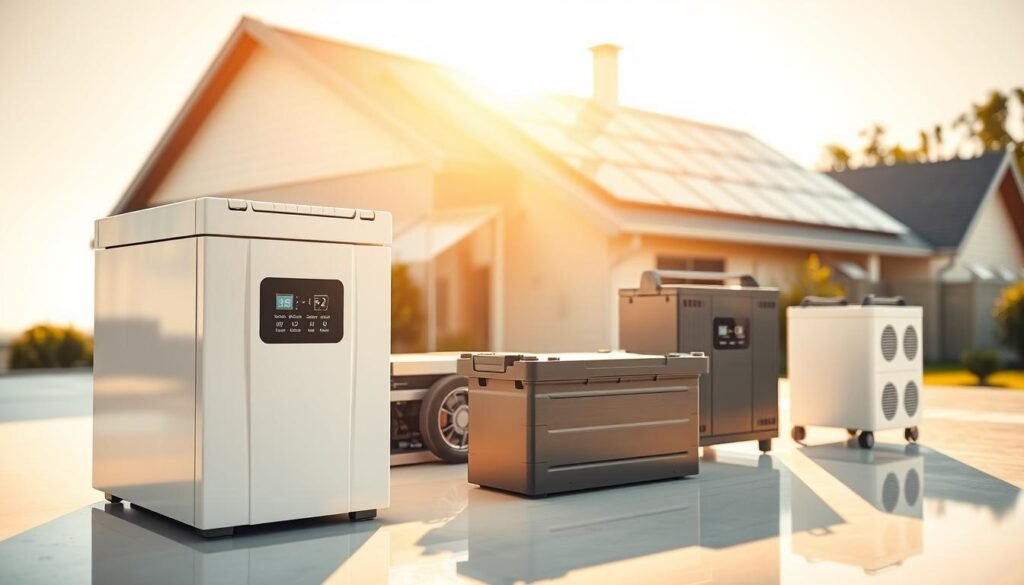
Battery storage boosts your energy independence. It stores extra energy for later use. There are many options, like:
-
Tesla Powerwall
-
LG Chem RESU
-
Enphase IQ Battery
Each battery has its own capacity and compatibility. Pick one that fits your energy needs and budget.
Grid-Tied vs. Off-Grid Systems
Homeowners must choose between grid-tied and off-grid systems. Grid-tied systems connect to the grid and can sell back excess energy. Off-grid systems need batteries for power when the sun’s not out.
Calculating Your Return on Investment and Payback Period
Figuring out the return on investment and payback period is key to knowing if solar panels are worth it for your home. You need to look at the financial pluses and minuses of solar energy systems.
Estimating Your Payback Timeline
The time it takes to get back your money from solar panels is usually between six to twelve years in the U.S. This depends on the cost at first, any government help, and how much energy you use.
Increases in Home Property Value
Adding solar panels to your home can make it more valuable. Research shows homes with solar panels sell for more than those without.
Ongoing Maintenance and Operational Costs
Solar panels need little upkeep and cost very little to run. But, remember to factor in the cost of replacing a lithium battery if you choose a system with one.
Long-Term Energy Savings Projections
One big plus of solar panels is the long-term savings on energy. By making your own power, you can cut down your bills a lot over time.
| Factor | Impact on ROI | Typical Values |
|---|---|---|
| Initial Investment | Higher upfront cost but long-term savings | $15,000 – $30,000 |
| Payback Period | Time taken to recover initial investment | 6 – 12 years |
| Energy Savings | Reduces utility bills | 50% – 100% of energy costs |
Conclusion
Using solar energy can save money and help the planet for homeowners. It’s important to make smart choices by doing your homework. This means understanding what you need and what works best for you.
Start by looking at how much energy you use. Check your roof’s condition and think about your local weather. This helps pick the best solar panels for your home.
By choosing wisely, you can cut down on your energy costs. You’ll also help make the environment cleaner. It’s a win-win situation for everyone.