Solar panels make direct current, but our homes and grids use alternating current. A solar inverter changes DC to AC. This lets your lights, appliances, and car chargers work right.
When picking a solar inverter, you need to think about a few things. You must match the inverter’s AC rating with the array’s DC output. If the inverter is too small, it won’t work as well and you’ll lose energy. If it’s too big, it might not work at its best either.
Use tools like Aurora’s modeling to figure out these things. It helps you see how much energy you’ll lose and if the inverter meets safety standards.
The inverter is the heart of your system. It keeps the voltage and frequency steady, protects against power surges, and has features like MPPT and monitoring. These help you get more energy and find problems easily.
When choosing a solar inverter, think about what you need now and what you might need later. Look at warranties and how easy it is to install in your area. These things affect how long your inverter will last.
Key Takeaways
- Solar inverters convert panel DC into usable AC for homes and the grid.
- Proper inverter sizing balances array DC output and inverter AC rating to reduce clipping and loss.
- High‑quality inverters with MPPT and monitoring deliver better efficiency and diagnostics.
- Plan for location, future expansion, and battery compatibility during inverter selection.
- Modeling tools and code validation are essential for safe, compliant inverter sizing.
Understanding what a solar inverter does and why it matters
Your inverter changes the direct current from solar panels into alternating current. This lets you use your home’s lights, refrigerators, and ovens. It also limits how much power you can send to the grid.
The inverter does more than just change current types. It makes a clean sine wave and manages voltage and frequency. It also has monitoring to spot faults early. Some inverters can even keep critical loads running during power outages.
Role of DC-to-AC conversion in residential systems
Solar panels make DC power, but the inverter changes it to AC. This makes it usable in your home. If your panels make too much power, the inverter stops it to protect your system.
Choosing the right inverter is key. It helps you use all the power you make and avoid losing any. Experts suggest using inverters that are about 1.1 to 1.3 times your system’s size.
Why inverter choice affects system efficiency and appliance safety
The inverter you pick can affect how well your system works and how safe your appliances are. A good match means less loss and fewer problems.
Inverters also keep your power stable and protect your electronics. Choosing one with good waveform and strong protections helps avoid damage to your appliances.
How inverters interact with the grid and feed-in requirements
Grid-tie inverters work with the utility’s power to let you send extra power back. They disconnect during big problems but stay on for small ones.
Smart inverters do more, like helping with grid stability and sending signals for control. For more on grid services and inverter features, check out solar integration and grid services basics.
Types of inverters: string, microinverter, and power optimizer options
Choosing an inverter means deciding how your solar array will handle power and any mismatches. Each type has its own cost, maintenance, and performance under different conditions. This guide helps you pick the right technology for your roof, budget, and future plans.
String (central) inverters: cost, maintenance, and ideal site conditions
String inverters connect panels into one device near your electrical panel. They are cost-effective and easy to maintain, thanks to their design.
They work best when panels face the same direction and get the same sunlight. Shading one panel can affect the whole string. Expect a lifespan of 10–15 years and less detailed monitoring than MLPE solutions.
Microinverters: panel-level conversion, shading resilience, and warranties
Microinverters convert DC to AC at each panel, making each module independent. This setup reduces losses from shading and mismatch, and makes adding panels easier later.
They often come with longer warranties, up to 25 years, and detailed monitoring. The downside is a higher upfront cost and the need for roof access for service or replacement.
Power optimizers: DC conditioning benefits and reliance on a central inverter
Power optimizers attach to modules and condition DC before it goes to a central inverter. They offer many benefits of MLPE with the cost of a string inverter.
They improve performance under shade or mismatch and offer detailed monitoring. You’ll need one central inverter, which is a single point of failure. Expect a modest added cost and a small power draw from each optimizer.
| Feature | String inverter | Microinverter | Power optimizer |
|---|---|---|---|
| Best for | Uniform roof, tight budget | Shaded or complex roofs, future expansion | Mismatch mitigation with central inverter |
| Cost profile | Lowest upfront cost per watt | Highest upfront cost, long warranty | Mid-range cost, added per-panel hardware |
| Maintenance | Easier service at ground level | Harder to access on roof | Optimizer on roof, inverter accessible |
| Monitoring granularity | System-level only | Panel-level monitoring | Panel-level monitoring |
| Shade performance | Degrades whole string | Minimal impact on other panels | Improves performance under shade |
| Safety & rapid shutdown | Depends on inverter model | Built into many designs | Reduces DC voltage at module |
| Dependency | No MLPE required | Distributed MLPE solution | MLPE at panel with central inverter |
For a detailed comparison or to explore manufacturer options, see this inverter guide. Choose the right inverter for your roof, shading, and battery plans for the best value.
Solar Inverter
Your solar inverter is key to a rooftop system. It changes DC from panels into AC for use. It also keeps the system safe by controlling voltage and frequency.
When picking a model, look at important features. High efficiency means less loss and more power. MPPT channels help with shading issues. Pure sine wave output is safe for your home’s electronics.
Hybrid inverters are great if you want to add batteries. Brands like Victron Energy offer high efficiency and easy monitoring. This helps spot problems early and avoid big costs.
MPPT technology adjusts to sunlight changes. It uses multiple channels to handle different shading. This is key for panels on different parts of the roof.
Warranty and lifespan vary by type. String inverters last 10-15 years, while microinverters can last up to 25 years. Think about the cost of replacement over time.
Look at manufacturer support and update policies. A long warranty with good monitoring means less downtime. This makes your investment safer and more reliable.
| Feature | Why it matters | What to check |
|---|---|---|
| MPPT channels | Maximizes panel output under varying irradiance | Number of MPPTs, input voltage range, partial-shade performance |
| Efficiency | Lower conversion losses, higher annual yield | Peak and weighted efficiency figures (CEC or European) |
| Inverter monitoring | Detects faults, tracks energy, simplifies maintenance | Cloud access, local logging, alerting, third-party integration |
| Waveform quality | Protects home electronics and sensitive loads | Pure sine wave output specification and THD (%) |
| Hybrid & battery-ready features | Enables storage integration and backup capability | AC-coupled vs DC-coupled support, battery chemistry compatibility |
| Inverter warranty | Shields you from early failures and replacement cost | Length, pro-rata terms, on-site service, transferability |
| Expected inverter lifespan | Influences total cost of ownership and replacement timing | Field data, manufacturer life estimates, MTBF figures |
Sizing your inverter: DC-to-AC ratio and inverter loading considerations
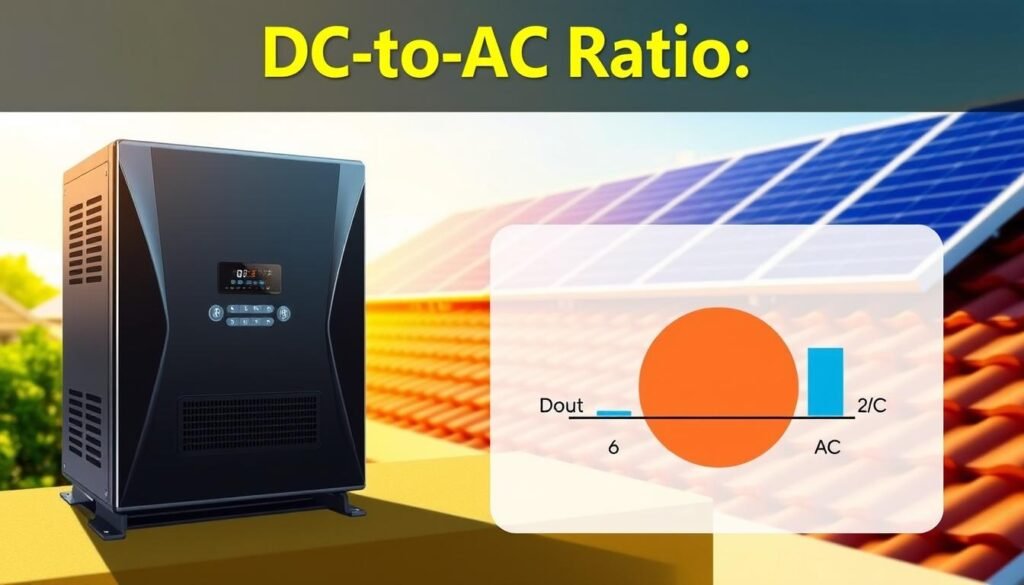
To size an inverter, start with the basic math. The DC-to-AC ratio is the installed DC capacity divided by the inverter’s AC rating. This ratio helps decide the inverter size and affects energy yield through the seasons. Most designers aim for a ratio of about 1.25, finding it a good balance.
Understanding inverter clipping is key. Oversizing the array can increase energy yield, but it clips during peak sun. This small loss is often worth it if the energy gain is more than the cost of extra hardware.
Use tools like Aurora or PVsyst to model performance. These tools show hourly production and clipping losses. For example, a 100 kW inverter at ILR 1.3 can boost energy yield slightly, but clipping increases at ILR 1.5.
Compare the cost of clipping to the cost of upsizing or adding a second inverter. This simple ROI helps make dollar-driven decisions. It turns abstract ILR choices into clear, justifiable actions.
Climate and site specifics affect inverter loading ratio choices. Hot climates and high irradiance sites may clip more at high ILR. Cold, diffuse-light areas benefit from modest oversizing.
Ensure inverter compatibility with battery or hybrid systems. Many inverters work well with brands like Goodwe, Growatt, and Solis. Battery choices and voltage configurations also impact inverter selection. For more on battery details and options, check battery configuration and compatibility.
Document your design with the DC-to-AC ratio, clipping losses, and cost trade-offs. Clear records make future changes, warranty claims, and performance reviews easier for everyone.
Climate, location, and site-specific factors that influence inverter choice
Choose an inverter after considering site-specific factors. Climate affects how much power your panels make over a year. In sunny areas, you might clip more, so adjust the DC-to-AC ratio to avoid it.
Cooler places let you size your inverter closer to the panel’s capacity. But, in hot areas, undersizing slightly helps with temperature loss.
How temperature and irradiance affect panel output and inverter behavior
Panel output drops with rising cell temperature. Expect lower power on very hot days. This means your inverter might handle less peak power than expected, reducing stress and heat.
High irradiance, like in midday, can cause clipping if the inverter is too small. Use models to predict clipping and weigh the benefits against the cost of extra hardware.
Orientation, tilt, and shading impacts for selecting microinverters vs string inverters
Shading from trees or uneven orientations can hurt string performance. Microinverters or power optimizers help by protecting each panel’s output. If your array is even, unshaded, and flat, a string inverter might be cheaper and simpler.
Do a shading analysis to see if using MLPE is worth it for your system’s lifetime.
Local code, rapid shutdown, and utility interconnection requirements in the United States
You must follow NEC rules and local utility interconnection requirements. NEC rapid shutdown rules affect your choice of devices. Many microinverters and MLPE meet these standards.
Utilities often require UL1741 compliance and anti-islanding features for safe grid tie. Check your utility for export limits, settings for export control, and required paperwork early to avoid delays.
Practical checklist for site-driven inverter selection
- Map irradiance and temperature profiles for expected annual production.
- Survey shading and roof orientations to decide on MLPE versus string solutions.
- Confirm NEC rapid shutdown rules and whether inverter type satisfies them.
- Review utility interconnection requirements and UL1741 or equivalent certifications.
- Model clipping and ILR trade-offs to balance yield against equipment cost.
Hybrid and battery-ready inverters: preparing for storage and backup power
Think about getting a hybrid inverter if you plan to store batteries soon or later. Hybrid inverters handle both solar conversion and battery management. This makes installation simpler and reduces the need to replace the inverter when adding batteries.
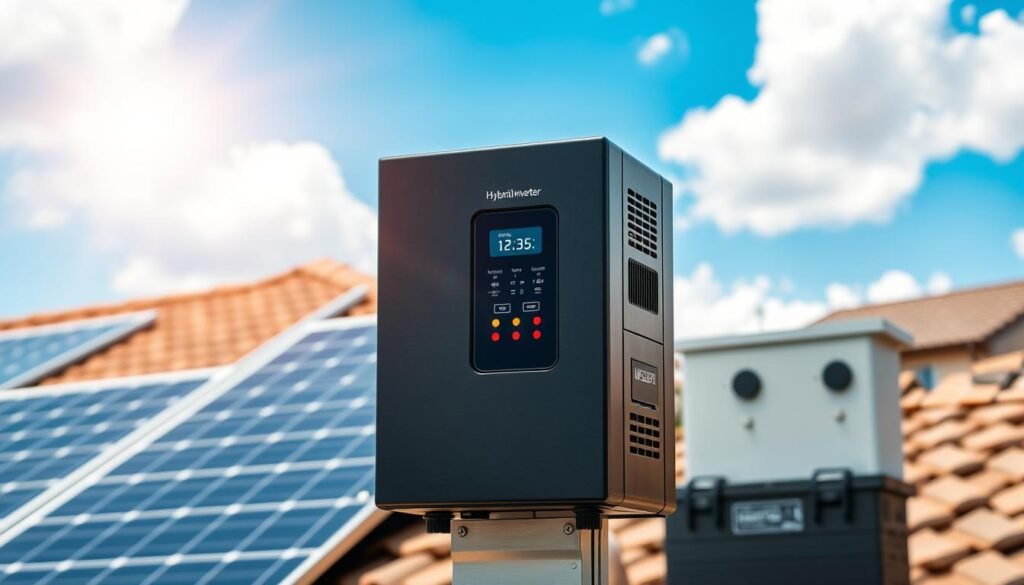
Choose a battery-ready inverter that can grow with your needs. Look for ones that support expansion and use common communication like CAN, RS485, or Bluetooth. Make sure the inverter’s AC ratings match your home’s power needs and the battery’s charge/discharge power.
Check the inverter’s PV and battery current limits. A small inverter might limit solar use or battery charging. Pick well-known brands like Victron for updates, reliable monitoring, and compatibility with different battery types.
For reliable backup, choose inverters that can form a grid. These inverters keep the power stable in island mode and support sensitive electronics. Also, look for black-start and built-in transfer switching for seamless backup power.
Ensure the inverter can prioritize loads and shed non-essential ones during long outages. Check for certifications like UL1741 SA/SB if needed by your utility and local codes. These features make a battery-ready inverter a smart choice for those wanting easy integration and strong backup power.
Efficiency, MPPT, and performance features to maximize energy yield
When choosing an inverter, look at real-world performance, not just peak numbers. Inverter efficiency is key, but how it performs at different loads is more telling. Brands like Victron show efficiencies up to 98% under perfect conditions.
But, partial-load behavior and temperature changes affect real output. Check how your chosen model performs at typical loads to guess actual energy gain.
MPPT keeps panels at their best power point as conditions change. Slow or imprecise tracking means lost watts. Good MPPT design cuts these losses and handles changing light and shade well.
Using multiple MPPT channels is useful for different panel orientations or tilts. Separate MPPTs for east and west arrays reduce mismatch losses. This lets each string work closer to its best.
Panel-level electronics, like microinverters or power optimizers, help by isolating poor-performing panels. This setup can outperform single-string systems on complex roofs. Weigh the cost of extra hardware against the energy gains from less mismatch loss.
Stringing strategy is important. Match module electrical characteristics within each string and keep string lengths within limits. Pairing the right string design with multiple MPPT or panel-level electronics improves peak power tracking and reduces clipping at high light levels.
Check real-world performance by looking at monitoring data for temperature effects, partial-load efficiency, and MPPT tracking accuracy. Use this data to fine-tune settings, reassign MPPT channels, or add optimizers for underperforming panels. This helps bridge the gap between inverter efficiency and actual energy capture.
Cost, return on investment, and the clipping vs. extra hardware trade-off
Choosing between a large string inverter, a second inverter, or panel-level electronics affects your spending and future savings. Weigh the cost of the inverter against the energy you’ll save each year. The clipping trade-off is about balancing small energy losses at peak times against the cost of extra hardware or microinverters.
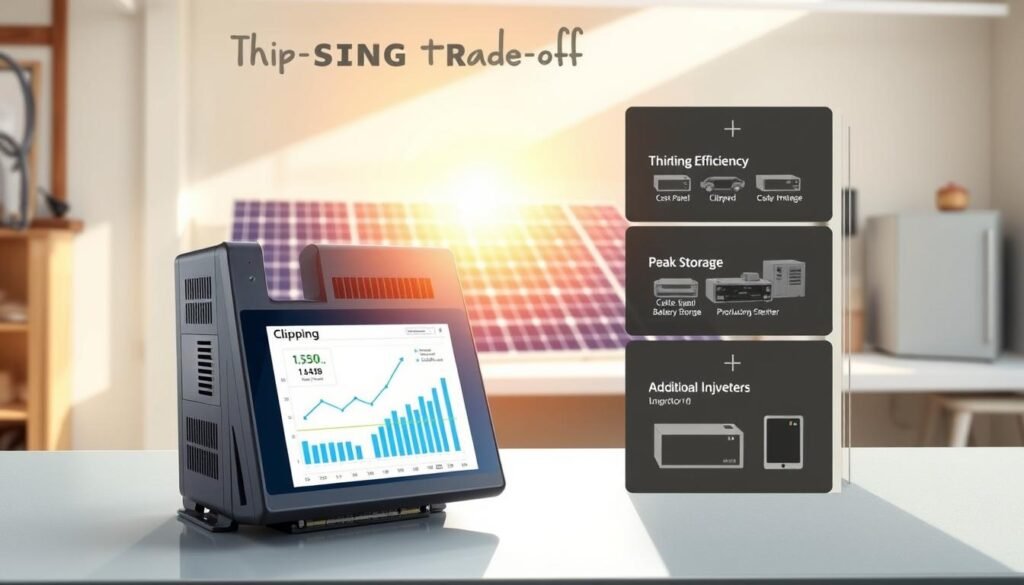
Compare the cost of microinverters and power optimizers to the price of a string inverter. For a 5 kW system, microinverters can add over $1,000 to the cost. You spend more upfront, but they can increase energy output in shaded areas and extend warranties, improving long-term value.
Consider if adding a second string inverter or oversizing the first one is worth it. A 100 kW system example shows that increasing inverter size can boost AC output by 1.3 to 1.5 times. But, it also increases energy loss during peak hours. Use hourly production data to estimate how much energy will be lost and its value at your electricity rate.
Use a simple ROI calculation to help choose. First, estimate the extra energy you’ll get from the chosen hardware. Then, multiply that by your local electricity rate to find the annual savings. Divide the cost of the hardware and installation by that savings to find the payback period. Remember to consider the inverter’s lifespan, warranty, and when you might need to replace it when calculating long-term value.
Below is a table comparing scenarios for a 5 kW system. It highlights the trade-offs you’ll face when deciding.
| Scenario | Incremental inverter cost | Estimated annual kWh gain | Annual value (@$0.15/kWh) | Simple payback (years) | Notes on lifetime value |
|---|---|---|---|---|---|
| String inverter only | $0 | 0 | $0 | — | Lowest inverter cost, but might need replacement sooner (10–15 years) |
| String + second inverter | $1,200 | 250 kWh | $37.50 | 32 | Boosts mid-day energy, but higher maintenance costs |
| Microinverters (full system) | $1,300 | 600 kWh | $90 | 14.4 | Higher upfront cost, but longer warranties and less energy loss |
| Power optimizers + central inverter | $900 | 420 kWh | $63 | 14.3 | Mid-range cost and energy gain, depends on brand features |
Adjust these inputs for your location. Use local electricity rates, shading patterns, and warranties from brands like Enphase, SolarEdge, Victron, or Fronius. Include maintenance and replacement costs to get the true long-term value.
Lastly, document how sensitive your choices are to assumptions. Small changes in energy savings or electricity rates can greatly affect the economics. If energy losses are small, choosing the cheapest inverter might be faster. But, if shading or mismatch is big, investing in microinverters or optimizers could improve your long-term savings.
Installation, placement, and ventilation best practices for long life
Starting with the right spot for your inverter is key. Choose a cool, shaded area or a ground-level spot near your main panel. This reduces heat and makes maintenance easier.
Stay away from attics and humid spots. Keep it away from direct sun and rain. Make sure there’s enough space for air and easy access.
Follow NEC wiring rules for safe and compliant setup. Use the right cables and breakers. Check that the inverter’s voltage and current match your system.
Consider the length and size of your wiring. This affects where you put the inverter. It also impacts your wiring choices.
Think about how easy it will be to service your inverter. A wall-mounted inverter is easier to reach. Microinverters need roof access, which adds complexity and cost.
| Consideration | Rooftop Microinverters | Ground/Wall-mounted String Inverters |
|---|---|---|
| Typical inverter installation | Under panels on racking, near junction boxes | Mounted on exterior wall or concrete pad near main panel |
| Ventilation needs | Passive roof airflow; risk of heat build-up in hot climates | Better controlled airflow, easier to add shading or enclosures |
| NEC wiring & conduit | Many short DC runs, smaller conductors but more terminations | Longer DC arrays may need larger conductors and conduit fills |
| Serviceability | Requires roof access, increases labor for repairs | Ground access simplifies troubleshooting and replacement |
| Heat exposure | Higher risk if placed on south-facing roofs without shade | Lower risk when mounted on shaded north or covered wall |
| Typical maintenance costs | Higher over lifetime due to rooftop interventions | Lower due to easy access and modular swaps |
Plan carefully to balance wiring, ventilation, and service needs. Work with a licensed installer to ensure compliance. Smart placement today means fewer problems and more power for years to come.
Monitoring, diagnostics, and smart features for ongoing system management
Keeping a solar system running well needs clear, timely info. Good inverter monitoring and diagnostics give you that insight. They help avoid sudden failures and catch slow performance drops early.
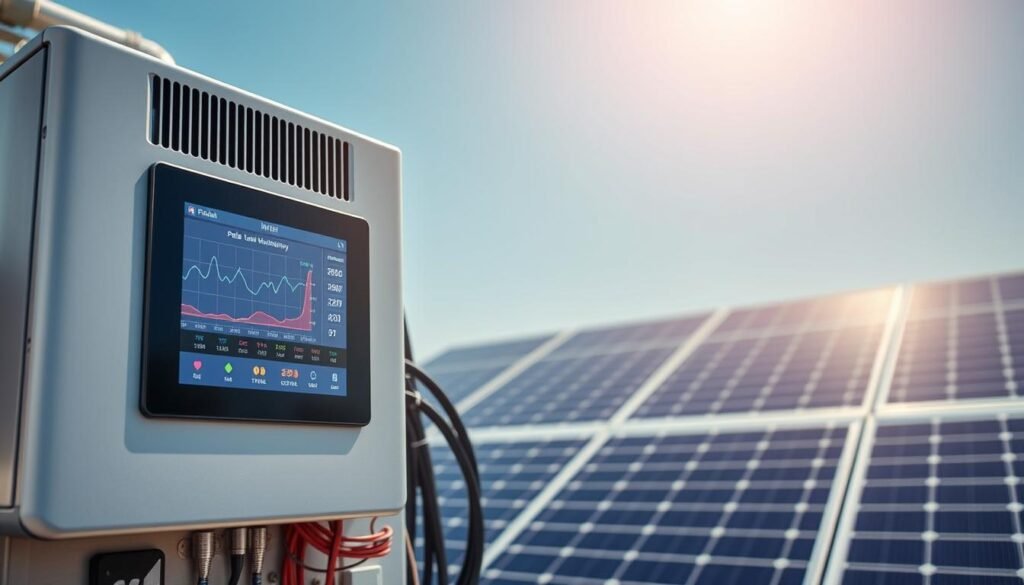
Choosing between panel-level and system-level monitoring affects the data you get. Panel-level monitoring, found in Enphase microinverters and SolarEdge power optimizers, shows output and alerts for each panel. System-level monitoring, common in Fronius and SMA string inverters, gives a summary of the whole system. It’s simpler and less expensive.
Remote firmware updates and cloud tools make fixing issues faster. When SolarEdge or Enphase update your inverter remotely, it gets new features and bug fixes without a visit. Clear error codes and a linked dashboard help techs solve problems from their office, cutting downtime.
Focus on key metrics to spot issues like clipping or underperformance. Watch AC output, inverter efficiency, and fault codes. Linking data to weather and temperature helps separate real problems from weather effects.
Use diagnostics to find clipped energy and check NEC rules. Aurora solar software models clipping and checks NEC rules. This helps size your system and decide on panel-level electronics for complex setups.
| Feature | What it shows | Who benefits |
|---|---|---|
| Panel-level monitoring | Per-module output, voltages, individual fault alerts | Homes with shading, complex arrays, or desire for granular analytics |
| System-level monitoring | Total AC output, cumulative energy, basic fault logs | Simple roofs, budget-conscious owners, straightforward arrays |
| Remote firmware & cloud tools | Over-the-air updates, centralized dashboards, log access | Installers and owners who want faster fixes and evolving features |
| Diagnostics & error codes | Root-cause guidance, time-stamped events, maintenance priorities | Service teams and owners tracking uptime and warranty claims |
| Performance data analytics | Clipping frequency, normalized yield, trend alerts | Designers optimizing ILR and owners monitoring ROI |
Set alerts for sudden drops in module output and repeated clipping. Early warnings of wiring faults or failing optimizers help keep energy high. Regularly checking performance data helps fine-tune your system or plan maintenance.
Brand, warranty, and reliability: choosing reputable inverter manufacturers
When choosing an inverter, consider the brand’s reputation, warranty, and reliability. A well-known brand can offer peace of mind, easier service, and protect your investment. The length of the warranty and the support from the manufacturer also impact the overall cost and downtime.
Why warranty length and terms matter
Warranty lengths vary by inverter type. Central or string inverters usually have warranties of 8–15 years. Microinverters can offer up to 25 years. It’s important to understand what the warranty covers, including parts, labor, and failure conditions.
A longer warranty means less chance of having to replace the inverter mid-life. Make sure to check for any prorated clauses, shipping costs, and if the warranty can be transferred if you sell your home.
Evaluating manufacturer support and certification
Good manufacturer support can fix issues quickly. Brands like Victron Energy offer remote diagnostics and updates through VictronConnect. This keeps your system running smoothly and efficiently. Elios Inversa provides UL1741-certified hybrid models for U.S. grid use and energy storage.
Certification is key for operating on many U.S. grids. Look for UL1741 and UL1741 SA/SB for advanced features. Ensure the vendor updates firmware and has clear support channels for both installers and homeowners.
When brand choice changes long-term cost and performance
Choosing a cheaper string inverter with a short warranty can lead to replacement in the solar array’s second decade. This increases the total cost and downtime, reducing overall yield.
Opting for a reputable inverter brand with strong support and proven reliability can extend its life. It also allows for new grid features through firmware updates. Local installer networks and responsive technical teams can also reduce repair time and protect your system’s output.
Checklist to compare options
- Confirm inverter warranty length and what it covers.
- Verify UL1741 or appropriate certifications for your utility.
- Ask about firmware update policy and remote diagnostics.
- Check documented field reliability and local installer support.
- Balance upfront cost against expected replacement timing and support quality.
Conclusion
When picking a solar inverter, think about the DC-to-AC ratio, clipping risk, site conditions, and your budget. The right size, usually between 1.13 and 1.30, can increase your energy harvest. But, it might lead to clipping. Compare the cost of extra inverter capacity to the value of clipped energy to make a smart choice.
Your choice should also consider the inverter type, climate impact, and if it’s ready for storage. Hybrid or battery-ready units from brands like Victron make future upgrades easier. They handle shading better than others. Make sure to plan for MPPT channels, monitoring, and NEC compliance for safety and performance.
For long-term reliability, focus on quality parts, correct placement, good ventilation, and active monitoring. Look for UL1741 certification, solid warranties, and good customer support. This ensures your appliances and investment are safe. For tough outdoor use, consider IP-rated hybrid cases that resist dust and moisture. See an IP65 hybrid option here: IP65 hybrid solar inverter.
In summary, to pick the right solar inverter, model clipping and energy yield. Prioritize efficiency and MPPT capability. Also, check the warranty and service terms. This guide will help you make a wise, lasting investment for homes and businesses.