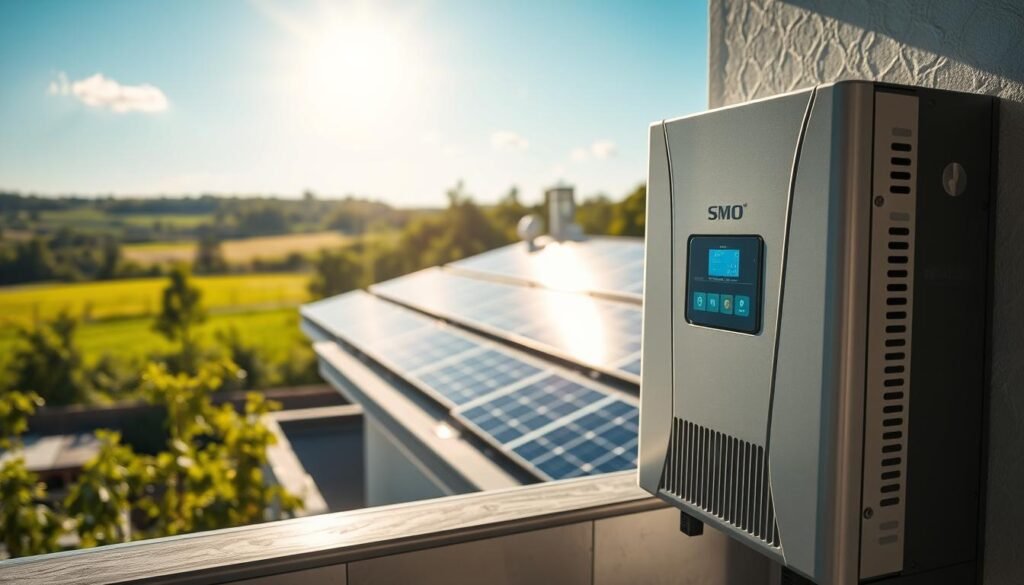
A solar inverter is key for turning sunlight into power for your home. High-efficiency inverters can change over 98% of solar DC to AC. This means you waste less energy and save more on solar power.
Choosing a top-notch solar inverter does more than just convert power. Modern models from SMA, SolarEdge, and Enphase come with smart monitoring and safety features. They’re also built to last, even in tough weather conditions. This means you’ll need less maintenance and your investment will last longer.
Using a high-efficiency inverter with a good solar system and optional battery storage boosts your energy freedom. It also cuts down on your monthly bills. The right placement and choice of model can also make your system last longer. Plus, you might get future features like helping the grid and responding to energy demand.
Key Takeaways
- A high-efficiency inverter boosts usable energy and improves solar energy savings.
- Top-tier residential solar inverter models offer smart monitoring and safety features.
- Durable inverters reduce maintenance and extend system life in harsh conditions.
- Pairing with batteries increases backup capability and overnight use.
- Higher upfront cost often yields better long-term financial returns and property value.
What a Solar Inverter Does and Why It Matters
The inverter connects your solar panels to your home’s devices. It does more than just change DC to AC. It also affects how much solar energy you use, how safely it moves, and how reliable your system is.
Choose an inverter that fits your roof and daily needs. The right inverter boosts system performance, cuts down on losses, and increases your investment’s value. A top-notch inverter can convert energy with rates close to 98 percent, saving you money each month.
Core function: DC to AC conversion
Your panels make direct current. But most home appliances need alternating current. The inverter changes DC to AC, so your fridge, lights, and outlets work right. Modern inverters have special channels to keep panels working well under changing conditions.
Role in system performance and safety
An inverter controls voltage and frequency to match the grid. It keeps your system running smoothly and safely. It also watches for faults and stops energy from flowing back into the grid during outages. Placing and cooling the inverter right keeps it running well.
How inverter choice affects overall system output
Picking the right inverter size and type is key. A too-small inverter cuts off peak production, while a too-large one wastes energy at low loads. The right inverter supports sending extra energy back to the grid. This boosts your system’s reliability and can even increase your home’s value.
| Feature | What to look for | Impact on your system |
|---|---|---|
| Conversion efficiency | Ratings ≥98% at typical loads | Higher usable energy, lower bills |
| MPPT capability | Multiple trackers for different roof orientations | Improved output in mixed shading |
| Safety functions | Anti-islanding, ground-fault, arc-fault detection | Compliance, worker and home protection |
| Sizing and form factor | Match inverter to array and load profile | Better system performance and lifespan |
| Grid compatibility | Supports bidirectional flow and net metering | Enables export, backup, and smarter energy use |
Higher Energy Conversion Efficiency and Greater Savings
You want an inverter that wastes as little sunlight as possible. High inverter efficiency means more of your panels’ DC power becomes usable AC power for your home. Top inverters reach conversion efficiencies above 98%, so small percentage gains add up over years to measurable savings on your power bills.
Efficiency ratings tell a clear story. A 1–2% improvement in conversion efficiency can recover hundreds of kilowatt-hours each year on a typical U.S. residential array. Those recovered kilowatt-hours translate to faster ROI and lower reliance on the grid during peak months.
Smart inverter features and MPPT boost real-world yields under changing sun and heat. By capturing power that would be lost, these functions increase annual output and shrink your payback window.
Durability matters to long-term financial benefits. Inverters often last 10–15 years. Choosing a higher-efficiency unit with an extended warranty lowers maintenance risk and reduces total cost of ownership over the system lifetime.
| Metric | Typical Low-Efficiency Unit | High-Efficiency Unit (≥98%) | Impact on ROI |
|---|---|---|---|
| Conversion efficiency | 95–96% | 98–99% | Higher lifetime energy yield |
| Annual energy recovery | Baseline | +2–4% more kWh | Shorter payback period |
| Maintenance & warranty | 10 years typical | 12–15 years available | Lower long-term costs |
| Monthly utility bills | Higher | Lower | Greater cumulative savings |
| Lifetime financial outcome | Moderate ROI | Improved ROI and long-term financial benefits | Stronger overall return |
Net metering can amplify the value of high conversion efficiency by crediting surplus generation at retail or near-retail rates. You gain immediate monthly savings while the system compounds returns over decades.
When you compare bids, weigh efficiency ratings against warranty and feature sets. A slightly higher upfront cost for superior inverter efficiency typically yields larger savings and a healthier ROI through the system’s life.
Maximum Power Point Tracking (MPPT) for Optimal Output
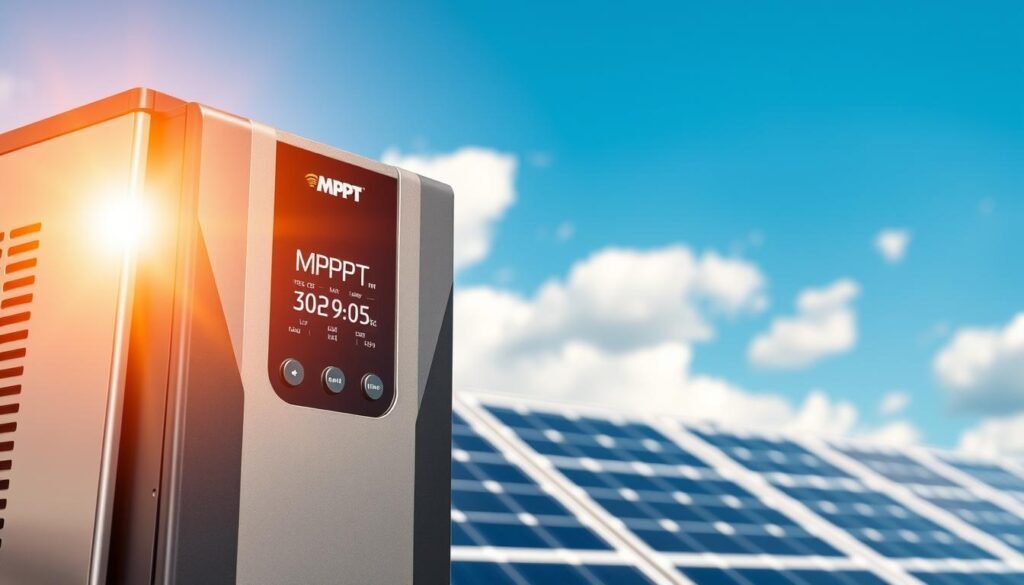
MPPT, or maximum power point tracking, makes sure your solar panels work at their best. It adjusts the voltage and current as sunlight and temperature change. This keeps the panels at their peak output all day long.
How it works
MPPT controllers use smart algorithms to find the perfect spot for maximum energy. They check the voltage and current and adjust the load to keep the panels at that spot. This happens many times a second to keep up with changing light conditions.
Benefits in partial shading and variable conditions
When clouds move or a tree casts shade, MPPT saves energy that would be lost. It stops one shaded module from bringing down the whole string. This means better energy every day.
Using MPPT with panel optimization works best on roofs with different angles or changing shadows. Microinverters or module-level power electronics with MPPT outperform single string inverters in these situations.
Smart Monitoring and Performance Visibility
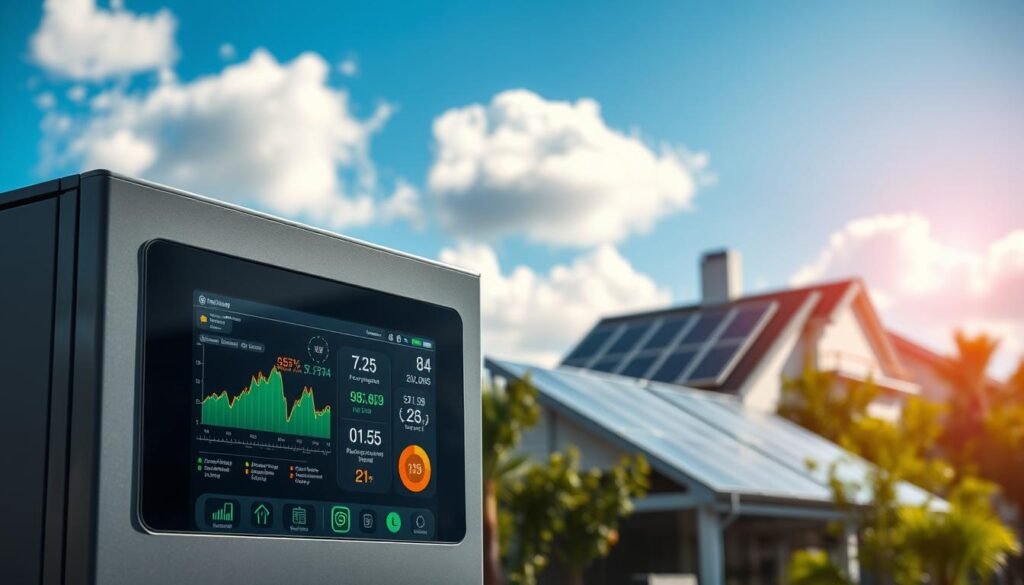
You can check your system’s health anytime with mobile apps and web portals. They show how much energy you’re making and using. This helps you catch any problems fast and make better energy choices for your home.
With real-time solar monitoring, you get dashboards and graphs to track your energy use. This lets you see trends and compare different days or months. Remote monitoring also helps service teams check data without visiting your home, saving time and money.
Real-time data and user tools
Top brands like SMA and SolarEdge offer easy-to-use apps for daily checks. You can see how much energy you’re making, set alerts, and export reports. This helps you use energy better. Inverter monitoring shows how your energy use affects your savings.
Diagnostics that speed repairs
These systems can find problems like shading and ground faults early. When a fault is found, you get alerts and help from technicians quickly. This keeps your system running smoothly and lasts longer.
You can also update your control systems remotely and add IoT sensors for extra security. For hybrid systems, you can see how your solar and battery are working together.
For more details on rugged hybrid inverters with IP65 protection and monitoring, check out the IP65 hybrid solar inverter product page.
| Feature | Benefit | What you see in the app |
|---|---|---|
| Inverter monitoring | Faster issue detection | Live status, error codes, uptime |
| Real-time solar monitoring | Immediate performance insight | Live power, production graphs |
| Diagnostics | Targeted repairs | Fault type, affected string, timestamps |
| Remote monitoring | Lower service costs | Remote logs, firmware updates |
| Performance visibility | Informed energy choices | Daily, weekly, and yearly summaries |
Improved Reliability and Durability for Home Installations
Choosing a high-quality inverter means less worry and more uptime. These inverters are built to last, withstanding harsh weather and reducing service needs. Their design ensures they keep working, even in tough conditions.
Keep your inverter in a cool, well-ventilated area. This helps it run smoothly and last longer. It also means fewer problems and less wear on connected parts.
Look for inverters with safety features like ground fault detection and arc fault protection. These features protect your home, utility workers, and the inverter from electrical issues. You’ll save on maintenance and enjoy longer service life.
Here’s a quick guide to help you choose the right inverter for your home.
| Feature | What it protects | Benefit for you |
|---|---|---|
| Thermal management | Internal electronics and capacitors | Improves inverter reliability and extends life |
| Arc fault protection | Wiring and structure | Reduces fire risk and service interruptions |
| Ground fault detection | Leakage currents to ground | Prevents damage and enhances safety |
| Voltage regulation | Connected appliances and batteries | Protects devices and keeps output stable |
| Rugged enclosure and coatings | Exterior exposure to elements | Delivers durable inverters that resist corrosion |
| Anti-islanding | Grid backfeed during outages | Safeguards utility workers and grid integrity |
Integration with Battery Storage and Backup Power
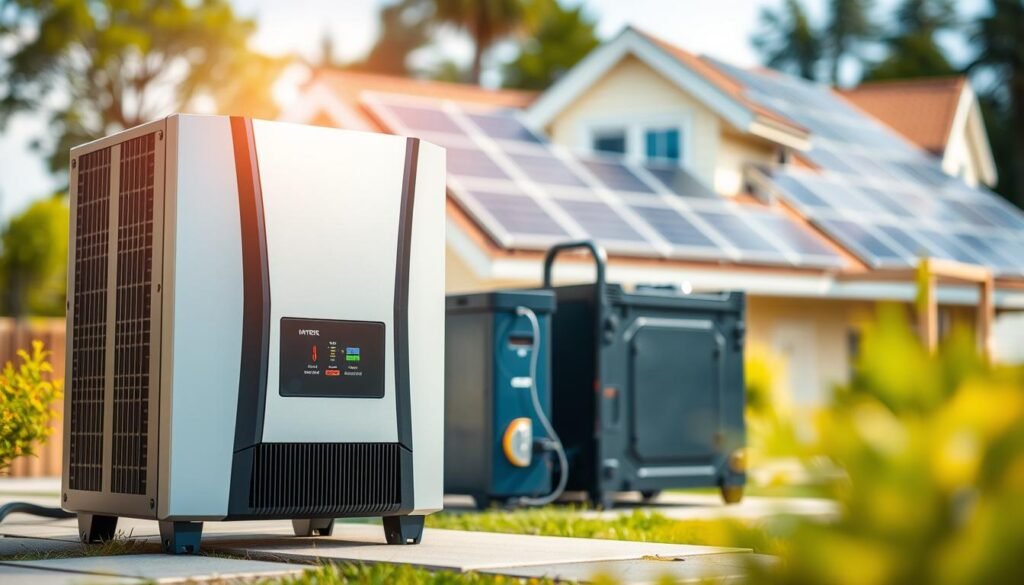
Adding battery storage to your rooftop solar makes your home system stronger. A hybrid inverter connects panels, batteries, and the grid. This way, you can save energy made during the day for use at night.
Hybrid inverter functionality
A hybrid inverter controls power flow between solar panels, batteries, and the grid. It decides when to charge batteries from solar or grid power. This lets you charge batteries when rates are low or use extra solar energy later.
Benefits during outages and overnight use
With the right battery setup, your system can power your home during outages. The hybrid inverter quickly switches to battery power for essential loads. This keeps your lights, fridge, and medical devices on without a hitch.
Solar-plus-storage systems also save money at night. They store cheap solar energy made during the day. Then, they use it when energy costs are higher in the evening.
When choosing a hybrid inverter, check if it’s compatible and has good warranties. Brands like Tesla, Schneider Electric, and SMA offer reliable systems. Their inverter battery charging profiles and safety features are tested and certified.
Enhanced Energy Management and Smart Home Integration
You can make your solar-plus-storage system a central energy hub. It can lower your bills and make your home more resilient. Smart inverters give you real-time info on energy production, battery status, and usage. This lets you manage your energy better.
Pairing these inverters with home automation and voice hubs like Amazon Echo or Google Home is smart. It lets you automate energy use based on prices and patterns.
Load shifting moves your energy use away from expensive times. Your system can use daytime solar to charge batteries. Then, it powers important circuits during evening peaks.
Time-of-use optimization schedules your appliances and devices for the cheapest times. This is done by software that plans your energy use.
EV charging integration lets you charge your car when solar is plentiful. You can limit charging during high rates or schedule it for midday. This cuts down on charging costs and keeps power for essential devices.
Smart home integration also includes demand-response and appliance control. Your system can turn off nonessential loads during high rates. It can also direct stored energy to important circuits and start normal operation when rates drop. This gives you control and helps the grid.
Choosing the right inverter and storage is key. Microinverters and hybrid inverters affect load shifting and shading management. High-efficiency inverters and lithium batteries improve performance and reliability.
| Feature | Benefit | Typical Component |
|---|---|---|
| Real-time monitoring | Informs energy management decisions and fault detection | Smart inverter with app |
| Load shifting | Reduces peak charges by using stored solar energy | Battery + scheduling software |
| Time-of-use optimization | Automatically schedules appliances for lower-cost periods | Energy management platform |
| EV charging integration | Prioritizes charging during solar surplus or low-rate windows | Smart EV charger + inverter control |
| Smart home integration | Automates load control and participates in demand-response | Smart hub (Amazon Echo, Google Home) + IoT devices |
For help with setting up and choosing devices, check out a practical guide. It covers smart inverters and how to connect them. You can also find detailed advice on integrating inverters with smart homes and the importance of inverter types by visiting an integration overview and a solar inverter primer.
integration overview solar inverter primer
Lower Dependence on Grid and Environmental Benefits
Choosing a high-efficiency inverter can make your home more independent from the grid. These inverters work well with solar panels and batteries. They help your home use less power from the grid during busy times.
Using less grid power means lower bills for you. Your home uses less electricity from dirty sources like coal and gas. Hybrid and grid-interactive inverters also store extra solar energy for later use. This makes your home more energy secure.
Reduced grid electricity consumption
High-quality inverters, like those from Fronius and SMA, use more of your solar power. This means you need less power from the grid. Net metering and smart load shifting help you use more solar energy. This keeps your appliances running smoothly.
Smart inverters let you control when you use power. You can charge batteries during the day and use them at night. This lowers your bills and helps the grid handle more solar power.
Carbon footprint reduction and sustainability
Using more solar power and storing it means less carbon emissions for you. Over time, efficient inverters make your home produce more clean energy. This is good for the planet.
Recycling your inverters at the end of their life is also important. It saves resources and supports sustainability. Rules like EPA guidelines in the U.S. help make sure recycling is done safely.
| Benefit | How it helps you | Real-world effect |
|---|---|---|
| Grid independence | Hybrid inverters with batteries enable off-grid operation during peaks | Lower monthly grid purchases and greater resilience during outages |
| Reduced grid consumption | MPPT and smart controls increase usable solar energy on-site | Smaller utility bills and reduced demand on fossil-fuel generators |
| Carbon footprint reduction | More clean kWh generated over system lifetime | Faster carbon payback and fewer greenhouse gas emissions |
| Sustainability | Recycling programs and optimized system sizing cut material use | Lower lifecycle environmental impact and circular use of materials |
| Renewable energy benefits | Grid-interactive inverters support stability and renewables growth | Higher renewable penetration and cleaner community grids |
Learn more about how inverters help create a cleaner future in this article about solar inverter benefits. Using advanced inverters supports your own renewable energy goals and helps the planet.
Sizing, Warranty, and Total Cost of Ownership Considerations
Choosing the right inverter size and type is key. It affects how well it works, your savings, and future upgrades. Start by matching the inverter size to your home’s peak load and battery storage.
For roofs with shading, microinverters or power optimizers might be better than a single string inverter. Hybrid inverters are good if you plan to add batteries later. Dedicated off-grid models are best for remote systems.
Choosing the right inverter
First, think about your appliances, backup needs, and solar array output. A Suburban Home Backup Solution at 10 kW / 20 kWh is a good example. It needs careful device matching.
Choosing the wrong size can cut usable power. Choosing too big can reduce efficiency and increase maintenance. Use manufacturer specs and a simple load audit to find the right match.
Comparing inverter types
String inverters are good for roofs with even sunlight and are cheaper upfront. Microinverters are better for complex roofs and partial shading. Hybrid inverters add battery integration and offer cleaner backup.
Think about the inverter’s lifecycle and how it fits with your battery plans. This will help you choose the right type.
Warranties and ongoing service
Look at the inverter warranty before buying. Premium brands often offer longer warranties and more service options. Solar panels usually come with 25-year guarantees, and inverters have 10–15 year warranties.
Extended warranty coverage can save you from unexpected replacement costs.
Maintenance and lifecycle planning
Regular maintenance keeps your system running smoothly. Simple tasks include firmware updates, ventilation checks, and looking for corrosion. Doing these tasks regularly lowers downtime and extends the inverter’s life.
Plan regular visits to catch wear early and keep the warranty valid.
Modeling total cost
Total cost of ownership includes the purchase price, maintenance, expected replacement, and energy savings over time. More efficient units cost more upfront but save money and need less service. Consider rebates, tax incentives, and net metering to get a better payback estimate.
Use tools or vendor guidance to compare the true lifecycle costs.
If you need manufacturer specs or installation support, talk to a trusted supplier like Aisen Solar Energy. They can help with detailed proposals that match inverter sizing, warranty choices, and long-term cost planning.
Grid Support Features and Future-Proofing Your Home System
Choosing the right inverter today is key for tomorrow’s system. Look for units with strong grid support and clear frequency response. These features help your system adjust to grid changes and join utility programs safely.
Modern grid-interactive inverters have ride-through modes and fast frequency response. They keep your home connected during brief outages and let you send energy back to the grid. For future-proof solar, choose inverters with firmware updates and IoT interfaces from SolarEdge and SMA.
Inverter compatibility is important when adding batteries, EV chargers, or smart home devices. Hybrid inverters from Tesla, Enphase, and Fronius work with many storage brands. This lets you control loads better and keeps your options open for new devices and standards.
Below is a compact comparison to help you weigh key grid-support traits and long-term adaptability.
| Feature | What it Does | Why it Matters |
|---|---|---|
| Frequency response | Adjusts output during grid frequency shifts | Stabilizes local grid and qualifies for grid services |
| Ride-through capability | Keeps inverter active during short outages | Maintains power to critical loads and avoids trips |
| Firmware updates | Enables new features and compliance upgrades | Extends hardware life and supports future standards |
| IoT and communications | Connects to home networks and utility systems | Allows demand-response participation and remote tuning |
| Inverter compatibility | Supports batteries, EV chargers, and third-party gear | Simplifies system expansion and keeps upgrade paths open |
When planning upgrades, check local rules like California Rule 21 or Germany’s VDE standards. Selecting a grid-interactive inverter with proven grid support and broad compatibility ensures smooth upgrades. It also opens doors to incentives and reliable performance as the grid evolves.
Conclusion
To get the most from solar power, a good inverter is key. It turns DC into AC efficiently and lets you monitor your system. It also supports batteries, keeping your home powered during outages.
Choosing the right inverter features like MPPT and hybrid capability boosts your system’s performance. It also means less maintenance. This reliability shortens the time it takes to see a return on your investment.
Your choice today shapes your future. Modern inverters are smart and help stabilize the grid. They prepare your home for electric cars and smart devices. By focusing on performance and future-proof features, you gain long-term value and help the environment.