
If you’re looking into solar-plus-storage for your home, lithium batteries are a great choice. They have more usable capacity, last longer, and take up less space. This means you can store more energy from your solar panels and use it when you need it most.
Modern lithium battery systems come with smart battery management systems. These systems actively balance the cells to protect them and make them last longer. This reliability means you can always count on backup power during outages. It also helps you shift solar energy to evening use every day.
When it comes to installation, weight and space are important. Lithium batteries are much lighter and smaller than older types. This makes them easier to install in garages, basements, or on walls, freeing up space in your home.
Scientists are working on new materials to make lithium batteries even better. They’re looking at silicon anodes, 3D electrodes, and nano-structured materials. These advancements could lead to batteries that last longer and hold more energy, making your investment in solar energy storage worth it.
Battery prices are dropping, and they work with many inverters from brands like GoodWe, Growatt, and Solis. This makes lithium batteries a good choice for many homeowners. For more information, check out lithium battery product pages.
Key Takeaways
- Lithium batteries increase usable storage and reduce the footprint compared to lead-acid systems.
- Smart BMS and active balancing improve safety and extend cycle life for residential battery storage.
- Material advances raise energy density, giving more runtime for the same space.
- Wide inverter compatibility and falling costs make solar-plus-storage easier to install and afford.
- Reliable backup power and daily shifting of solar generation boost self-consumption and resilience.
Why choose lithium battery for your solar energy storage
You’re looking for a clean storage option that works well with rooftop panels. Lithium batteries offer high capacity and quick charging. This means you can use solar energy at night and avoid wasting it.
How lithium chemistry integrates with solar generation
Lithium-ion cells charge fast thanks to advanced materials. They work well with inverters. A battery management system keeps an eye on the battery’s health in real time.
This system helps even out solar energy and makes sure you have power when you need it.
Advantages over lead-acid and other chemistries for residential systems
Lithium-ion batteries beat lead-acid in many ways. They last longer and are more efficient. Lead-acid needs to be bigger and requires more upkeep.
Brands like Tesla Powerwall and LG Chem offer lithium batteries that are compact and reliable. They come with clear warranties for homeowners.
Role in improving grid stability and backup power for your home
Lithium batteries help the grid by storing extra energy during the day. This reduces strain on the grid. During power outages, a lithium battery can power your home for hours, not just minutes.
Together, many lithium batteries can help utilities manage energy better. This lowers stress on the grid and saves resources.
Higher energy density and longer usable capacity
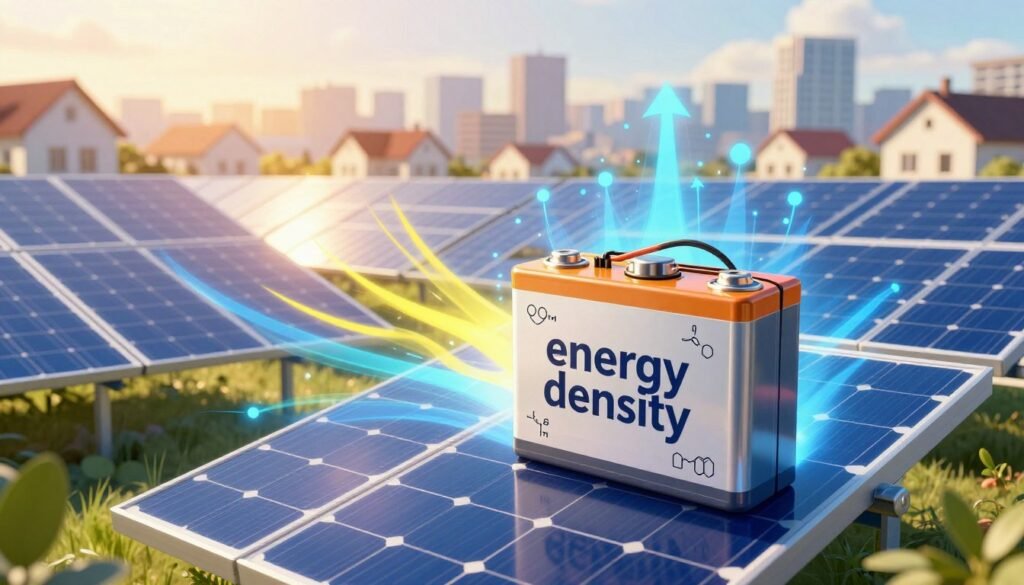
You want a battery that stores more power in less space. New lithium systems have higher energy density. This means you can use your battery for longer without needing a bigger cabinet.
This is important when you have equipment in tight spaces like garages, attics, or small closets.
Materials science is key to these improvements. Silicon anodes and alloying elements like germanium increase capacity over graphite. Adding 3D electrodes boosts surface area and shortens ion paths. This leads to better charge uptake and more usable kWh.
New manufacturing methods like roll-to-roll printing and additive techniques create micro- and nano-scale features on electrodes. These features increase energy density while keeping the battery small. Engineers use electron microscopy and battery cyclers to test these designs under real conditions.
For homes in the U.S., this means more overnight backup and better solar shifting in a smaller unit. With higher lithium battery capacity, you can place batteries in spots you couldn’t before. This opens up more installation options for you.
| Characteristic | Lead-acid (typical) | Lithium with silicon anodes & 3D electrodes | Practical benefit for your home |
|---|---|---|---|
| Gravimetric energy density (Wh/kg) | 35–50 | 150–250 | More stored energy with less weight |
| Volume per usable kWh | Large cabinet footprint | Compact battery storage cabinets | Easier placement in garages and closets |
| Cycle-capable usable capacity | 30–50% depth of usable discharge | 70–90% usable discharge | Longer runtime and more effective kWh for daily shifting |
| Typical installation flexibility | Limited; outdoor/vented preferred | Indoor or compact outdoor options | More siting choices for rooftop and home layouts |
When comparing systems, look beyond amp-hour ratings. Focus on real lithium battery capacity in kWh for your needs. Higher energy density and modern electrode designs help meet peak needs while keeping the system compact and easy to place.
Longer cycle life and better lifecycle economics
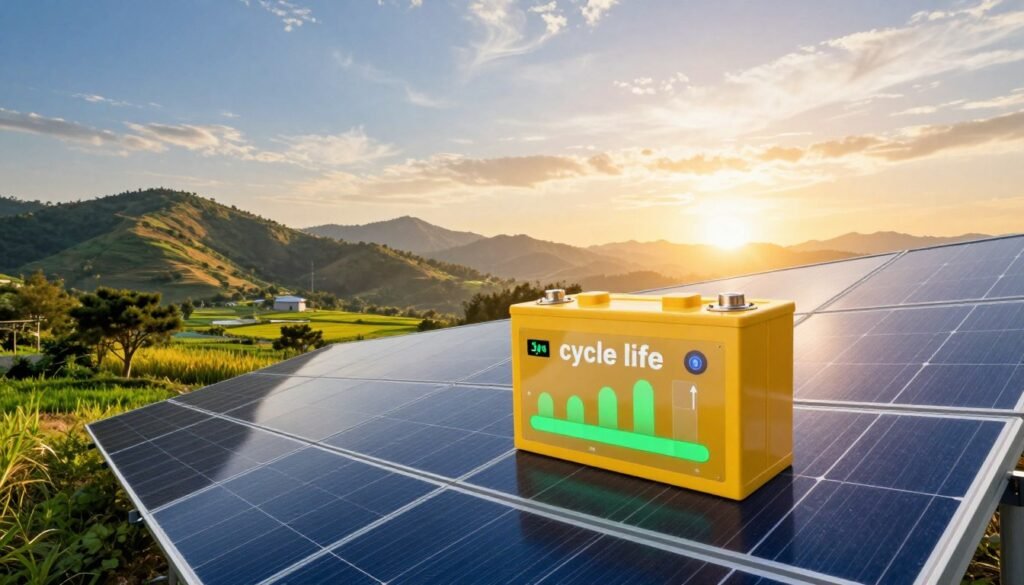
Choosing lithium storage means more cycles per battery. This cuts your battery lifecycle cost over years. A higher cycle life means each kilowatt-hour costs less, improving payback for home and grid-scale projects.
Lithium chemistries offer several times more usable cycles than alternatives. This lowers the cost per stored kWh, even with similar upfront prices. Larger systems and longer warranties increase these savings.
Cycle life compared to alternative batteries and how it lowers lifetime cost
When looking at lifetime cost, consider replacement frequency and performance fade. Lithium batteries last longer, so you replace packs less often. This reduces downtime and lowers long-run capital spending.
Use real numbers to evaluate options. A pack lasting 5,000 cycles will spread capital over more energy than one lasting 500 cycles. Your battery lifecycle cost falls, and your system returns improve.
Diagnostics and battery health monitoring to extend useful life
Advanced battery diagnostics detect early degradation and adjust operating profiles. Research teams at places like MIT and companies like Tesla use models to flag issues in real time.
With robust diagnostics and a smart BMS, you can fine-tune charge rates and temperature windows. These controls preserve capacity, extend cycle life, and reduce unexpected replacements.
Second-life for degraded EV packs in stationary solar systems
EV pack reuse offers a cost-effective storage solution through second-life batteries. Automotive packs that no longer meet vehicle range needs often retain substantial capacity for home or microgrid use. Reusing these packs can cut upfront capital while keeping lifecycle emissions low.
Workflows that combine diagnostics, refurbishment, and system integration unlock value from second-life batteries. Research on circular refining and recycling shows big energy and emissions benefits for reused materials; see a detailed lifecycle comparison at circular refining pathways.
- Lower battery lifecycle cost from longer cycle life
- Real-time battery diagnostics extend productive life
- Second-life batteries and EV pack reuse reduce capital needs
Higher round-trip efficiency for more usable solar energy
Using a modern lithium battery with your solar panels means more energy at night. Studies on electrode designs have cut down on losses. This boosts the efficiency of your system.
Most lithium systems have a round-trip efficiency of 90% or more. This is higher than many other types, like lead-acid batteries. This means more energy is stored and used later, not wasted as heat.
Higher efficiency means more solar energy is used at home. This reduces the need to buy energy from the grid. It also lowers your bills.
Smart inverters help control when your battery charges and discharges. They work with your solar panels to use more energy during the day. This way, you use less energy from the grid at night.
Keeping your battery cells balanced is key. This is done by monitoring their health. This way, your battery works better and lasts longer.
Here’s a quick look at how different systems compare. It shows which one gives you more energy for your home.
| System Component | Typical Round-Trip Efficiency | Impact on Solar Self-Consumption | Role of Controls |
|---|---|---|---|
| Lithium-ion battery + modern inverter | 88–96% | High — stores most midday surplus for evening use | Smart inverters enable scheduled discharge and peak shaving |
| Lead-acid battery system | 60–80% | Moderate — greater losses reduce usable stored energy | Simple controllers; limited charge optimization |
| Flow battery (vanadium) | 65–85% | Moderate — stable capacity but higher parasitic losses | Requires flow control; less native inverter integration |
| Lithium + advanced BMS + smart inverter | 90–96% | Very high — maximizes self-consumption and minimizes grid draw | BMS optimization balances cells; inverters manage export and TOU |
For reliable products, look at proven manufacturers. Check out solar generators that focus on efficient storage.
Choose systems with high round-trip efficiency and smart inverters. This will help you use more solar energy and save on bills.
Faster charge/discharge rates and better performance in peak demand
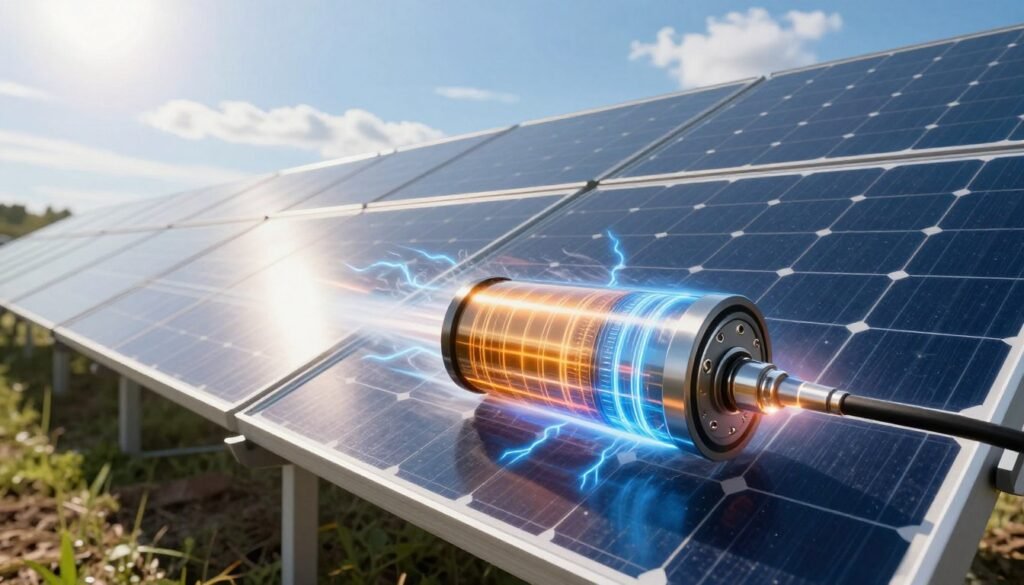
You can use midday solar peaks and send stored energy when rates go up. Fast charge lets your system grab extra PV during clear days. Then, it sends power in the evening, helping manage peak demand and smooth out household use.
New electrode designs make your system quicker. Nano- and micro-structured electrodes, like 3D shapes, help ions move faster. This means you can charge and discharge quickly without losing battery life.
How fast charge capability helps capture midday solar and respond to peaks
When the sun shines brightly for a short time, a fast charge battery grabs energy fast. This way, you don’t lose any solar power. Later, it sends power when rates are high, cutting down your grid use. This helps lower your demand charges and makes time-of-use plans more beneficial.
Nano- and micro-structured electrodes that improve charge kinetics
Methods like roll-to-roll coating and precise patterning create thin layers. These layers make ions move faster, reducing heat. Your system can handle many high C-rate cycles while keeping voltage and temperature steady.
Real-world benefits for demand charge management and backup readiness
In real life, fast charge/discharge helps you meet utility demand events and join demand response programs. It lets you cut peak loads, boost backup readiness, and delay expensive upgrades. For bigger needs, check out Aisen Solar Energy’s commercial high-voltage lithium battery for scalable solutions.
Safety features, standards, and proper installation practices
Before buying or installing a solar storage system, plan for battery safety. Design, monitor, and follow codes to reduce risks and ensure reliability. Companies like Tesla, LG Energy Solution, and Sonnen offer guides on safety controls and testing.

Battery management systems and active safety controls
A strong BMS is key to your system’s safety. It checks voltage, current, temperature, and charge levels constantly. If it finds a problem, it can stop charging, cool down, or sound an alarm.
Tools like XANES and model-driven analytics help spot issues like dendrites or electrolyte loss. This knowledge helps make safer designs and lowers the risk of fires.
Installation best practices: ventilation, fire protection, and qualified installers
Follow the best practices for installing batteries to manage heat and prevent fires. Install according to the manufacturer’s instructions and local laws. Make sure there’s good airflow and keep batteries away from living areas if you can.
Use fire safety measures like smoke detectors, suppression systems, and fire barriers. Choose a licensed installer who knows about home energy storage. Check their certifications from groups like NABCEP or state boards.
Regulatory approvals, interconnection processes, and permit considerations
Start working with your utility and local authorities early. Even small systems might need permits and approval for connection. Larger systems go through more detailed processes.
Permit applications need electrical plans, equipment details, and safety plans. Keep records of BMS settings, emergency shutdowns, and installer qualifications for inspectors and your utility.
- Keep firmware and BMS settings up to date as advised by the manufacturer.
- Have regular inspections and thermal scans to find hotspots.
- Make a plan for emergencies with local fire services.
Declining costs and available rebates to lower upfront expense
Battery costs have dropped sharply thanks to advances in materials, manufacturing, and diagnostics. You benefit from faster commercialization driven by benchtop spectroscopy and high-throughput prototyping. These improvements push more efficient cells into residential racks and shorten the time it takes for new designs to reach your home.
Current residential installation cost estimates and ROI expectations
Typical installed prices for a home lithium-ion solar battery system range between $18,000 and $25,000. Your residential battery ROI depends on local electricity rates, time-of-use tariffs, and how often you use stored energy during peak periods. Falling battery costs compress investment payback and make storage a realistic addition for more homeowners.
Federal, state, and local rebates — how to qualify and stack incentives
You can qualify for several solar-plus-storage incentives at federal, state, and local levels. As of July 23, 2024, homeowners may be eligible for up to $5,000 in battery rebates for an eligible storage system and an additional $5,000 for solar panels when programs permit stacking. Check program rules carefully to confirm eligibility and whether rebates apply with or without a paired PV array.
You can get help applying for incentives and tax credits from providers who offer financing with low-interest rates and flexible payment plans. For direct support and rebate guidance, consider reviewing resources at Aisen Solar Energy to streamline paperwork and approval.
How falling battery costs improve payback for solar-plus-storage systems
Lower battery costs reduce upfront capital and shorten the path to positive cash flow. When you combine lower equipment prices with available battery rebates and smart rate management, you tighten the investment payback horizon. That improves residential battery ROI for typical U.S. installations.
| Item | Estimated Range | Impact on Your Payback |
|---|---|---|
| Installed battery system | $18,000 – $25,000 | Primary upfront expense; lower costs shorten payback |
| Battery rebates | Up to $5,000 | Direct reduction in installed cost; stacks where allowed |
| Solar rebates (stackable) | Up to $5,000 | Further lowers combined solar-plus-storage incentives |
| Financing options | Low-interest, flexible terms | Spreads cost; improves monthly cash flow and ROI |
| Warranty and lifespan | 25-year panel performance; battery/inverter warranties vary | Longer warranties reduce risk and support investment payback |
- Monitor how battery costs evolve in your area to time purchases.
- Confirm stacking rules for battery rebates before signing contracts.
- Factor warranties and expected cycles into residential battery ROI calculations.
Environmental benefits and role in decarbonizing your energy use
Pairing solar panels with lithium battery storage can cut emissions. It boosts renewable energy use. Storing solar energy during the day lets you use it at night. This reduces your need for energy from fossil fuels.
Second-life batteries give old EV packs a new purpose. They can be used in home systems. This extends their life, saves resources, and reduces waste.
Choosing the right materials is key. Look for suppliers who are transparent about their practices. Learn more about recycling at lithium battery recycling benefits.
Advanced recycling can recover over 95% of valuable materials. It uses less energy and water than mining. This reduces the carbon footprint of new batteries.
Recycling locally cuts down on emissions. It’s better for the environment when recycling centers are close. It also supports local supply chains for important minerals.
Using battery storage makes the grid more reliable. It reduces peak demand and smooths out energy generation. This leads to fewer emissions and a more stable energy supply.
These strategies—renewable energy, second-life batteries, and recycling—have big environmental benefits. They help you meet your energy goals and protect future resources.
Scalability and flexibility for residential and microgrid applications
You can adjust storage as your needs change. New manufacturing and diagnostics make modular battery systems great for homes and small community grids. Modular designs let you increase capacity without replacing the whole system, making your investment grow with your needs.
Start with a basic unit for typical home sizes. Companies like Tesla, Enphase, and LG Chem offer modules that work with common inverters. Advances in production and design lower costs while maintaining quality. Planning tools help you design a layout for future growth.
Integrate batteries with smart energy management and EV charging for better use. A smart controller will use rooftop solar, charge your EV when it’s cheap, and save energy for outages. This makes your home more efficient and resilient.
Choose storage based on your energy use. Smaller systems are good for basic backup and shifting energy use. Larger systems support full-house backup and can even create a neighborhood microgrid. Rules for connecting systems vary by size, with smaller ones having simpler rules.
| System Tier | Typical Residential System Sizes | Primary Use Case | Scalability Path |
|---|---|---|---|
| Entry | 5–10 kWh | Load shifting, basic backup for essentials | Add identical modules to reach 10–20 kWh |
| Mid | 10–25 kWh | Whole-house daytime shifting and medium backup | Stack modules; integrate EV charging integration for smart charging |
| Large | 25–100 kWh | Full backup, off-grid capability for short periods | Combine modular battery systems and second-life EV packs for cost savings |
| Community | 100 kW+ (small microgrid) | Neighborhood resilience, shared home microgrid services | Plan with utilities for distribution interconnection and staged expansion |
Initial costs for installs range from $18k to $25k, depending on features and labor. You can delay some costs by adding modules over time. Second-life EV packs can also help lower costs and increase capacity.
When designing your system, include clear rules for the home microgrid and EV charging. Set priorities for critical loads, time-of-use charging, and reserve margins. This ensures reliability and allows for safe expansion as demand grows.
Maintenance, monitoring, and maximizing battery lifespan
Keeping your home battery reliable starts with simple, consistent care. Good battery maintenance reduces unexpected downtime and helps you get the most from your investment. Use a mix of routine checks, smart monitoring, and informed user battery care to protect performance and safety.
Routine checks, firmware updates, and remote diagnostics
Do brief visual inspections monthly. Look for loose connections, corrosion, or unusual odors. Also, check vents and enclosures for debris. Keep firmware current to get safety and efficiency fixes.
Remote diagnostics offer real-time telemetry. This lets you spot issues fast. A system with remote diagnostics will alert you to voltage drift, temperature spikes, or irregular charge cycles before they worsen.
How X-ray spectroscopy and modeling inform safer, longer-lasting systems
Diagnostics and physics-based models reveal what happens inside cells as they age. Bench studies using XANES spectroscopy let researchers see chemical shifts without destroying the battery. That data feeds simulations on the supercomputer scale to predict failure modes and refine battery chemistry.
Those lab insights translate to firmware and operational strategies. Manufacturers like Tesla and LG Energy Solution use modeling to tune charge limits and thermal controls that improve battery longevity in real installations.
User actions that preserve performance: temperature control, cycling habits
Keep batteries in moderate temperatures. Aim for a stable indoor environment or use active cooling for hotter climates. Avoid storing batteries near heat sources or in unvented attics.
Follow charge and discharge guidance from your system maker. Shallow, regular cycles tend to be kinder than repeated deep discharges. If you rely on backup power, schedule occasional managed cycling so the battery stays healthy without stress.
The battery management system continuously monitors voltage, current, temperature, and state of charge. It can intervene or send alerts so you can act on early warnings. Pair that BMS with routine inspections and remote diagnostics to maximize runtime and support broader renewable adoption.
| Task | Frequency | Benefit |
|---|---|---|
| Visual inspection of connections and enclosure | Monthly | Prevents corrosion and loose-contact faults |
| Firmware and BMS updates | As released | Improves safety, efficiency, and controls |
| Remote diagnostics/telemetry review | Weekly or automated alerts | Early detection of anomalies and trend tracking |
| Temperature and ventilation check | Seasonally and after weather events | Maintains optimal operating range for battery longevity |
| Qualified professional inspection | Annually | Validates system health and safety compliance |
Conclusion
This lithium battery benefits summary shows why lithium is top for home storage today. Research in materials and diagnostics is making batteries better. This includes silicon anodes, 3D electrodes, and advanced modeling.
These improvements mean batteries can hold more power in a smaller space. They also last longer and are safer. This makes them more efficient and cost-effective over time.
Choosing lithium batteries for solar-plus-storage setups offers many benefits. They charge and discharge faster and last longer than older batteries. This boosts how much solar power you can use at home.
It also makes your backup power system more reliable. This is great for using more solar power in your area.
When deciding on a battery, consider the cost, rebates, and installation. Residential systems cost around $18,000 to $25,000. Some rebates can lower this cost.
It’s also important to choose a qualified installer and follow safety guidelines. This ensures your battery works well and lasts a long time.
In summary, lithium-based storage is getting better and cheaper thanks to research. If you want reliable backup power and a good return on investment, lithium batteries are a smart choice. They help make your home energy cleaner and more stable.