
This case study shows how a custom solar power system cut energy costs and boosted reliability at a U.S. factory. It uses examples from Northern California, like Crystal Geyser and Labcon, and SunPeak’s work across the country. It offers real steps for using solar in industrial settings.
Factories use a lot of energy during the day for things like CNC machines and HVAC. A good solar energy system can reduce daytime energy use. This lowers costs and makes energy use more stable. Solar can cut daytime energy use by 20–60% and pay for itself in 4–7 years.
SunPeak knows how to set up solar systems on roofs and ground. This study shows how these systems can bring big benefits. It talks about how solar can save money and improve operations in a smart way.
Key Takeaways
- Industrial solar projects can reduce daytime grid consumption and cut peak demand charges.
- A solar power system for factories often yields 20–60% daytime load offset.
- Payback periods commonly fall between four and seven years with 25–30+ year asset life.
- Regional experience, like Northern California commercial installs, helps navigate permitting and site constraints.
- Early coordination between engineering, operations, and utility stakeholders improves integration and reliability.
Project Overview: Solar Power System Implementation at a U.S. Manufacturing Facility
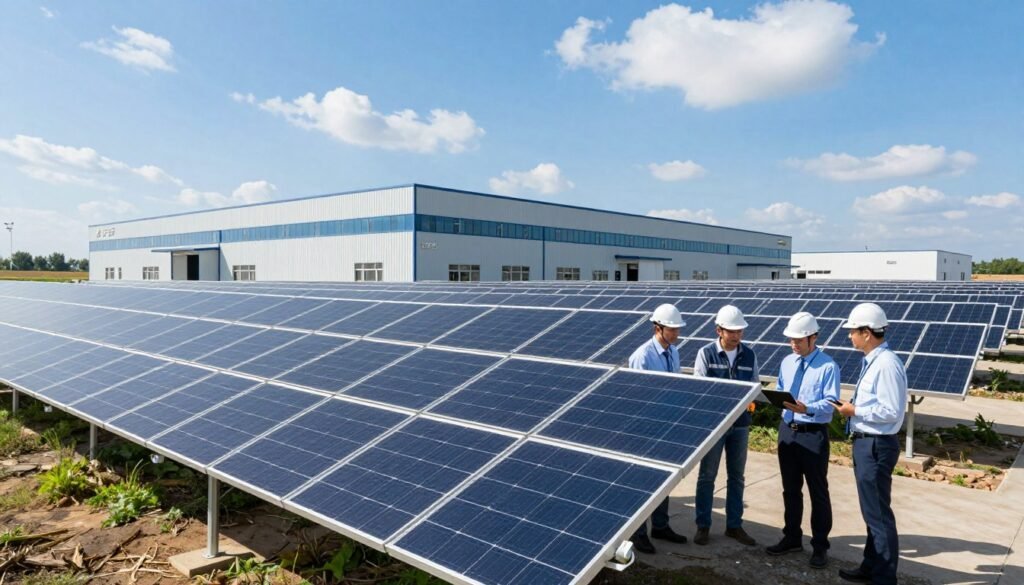
A medium-sized factory in Northern California started with a site assessment. They looked at examples from Novato, Petaluma, Napa, and Santa Rosa for design. SunPeak’s experience helped with complex sites, using both rooftop and ground systems.
Client profile and site context
The client runs CNC machining and large HVAC systems all day. This makes them a good fit for solar power. They wanted little disruption during the installation.
Local examples helped with permits and approvals. This made the process smoother.
Scope and objectives
The main goals were to cut down on daytime energy use and costs. They aimed for a 20–60% load offset. They also wanted to save money in the long run.
They considered rooftop and ground systems. The choice depended on the site’s conditions.
Project timeline and stakeholders
The project had several phases. First, they did an energy audit and load profiling. Then, they checked the roof and site.
They decided on the system design, got permits, and installed it. The whole process took several months.
Many people were involved, like facility leaders and engineers. Local businesses shared their experiences. This helped with planning and execution.
Policy changes can affect costs and choices. A recent study by the Center for Strategic and International Studies at assessing United States solar power play discussed this.
| Phase | Typical Duration | Primary Deliverable |
|---|---|---|
| Energy audit & load profiling | 2–4 weeks | Hourly load map and production targets |
| Site assessment & structural analysis | 2–6 weeks | Roof condition report; site shading and ground suitability |
| Design & permitting | 1–3 months | Permit sets, electrical one‑line, interconnection application |
| Procurement & installation | 4–12 weeks | Installed rooftop or ground system, inverters, monitoring |
| Commissioning & verification | Days to 2 weeks | Performance test, monitoring handover, O&M plan |
- Design tradeoffs balance rooftop solar for factories with ground‑mounted solar to meet daytime load offset goals.
- Early stakeholder coordination reduces permitting delays and aligns interconnection timing with construction.
- Clear performance targets and a robust site assessment shorten payback uncertainty and improve project finance options.
Challenges: Site Constraints, High-Load Profile, and Integration Risks
Starting a solar project can face many challenges before buying panels. Finding out about rooftop problems, old roofs, and small spaces is key. Cities like San Rafael, Petaluma, Novato, Napa, and Santa Rosa show how to fit solar panels into tight spots.
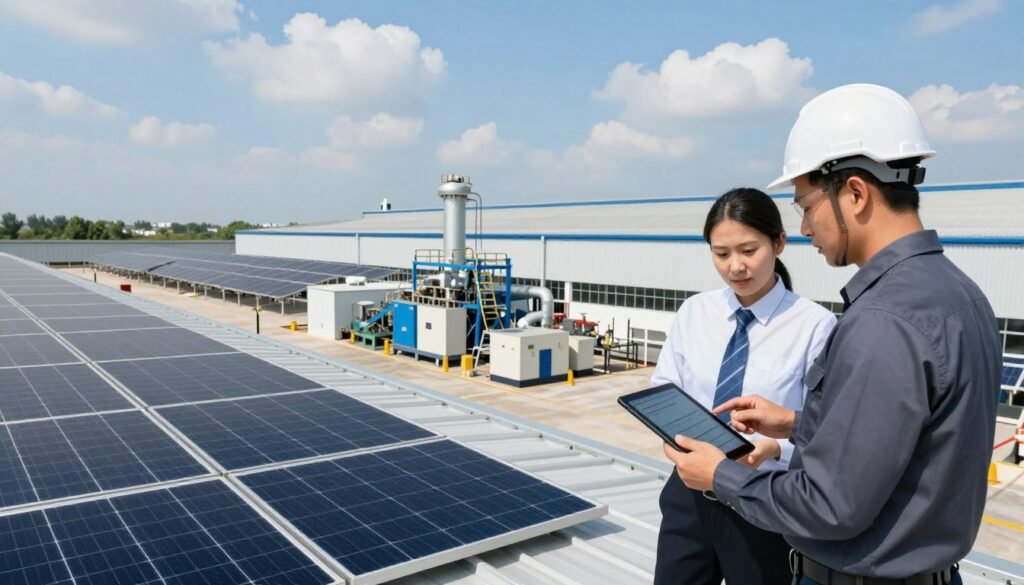
Understanding energy needs is critical. Factories with machines running all day need a lot of power. By analyzing energy use hour by hour, solar panels can help lower bills by 30–60%.
Checking if the roof can handle solar panels is important. Things like vents and skylights can limit where panels can go. If the roof can’t handle it, solar panels might go on the ground or in carports.
Getting solar panels to work with the electrical system is another challenge. It’s important to follow rules and avoid power outages. Designers plan carefully to ensure the system works well and doesn’t disrupt operations.
Getting permits and finding incentives can be hard. Big projects need to go through many steps to get approval. Companies with experience can help speed things up and find the best deals.
| Challenge | Primary Risk | Mitigation |
|---|---|---|
| Complex load patterns | Missed demand-charge savings | Hourly load profile analysis and targeted PV sizing |
| Roof obstructions and age | Insufficient usable area; structural overload | Confirm roof load capacity; consider ground mounts or carports |
| Electrical tie-in | Production downtime and power quality issues | Coordinate with plant engineers and utilities; staged commissioning |
| Permitting and incentives | Timeline delays and suboptimal incentives | Engage local authorities early and leverage multi-state permitting experience |
Experience shows how to overcome these challenges. Assessing the site, analyzing energy needs, checking the roof, and planning for electrical integration can help. For more information, check out solar generator options.
Result: Performance, Financials, and Operational Benefits
The project’s solar performance metrics showed it generated enough power to offset 30–50% of daytime facility load each year. On average, similar systems in Northern California and the Midwest kept about 90–95% of their power after 25 years. This allowed plant operators to adjust production to meet demand.
Energy production and load offset
The systems provided steady power during the day, reducing the need to buy energy from the grid. The amount of power generated varied based on the system’s size and location. This allowed staff to adjust noncritical loads and schedule processes to match solar output.
Cost savings and economic outcomes
Using solar energy lowered utility costs by reducing daytime energy purchases. The systems paid for themselves in four to seven years, thanks to incentives and financing. This predictable power helped stabilize energy costs and improve budgeting for energy-intensive operations.
| Metric | Typical Range | Impact |
|---|---|---|
| Annual offset of daytime load | 20%–60% | Reduced grid consumption and lower COGS for energy |
| Payback period | 4–7 years | Accelerated ROI and capital recovery |
| Expected service life | 25+ years (90–95% performance) | Long-term asset value and manufacturing energy savings |
| Demand charge reduction | Varies by tariff; often significant | Improves monthly operating margins |
Operational and reliability improvements
Planning for switchgear and transformers helped reduce voltage swings that could harm equipment. Adding battery capacity for peak shaving and backup improved power quality and reliability. This made production less vulnerable to power outages.
Sustainability and strategic business impact
Even small offsets in energy use led to significant savings and a better return on investment in solar. This helped meet sustainability goals and attracted buyers and investors. Services like maintenance, warranty, and financing options ensured smooth operation and timely deployment, thanks to partners like AISEN Solar Energy.
Implementation Details and Best Practices for Manufacturing Solar Projects
Successful solar projects at manufacturing sites need clear planning and site-specific decisions. Local examples from San Rafael, Petaluma, Novato, Napa, and Santa Rosa show the importance of roof age, obstructions, and parcel limits. Early collaboration with operations teams keeps production steady during work and shapes practical choices for layout and timing.
Design considerations specific to factories
Start with a thorough roof assessment and structural analysis when evaluating rooftop vs ground-mounted systems. Aging roofs may need repairs before panels go on, while parcels with spare land invite ground-mount or solar carports for added capacity.
Shading analysis and future expansion plans guide array placement. Detailed load profile modeling tells when solar delivers peak value and whether storage or demand-management should be added to capture savings during high-demand hours.
Engineering and electrical integration
Coordinate designs with plant electricians and engineering firms to size switchgear and transformers correctly. NEC compliance and local code checks prevent costly rework during commissioning.
Specify proven mounting systems and reliable inverters, drawing on multi-state experience from firms such as SunPower and Enphase for recommendations on durable components and trusted suppliers.
Construction and commissioning practices
Adopt phased installation schedules and sectional work to limit downtime. Off-shift windows are effective for rooftop work near active production lines.
Implement QA/QC and testing protocols that include string testing, inverter commissioning, and protective device settings verification. Phased commissioning lets teams validate performance targets as each section goes online.
Long-term operations and maintenance
Define solar O&M plans that include scheduled cleaning, preventive checks, and periodic roof inspections to protect warranties and asset life. Real-time performance monitoring with KPIs helps spot drops in output quickly.
Active warranty management and a documented remediation workflow allow rapid fixes for underperformance. Robust solar O&M plans maintain expected energy yields and support steady financial returns.
Conclusion
In Northern California, from Novato to Concord, there’s a clear need for custom solar solutions. These solutions are key for factories, warehouses, and schools. They work best when they’re designed for each site and installed by experts.
Projects like SunPeak’s show that different setups can lower risks. These setups include roofs, grounds, carports, and hybrids. They help cut energy costs, reduce peak charges, and make budgets more stable for manufacturers.
Even a small offset in energy use can boost profits. It’s wise to start with an energy audit and load analysis. This helps size systems and storage right.
Next, explore system and financing options with trusted providers. Look at Aisen Solar Energy for storage and off-grid solutions. This approach aims for payback in 4–7 years and long-term performance.
| Focus | Action | Expected outcome |
|---|---|---|
| Energy audit | Conduct hourly load profiling | Accurate system sizing and realistic ROI |
| System type | Assess roof, ground, carport, hybrid | Optimized site use and higher generation |
| Storage | Evaluate lithium battery integration | Peak shaving and reliability gains |
| Financing | Model CAPEX, incentives, and leases | 4–7 year payback scenarios |
| Provider selection | Choose experienced commercial teams | Smooth permitting, installation, and commissioning |
Call to Action
Facility leaders should start by scheduling a solar audit. This audit will show how strong your rooftop is and if there’s land nearby for solar panels. It will also look at how much power you use each hour.
Next, ask for a commercial solar consultation from experts like SunPeak. They should give you a detailed solar power system quote. This quote should include how much power you’ll save and how long it will take to pay off.
Look at both owning the system and leasing it. Also, check out local and state incentives. This will help you make a smart choice.
Choose a company that does everything for you. They should check your site, plan the installation, and take care of it for years. Start the energy audit and load study. Then, ask for proposals to find the best way to save money and be more sustainable.