
Living off the grid means you need a smart plan for power. Many homes find their solar panels work best when no one needs power. But, when it’s hot and sunny, everyone uses more electricity.
To keep your lights on at night, you need to save extra power. High-quality energy storage makes saving easy. Modern batteries let you store every watt of power you make during the day.
This setup means you always have power, even on cloudy days or in storms. It gives you the freedom you want, without worrying about blackouts. Buying these units is the smartest way to get true off-grid power and be self-reliant for good.
Key Takeaways
- Capture excess power during daylight for use throughout the night.
- Ensure a steady electricity supply during cloudy or stormy weather.
- Reduce your reliance on expensive backup fuel generators.
- Optimize the overall efficiency of your independent power system.
- Maintain a stable lifestyle in remote or rural locations.
- Lower long-term costs by maximizing naturally harvested sunlight.
The Critical Challenge of Achieving Off-Grid Power Reliability
Getting reliable power off the grid is tough, mainly because solar energy is not always there. We need power that doesn’t stop, but solar panels can’t always provide that.
Why Solar Panels Alone Cannot Provide Consistent Power
Solar panels work only when the sun is out. So, the power they make depends on the weather. This makes it hard to always have enough power.
The Intermittency Problem: When the Sun Doesn’t Shine
When it’s dark or cloudy, solar panels don’t work. This means we don’t always have enough power. This is a big problem for systems that only use solar power.
People usually use the most energy in the evening. But solar panels don’t make as much power then. This makes it clear we need a way to store energy for later.
Understanding Power Generation vs. Consumption Timing
It’s important to know when we make power and when we use it. Solar panels make power during the day, but we use the most power at night.
To fix this, we need to store extra power made during the day. This way, we can use it when we need it most. This makes sure we always have power.
How Solar Energy Storage Systems Deliver True Energy Independence
Solar energy storage systems are key to reliable energy independence. They solve the problem of solar power being intermittent. This ensures a steady energy supply.
Capturing Excess Energy for Later Use
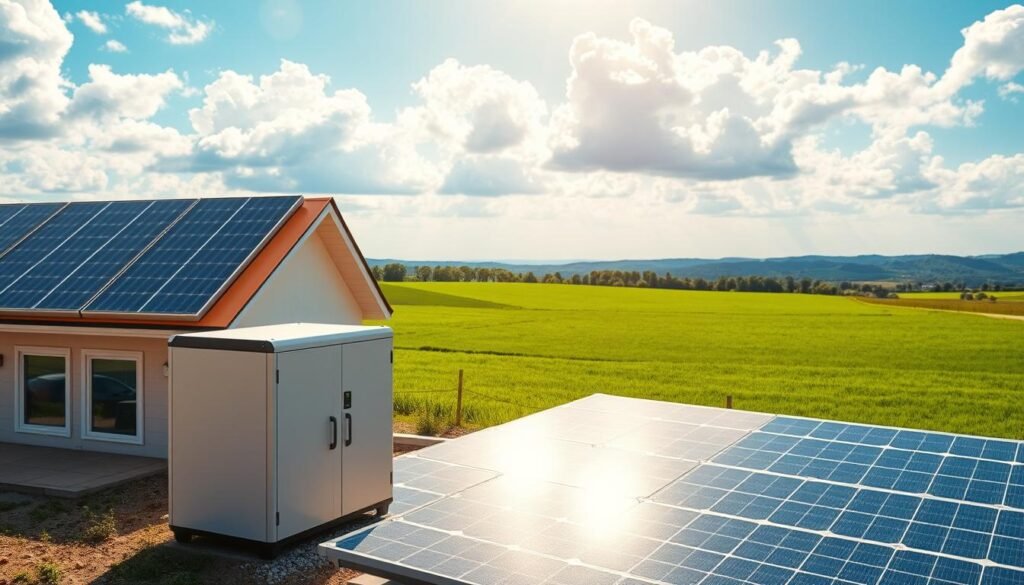
Solar energy storage systems capture extra energy from solar panels when they produce a lot. This extra energy is stored for later use. It makes the solar panel system more efficient.
This stored energy is usually in battery form. It’s used when there’s little solar energy. This keeps the power supply steady.
Ensuring Power Availability During Nighttime Hours
Solar energy storage systems are vital at night when solar panels don’t work. They store energy from the day for use at night. This way, homes and businesses have power all day and night.
| Time of Day | Solar Production | Energy Storage Status |
|---|---|---|
| Daytime | High | Charging |
| Nighttime | Low/Zero | Discharging |
Managing Seasonal and Weather-Related Variations
Solar energy changes a lot with the seasons and weather. Solar energy storage systems help by storing extra energy when it’s plentiful. This energy is used when it’s scarce.
This is very important in places with big changes in sunlight throughout the year. It keeps the power supply steady. This is what makes solar energy storage systems key to true energy independence.
Essential Benefits of Adding Storage to Your Off-Grid Solar System
Adding energy storage to off-grid solar systems makes power supply consistent and reliable. This is key for homes and businesses that rely on solar energy.
Energy storage brings many benefits to off-grid solar systems. It improves performance and reliability. This makes it essential for those wanting energy independence.
Uninterrupted 24/7 Power Access
Energy storage lets you have power anytime, even when it’s not sunny. This means you can power your home, business, or other needs without interruption.
Protection Against Cloudy Days and Weather Events
It also protects against power loss on cloudy days or during bad weather. By storing energy when it’s sunny, you have a steady power supply even when it’s not.
Load Management and Peak Demand Handling
Energy storage helps manage energy use and peak demand. This prevents power shortages when you need it most. It ensures all your devices and appliances work well.
Maximizing Solar Panel Investment Through Energy Capture
Energy storage captures and uses extra energy from solar panels. This boosts your solar system’s efficiency and gives you a better return on investment.
| Benefits | Description | Impact |
|---|---|---|
| Uninterrupted 24/7 Power Access | Ensures power availability at all times | High |
| Protection Against Cloudy Days and Weather Events | Provides stable power during adverse weather | High |
| Load Management and Peak Demand Handling | Manages energy distribution efficiently | Medium |
| Maximizing Solar Panel Investment | Captures and utilizes excess energy | High |
Comparing Battery Technologies for Off-Grid Solar Storage
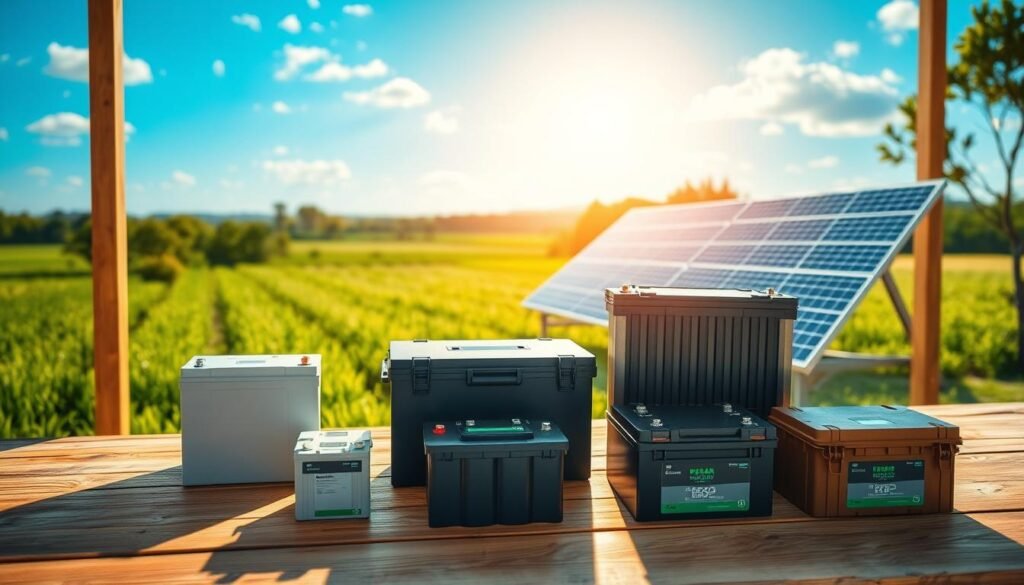
Choosing the right battery technology is key for off-grid solar systems. Each option has its own strengths. Knowing these helps you make a smart choice.
Lithium-Ion Battery Solutions
Lithium-ion batteries are top picks for off-grid solar. They’re efficient, last long, and need little upkeep. You can use most of their capacity without harming their life span.
Tesla Powerwall 3 for Off-Grid Applications
The Tesla Powerwall 3 is great for both on-grid and off-grid use. It’s high-performing, scalable, and works well with solar panels. It’s perfect for those wanting reliable energy storage.
LG Chem RESU Series
The LG Chem RESU Series is a top lithium-ion battery for off-grid solar. It’s compact and has high energy density. This makes it a flexible and efficient choice for solar systems.
Generac PWRcell System
The Generac PWRcell System is a modular lithium-ion battery. It’s designed for off-grid and grid-tied solar systems. Its modular design lets you size your system as needed.
Lead-Acid Battery Options
Lead-acid batteries are a traditional, cost-effective choice for off-grid solar. They might not be as efficient or last as long as lithium-ion. But, they’re a good option for some uses.
Flooded Lead-Acid Batteries
Flooded lead-acid batteries need regular upkeep to work well. They’re cheaper upfront but might not last as long as other types.
AGM Sealed Batteries
AGM sealed lead-acid batteries are easy to maintain. They’re durable and handle vibration well. This makes them great for off-grid places where it’s hard to get to batteries.
Advanced Alternative Technologies
New technologies like saltwater and flow batteries are emerging. They offer unique benefits for off-grid solar storage. These could be the future of energy storage.
Aquion Energy Saltwater Batteries
Aquion Energy saltwater batteries use saltwater to store energy. They’re seen as more sustainable and eco-friendly. They’re good for long-term energy storage in off-grid systems.
Redflow Flow Batteries
Redflow flow batteries use zinc-bromine to store energy. They’re known for long discharge and deep cycle ability. They’re ideal for off-grid systems with high energy needs.
How to Properly Size Your Off-Grid Storage System
Getting the right size for your off-grid solar storage system is key. It ensures you have a steady and efficient energy supply. You need to think about a few important things to make sure your system works well.
Calculating Your Daily Energy Requirements
To size your system right, start by figuring out your daily energy needs. Look at how much energy your appliances and devices use. Make a list of all devices, their power use, and how long they run each day.
- Identify all energy-consuming devices and appliances.
- Determine the wattage of each device.
- Calculate the total daily energy consumption in watt-hours (Wh).
For instance, a 20W LED light used for 5 hours a day uses 100 Wh. Add up the energy use of all your devices to find your daily need.
Determining Optimal Battery Capacity in Kilowatt-Hours
After figuring out your daily energy needs, find the right battery size. Battery size is measured in kilowatt-hours (kWh). Think about how much energy you need daily and how long you want the system to run without needing to recharge.
A solar generator can help a lot. It gives you power when the sun isn’t shining as much.
Planning for Days of Autonomy
Days of autonomy mean how long your system can run without solar power. This is important for bad weather or when you need to do maintenance. Aim for at least 3 to 5 days of autonomy.
Accounting for Depth of Discharge and Battery Longevity
Depth of discharge (DOD) shows how much of the battery’s capacity is used. Most batteries have a recommended DOD to last longer. For example, lithium-ion batteries should not go below 20% of their capacity.
| Battery Type | Recommended DOD | Typical Cycle Life |
|---|---|---|
| Lithium-Ion | 80% | 3000-5000 cycles |
| Lead-Acid | 50% | 500-1000 cycles |
By thinking about these points, you can make sure your off-grid system is the right size. This way, you get a reliable and efficient energy supply.
Investment Analysis: Costs and Financial Returns
Before investing in an off-grid solar energy storage system, it’s key to analyze costs and returns. You need to know the system’s components, savings, and incentives.
Initial System Costs Breakdown
The cost of an off-grid solar system varies based on size and components. Knowing the initial costs helps understand the investment needed.
- Solar panels
- Battery storage systems
- Inverter and charge controller
- Mounting hardware and wiring
- Installation costs
Each part affects the total cost. For example, solar panels cost between $2.50 to $3.50 per watt. Battery systems range from $400 to $1,000 per kilowatt-hour.
| Component | Cost Range |
|---|---|
| Solar Panels | $2.50 – $3.50 per watt |
| Battery Storage | $400 – $1,000 per kWh |
| Inverter/Charge Controller | $1,000 – $3,000 |
| Mounting Hardware & Wiring | $500 – $1,500 |
| Installation Costs | $2,000 – $5,000 |
Calculating Long-Term Energy Savings
Off-grid solar systems offer long-term energy savings. They reduce or eliminate grid power use.
To find energy savings, consider:
- Daily energy use
- System efficiency
- Local electricity rates
A typical home system can save $500 to $1,500 yearly. This depends on system size and local rates.
Maximizing Federal Tax Credits and State Incentives
The U.S. government has incentives for renewable energy, like the Solar Investment Tax Credit (ITC). This lets homeowners deduct a big part of the system’s cost from taxes.
States also offer incentives like rebates, tax credits, or property tax exemptions. Knowing your state’s incentives can help save more.
Understanding Total Lifetime Value
When looking at off-grid solar systems, consider the total lifetime value. This includes the system’s cost over its life, including maintenance and upgrades.
Understanding the total value helps make a better investment choice. It ensures you get the best return.
Installation Considerations and System Maintenance
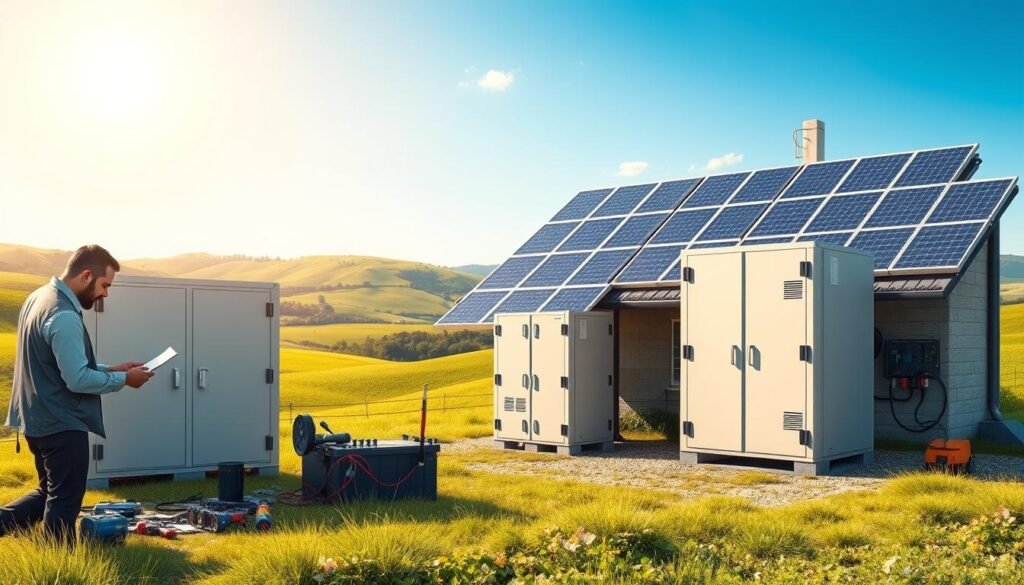
Off-grid solar energy storage systems need careful installation and regular maintenance for best performance. A well-designed and installed system boosts efficiency and extends equipment life.
Professional Installation vs. DIY Setup
Choosing between professional installation and DIY setup is a big decision. DIY might save money, but it can cause problems if you’re not skilled in electrical systems. Professional installers ensure the system is right, safe, and works well.
For those looking into professional services, solar energy experts offer great advice and guidance.
Meeting NEC Codes and Safety Requirements
Following the National Electric Code (NEC) and safety standards is key for safe off-grid solar systems. These rules protect against electrical dangers and ensure installations meet high standards. Meeting these requirements is both legal and essential for safety.
Establishing Routine Maintenance Schedules
Regular maintenance keeps your solar system running smoothly. It involves checking connections, battery health, and ensuring all parts are clean and working. A set maintenance schedule helps spot issues early, reducing downtime and extending system life.
Implementing System Monitoring and Performance Optimization
Monitoring your system is critical for understanding its performance. With monitoring tools, you can see energy production, use, and storage in real-time. This lets you make adjustments to improve performance, like using energy when it’s plentiful or tweaking the system to better meet your needs.
Proven Off-Grid Solar Storage Applications
Off-grid solar energy storage systems have changed how we get power in far-off places. They work well in many situations, giving steady power where the grid can’t reach.
These systems are key for many uses. They power homes in the wilderness, help businesses, and act as emergency backups.
Remote Home Power Systems
For homes far from cities, off-grid solar is a great power source. It lets homeowners make their own electricity, cutting down on diesel use and pollution.
Many remote homes now use off-grid solar. They enjoy being energy independent and save money on energy.
Off-Grid Commercial and Agricultural Operations
Off-grid solar is also used in businesses and farms. It gives a steady power source for different needs. This cuts down energy costs and boosts resilience.
It powers irrigation, lights, and tools in farms. It also helps remote businesses run smoothly.
Emergency Backup and Disaster Preparedness
Off-grid solar systems also act as emergency power during disasters and grid failures. They keep important systems running when the power goes out.
This is very important for areas hit by natural disasters. Reliable backup power can save lives.
Documented Performance Results and User Experiences
Many success stories prove off-grid solar systems work well. Case studies and happy customer stories show their reliability and efficiency.
These stories offer insights into using off-grid solar. They help others make informed choices about these systems.
Conclusion
Getting reliable off-grid power is more than just solar panels. It needs a full energy storage solution. This way, people can have a steady power supply, even when it’s dark.
Solar energy storage systems save extra energy from solar panels. This lets people use it later, making their solar investment worth it. Many solar resources show how important this is for power at night and through the seasons.
Using solar energy storage also boosts energy independence. This is a big plus for those wanting off-grid power. The right batteries and system size mean no power cuts, protection from weather, and better energy use.
As we move towards renewable energy, solar energy storage will become even more vital. For those investing in off-grid solar, knowing about energy storage is key. Check out advanced energy storage solutions for real energy freedom and reliable power.