
Are you setting up an off-grid solar system? You need a battery that’s reliable and won’t hold you back. Lithium battery tech, like LiFePO4 and NMC, offers better efficiency and lasts longer than old lead-acid batteries.
In remote areas, these benefits are huge. Lighter batteries save on shipping and storage costs. Plus, they come with smart systems that cut down on upkeep. You can even check on them from afar, thanks to remote monitoring.
While they cost more upfront, lithium batteries are cheaper in the long run. They can handle more charge and last longer, meaning you won’t need to replace them as often. This makes them a smart choice for keeping your solar system running strong.
Key Takeaways
- Lithium battery systems offer higher round-trip efficiency (90–95%) than lead-acid.
- LiFePO4 and NMC chemistries power compact, lighter solar battery storage for remote sites.
- Integrated BMS and remote monitoring reduce maintenance and downtime.
- Brands like Tesla, Enphase, Panasonic, LG, and Generac show real-world performance and warranties.
- Higher upfront cost is offset by longer life, higher usable capacity, and lower total cost of ownership.
What an Off-Grid Solar System Requires from Energy Storage
You need storage that delivers dependable power when the sun is down. Off-grid systems require batteries that offer consistent power, quick response, and long life. It’s important to choose technology that minimizes service interruptions in remote areas.
Reliability and consistent backup power in remote locations
Backup power is essential for cabins, rural homes, and critical loads. Lithium systems from Tesla, Panasonic, and EcoFlow have high discharge efficiency. This means most captured energy is usable.
Pair these batteries with compatible inverters and a smart transfer switch. This ensures seamless auto-switchover during outages.
High usable capacity and depth of discharge for daily cycling
Daily cycling works best with high usable capacity. Modern lithium chemistries have a depth of discharge from 80% to 95%. This lets you draw more energy than with lead-acid.
This higher capacity lowers the need for a large pack size. It keeps performance steady even on cloudy days.
Low maintenance and remote monitoring for hard-to-reach sites
Low maintenance batteries eliminate tasks like watering and routine equalization. Built-in BMS features provide cell balancing, temperature protection, and state-of-charge reporting. This protects the battery’s lifespan.
Remote monitoring from brands like Enphase and EcoFlow reduces site visits. It speeds up fault diagnosis, cutting downtime and operational cost.
For a practical guide on off-grid setups and compatible hardware, visit off-grid solar power systems explained. It covers sizing, hybrid generator options, and efficient battery-backup strategies.
| Requirement | What to look for | Why it matters |
|---|---|---|
| Backup power reliability | High discharge efficiency, auto-switchover, tested inverters | Maintains critical loads without manual intervention |
| Depth of discharge | 80–95% DoD for lithium; avoid deep cycling limits of lead-acid | Increases usable capacity and reduces needed bank size |
| Usable capacity | Match daily consumption plus 2–3 cloudy days reserve | Prevents energy shortfalls during extended low production |
| Low maintenance batteries | Sealed lithium chemistries with BMS | Reduces visits and lowers lifecycle operating cost |
| Remote monitoring | Cloud telemetry, alerts, state-of-charge reporting | Speeds diagnostics and keeps remote sites operational |
| Compatibility | Integrated solutions: inverter, charge controller, battery | Ensures efficient charging and reliable system behavior |
lithium battery: Core Advantages for Off-Grid Solar
You’re looking for a storage solution that captures more solar energy, fits your space, and lasts long. Lithium batteries excel in these areas. They let you design systems that need less capacity to meet the same demand.
High round-trip efficiency that preserves more generated power
Lithium systems have a round-trip efficiency of 90–95%. This means you lose only a small part of the solar energy when charging and using it. You get to keep more power for when the sun isn’t shining.
Lead-acid batteries, on the other hand, have an efficiency of 70–80%. They waste more of the solar energy you produce.
Higher usable capacity with deep depth of discharge (DoD ~80–95%)
Lithium batteries can handle a deep discharge of 80% to 95%. This lets you use a bigger part of the stored energy each day. You need less weight and space to meet your energy needs.
You’ll install fewer kilowatt-hours to get the same amount of usable energy. This is compared to traditional lead-acid batteries.
Longer cycle life and longer warranty periods vs. lead-acid
Lithium batteries last for thousands to over ten thousand cycles. LiFePO4 packs can go up to 6,000 cycles at 80% DoD. They aim for 10–15 years of service in homes.
Manufacturers offer longer warranties than lead-acid batteries. Residential and commercial lithium systems often come with warranties of ten years or more. This reduces the need for replacements and makes planning easier for off-grid projects.
Energy Density and Space Savings for Compact Installations
When planning an off-grid battery array, energy density is key. Higher energy density means smaller batteries, less weight, and less space needed. This is great for tight spots like rooftops, tiny homes, and remote cabins.
Lithium batteries have an energy density of 150–250 Wh/kg. Lead-acid batteries are around 30–50 Wh/kg. This difference is important when space and weight are limited.
A smaller battery footprint saves money on enclosures and shipping. Lighter batteries are easier to handle and need less space for racks or cabinets. This also cuts down on freight costs and installation time.
To size a 10 kWh system, consider real numbers. Lithium batteries are about 90% usable, so you need around 11–12 kWh nominal. That’s roughly 44–80 kg of battery mass. Lead-acid batteries, being only 50% usable, require about 20 kWh nominal, making them much larger and heavier.
Brands like Tesla Powerwall and MENRED LFP.6144.W show how modular systems can be. You can stack lithium modules to reach your target capacity quickly. This is faster than installing big strings of lead-acid batteries.
Here’s a quick comparison to help you see the differences for a 10 kWh goal.
| Parameter | Lithium (typical) | Lead-Acid (typical) |
|---|---|---|
| Energy density (Wh/kg) | 150–250 Wh/kg | 30–50 Wh/kg |
| Required nominal capacity for 10 kWh usable | ≈11–12 kWh | ≈20 kWh |
| Estimated mass for nominal bank | ≈44–80 kg | ≈400–670 kg |
| Impact on battery footprint | Small cabinet, modular racks | Large cabinets or multiple batteries |
| Logistics and installation | Lower shipping cost, easier handling | Higher freight and labor needs |
Your choice impacts more than just weight. Higher energy density means faster installs, lower costs, and better fits for tight spaces. Think about these factors when choosing between lithium and lead-acid for off-grid projects.
Lifecycle Cost and Return on Investment for Off-Grid Projects
Choosing between battery types is about today’s cost versus tomorrow’s. The upfront price is clear, but lifecycle cost paints the full picture. Consider replacement cycles, maintenance, and how incentives affect your decision.
Residential lithium battery systems cost between $10,000 and $30,000. Lead-acid systems start at $5,000 to $15,000. The lower initial cost of lead-acid might seem better, but it needs more replacements and upkeep.
Think about the total cost over 10 to 15 years. Lithium batteries last thousands of cycles, reducing replacement needs. Lead-acid batteries last 3–5 years with fewer cycles. Over time, lithium’s lower replacement costs make it more cost-effective.
Here’s a simple table to show savings. It compares upfront costs, service events, and lifecycle costs for a 10 kWh system. Numbers vary by brand, usage, and local rates, but it shows typical differences.
| Metric | Lithium (10 kWh usable) | Lead-Acid (10 kWh usable) |
|---|---|---|
| Typical upfront cost | $15,000 | $8,000 |
| Estimated lifespan | 10–15 years (3,000–8,000 cycles) | 3–5 years (500–1,000 cycles) |
| Maintenance/servicing events | Low, occasional BMS checks | Frequent watering, equalization, replacements |
| Replacement count in 15 years | 0–1 | 3–5 |
| Estimated total cost of ownership | $16,000–$20,000 | $20,000–$35,000 |
| Relative battery ROI | Higher over time | Lower due to replacements |
Battery incentives can make payback faster. The federal tax credit for battery installations with solar can lower upfront costs. Local rebates and utility programs can also reduce costs.
To figure out your payback, consider incentives, cycle counts, and maintenance. This will show how total cost and ROI change. You’ll pick the best option for your budget and goals.
Performance Across Temperatures and Environmental Conditions
When picking batteries for off-grid systems, temperature matters a lot. The battery’s temperature range affects how much energy you can use each day. It also decides what extra protection you need to avoid damage.
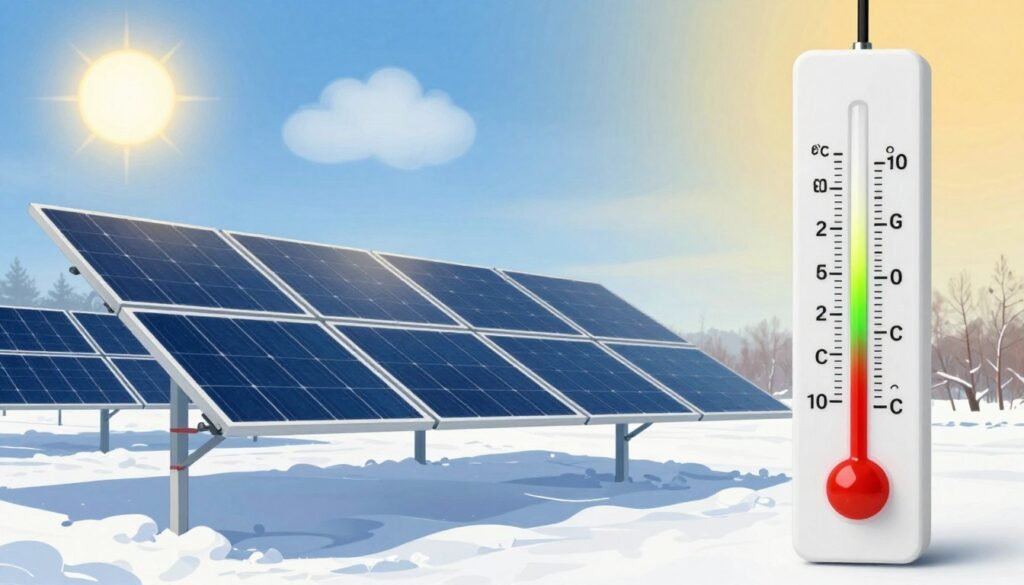
Operating ranges for common chemistries
LiFePO4 cells work well in a wide range of temperatures. They can discharge safely from -10°C to 50°C. Charging starts near 0°C and goes up to 50°C, depending on the maker.
NMC packs have similar discharge ranges but need tighter temperature control. This is because temperatures can change quickly.
Cold-weather charging considerations
Charging batteries in cold weather can cause lithium plating. This reduces capacity and can damage the battery permanently. It’s best to avoid charging in cold unless the battery has special heaters or a charge-lockout.
Many suppliers, like Battle Born and Victron, suggest using external heaters or insulated boxes for very cold sites.
Enclosures, insulation, and thermal management options
Insulated boxes and placing batteries near living areas can help. Reflective covers also reduce temperature changes without using power. These simple steps can work well for most places.
In very cold or hot places, active thermal management is key. Use thermostatic heaters in cold and fans or liquid cooling in hot. LiFePO4 is less prone to overheating than NMC, but you should plan for ventilation and temperature sensors.
| Item | Typical Range | When to Use | Impact on Performance |
|---|---|---|---|
| LiFePO4 discharge | -10°C to 50°C | Most off-grid systems | Stable capacity, long cycle life |
| LiFePO4 charging | 0°C to 50°C | Require heaters or lockout below 0°C | Prevents lithium plating and capacity loss |
| NMC operating | -5°C to 45°C | Controlled installations with active cooling | Higher thermal sensitivity; monitor closely |
| Passive thermal management | Insulation, placement | Mild to moderate climates | Low energy cost; reduces temp swings |
| Active thermal management | Heaters, fans, liquid cooling | Extreme cold or heat | Allows safe charging and full output |
Match your thermal management plan to your site’s data. Keep an eye on battery temperatures and follow the maker’s limits. Choose enclosures that fit your climate to protect performance and lifespan.
Safety, Chemistry Choices, and Thermal Management
Choosing the right batteries for off-grid systems is key. It affects cost, lifespan, and how you design the system. Below, you’ll find contrasts and practical tips to reduce risks and improve system uptime.
LiFePO4 vs. NMC trade-offs
LiFePO4 and NMC differ in energy density and weight. NMC has higher energy density, making packs smaller and saving transport costs. LiFePO4, on the other hand, offers longer cycle life and consistent performance.
LiFePO4 is often cheaper per cycle, making it a good choice for many off-grid systems. It has lower cobalt content, easier recycling, and predictable aging. NMC might be better for mobile systems due to its weight, but LFP is more suitable for stationary setups.
Thermal runaway risk and mitigation
Thermal runaway is a big safety worry with lithium batteries. It can start from overcharge, internal short, or physical damage. To reduce this risk, careful system design is essential.
Modern batteries use BMS protection to manage cell voltages and prevent unsafe temperatures. Certified enclosures, ventilation paths, and module spacing help limit heat spread. Regular checks and correct wiring practices also lower abuse risks.
Why many installers prefer LFP chemistries
LFP chemistries are popular for off-grid arrays. They resist thermal runaway better than NMC, handling higher temperatures and wider charge/discharge patterns.
For long service life and low fire risk, choose LFP with a strong BMS. This combo enhances battery safety and eases operational demands in remote areas.
| Factor | LiFePO4 (LFP) | NMC |
|---|---|---|
| Energy density | Lower (150–200 Wh/kg) | Higher (180–250 Wh/kg) |
| Thermal stability | High; lower thermal runaway risk | Moderate; higher sensitivity to abuse |
| Cycle life | Long (3,000–10,000+ cycles) | Moderate (1,000–5,000 cycles) |
| Cost per cycle | Lower over lifetime | Higher over lifetime |
| BMS protection needs | Essential but simpler tolerance | Essential with tighter controls |
System safety improves with the right chemistry choice, enclosure certification, and BMS protection. Plan for monitoring, ventilation, and regular checks to minimize thermal runaway risk. This way, you can enjoy LFP benefits for reliable off-grid systems.
Maintenance, Monitoring, and Reliability in Remote Installations
Your off-grid battery bank should run smoothly with little upkeep. A good BMS keeps an eye on voltage, current, and temperature. It makes sure all cells are balanced and shuts down if needed.
Many makers offer cloud platforms for remote monitoring. Companies like Tesla and Enphase give you real-time updates on your battery’s health. This lets you or your installer fix problems before they cause trouble.
Choosing low maintenance batteries saves money on remote sites. Unlike old-school batteries that need constant care, lithium ones are easy to manage. Just keep the terminals clean and make sure the area is well-ventilated.
The right BMS and remote tools help avoid problems and extend when you need to visit. Update your system regularly, set alerts, and check past performance. This way, you can avoid sudden breakdowns and keep your system running smoothly.
| Feature | Benefit for Remote Sites | Typical Example |
|---|---|---|
| Battery Management System (BMS) | Prevents overcharge, overdischarge, and thermal events | Cell balancing, temperature shutdowns |
| Remote battery monitoring | Reduces site visits and speeds fault response | Cloud alerts, SOC, cycle count, performance logs |
| Low maintenance batteries | Lower recurring O&M and fewer consumables | No watering, occasional terminal cleaning |
| Reliability off-grid | Higher availability and predictable backup performance | Long cycle life with consistent depth of discharge |
Scalability and System Design Flexibility for Different Off-Grid Needs
Plan your off-grid project to grow with you. Modular batteries let you add capacity in stages. This makes transport to remote sites simpler and lowers initial costs.
Match battery stacks to your inverter and charge controller from the start. Proper inverter integration makes parallel stacking easier. Choose inverters from reputable brands that support multi-unit operation for smooth expansion.
Design your system based on how you will use it. If you expect routine daily cycling, choose chemistries built for longevity and deep discharge. For occasional backup-only use, cost-sensitive options exist, but you may trade usable capacity and maintenance overhead.
Use a clear bill of materials that anticipates extra conduit, larger breakers, and room for additional racks. This reduces costly rework when you add modules or upgrade inverters to increase output and storage.
Keep the balance of system parts robust. Oversized cabling, flexible monitoring, and a BMS that accepts added modules help with future proofing. Smart monitoring gives you data to plan capacity increases confidently.
For projects that require both grid services and autonomy, hybrid solar systems offer flexible modes. Hybrid inverters provide grid interaction, frequency control, and the option to stack units for greater AC capacity when needs rise.
Compare lifecycle costs when sizing your system. LiFePO4 modules often win on cycle life and lower replacement frequency, supporting a lower levelized cost of energy over a decade of daily use.
Read a practical guide on scalable modular ESS planning for off-grid sites here: scalable off-grid BOM and modular ESS.
- Plan for growth: reserve space for extra battery racks and inverters.
- Specify components that work in parallel: BMS, MPPTs, and stackable inverters.
- Prioritize daily cycling battery design when regular use is expected.
Environmental Impact, Recycling, and Sustainability Considerations
When picking batteries for off-grid systems, think about the materials used and mining’s effects. Mining for lithium, nickel, and cobalt harms water, land, and local life. But, LFP batteries use less cobalt, which lowers risks and mining impact.
Investments in recycling and better methods aim to make reused metals cheaper. Keep up with recycling news and policy changes that help battery recycling. For more info, check out AISEN Solar Energy.
Old EV batteries can be used again. They can power backup systems or community grids. This use extends their life, cuts costs, and reduces emissions.
Choose batteries that last long and work well. Better efficiency and warranties mean more energy stored over time. This cuts down on emissions compared to less efficient batteries.
Recycling batteries is a big challenge. Current methods shred and chemically separate metals. Look for makers that make batteries easy to recycle and support take-back programs.
Here’s a quick guide to help you choose sustainable storage.
| Factor | What to Look For | Benefit to Your Project |
|---|---|---|
| Material footprint | Lower-cobalt chemistries like LiFePO4 | Reduced toxicity and lower lithium mining impact |
| End-of-life strategy | Manufacturer take-back and certified recycling | Improved battery recycling outcomes and lower disposal risk |
| Second use | Validated second-life batteries for stationary storage | Cost-effective backup and delayed material recovery |
| Operational efficiency | High round-trip efficiency, strong BMS | Lower lifecycle emissions and better energy yield |
| Longevity | Designed for long cycle life and durability | Fewer replacements, less raw-material demand |
Planning for sustainable storage helps clean the air and strengthens communities. Designing for reuse and recycling reduces environmental costs of off-grid power.
Conclusion
Choosing lithium battery technology for off-grid solar in the United States offers many benefits. You get higher efficiency, better energy density, and more usable battery life. This means you’ll need to replace batteries less often, use smaller spaces, and save money over time.
When picking batteries for off-grid solar, consider the initial cost and total cost over time. Look at federal tax credits, warranties, and features like BMS and thermal management. LiFePO4 batteries are safer, last longer, and perform well, making them a good choice for daily use.
If you want a reliable system with little upkeep, LiFePO4 lithium batteries are the best choice. But if you’re on a tight budget and only need occasional backup, lead-acid might work. Always get quotes from trusted installers and match the system to your needs for the best results.