The sun gives us constant warmth and light. This natural gift powers our homes and businesses all day, every day. It’s a big step towards a greener life for many Americans.
When sunlight hits special panels, it makes electricity for our needs. This electricity lights up our rooms and runs our important appliances. Soon, you’ll see your utility bills drop a lot.
Using solar energy helps you save money on your bills. It keeps your home running smoothly and helps the planet. It’s a smart way to cut down on your monthly expenses.
Key Takeaways
- Sunlight serves as a clean source for heat and light.
- Households use this resource to generate electricity.
- Businesses benefit from lower monthly utility expenses.
- Radiant heat provides natural warmth for building interiors.
- Adopting green technology protects the local environment.
- Advanced systems offer a reliable long-term financial return.
What Is Solar Energy and Why It Matters Today
The world is moving towards cleaner energy, and solar energy is leading the way. This change is to cut down on fossil fuels and fight climate change.
Solar energy is key in the global energy scene. It’s not just for homes; businesses and industries are also jumping on the solar bandwagon fast.
Defining Solar Energy and Its Sources
Solar energy comes from the sun’s rays. We use solar panels or systems to capture it. The main source is the sun itself.
Solar panels turn sunlight into electricity. This energy can power our homes, businesses, and more. Using solar energy cuts down on fossil fuel use, lowering emissions and making our environment cleaner.
The Growing Role of Solar Power in America
Solar power is growing fast in America. Solar PV capacity has increased a lot in Canada and the U.S. over the years. For example, over 3,000 homes and businesses in Saskatchewan use solar power.
The cost of solar tech is going down. Governments offer incentives, and more people know about renewable energy’s benefits. So, solar energy is becoming a big part of America’s energy mix.
Why Homeowners and Businesses Are Making the Switch
People and companies are choosing solar energy for many reasons. One big reason is saving money on energy costs. Solar lets them make their own electricity, cutting down on grid use and bills.
Solar energy is also cleaner than traditional sources. It helps lower greenhouse gas emissions. This is good for the planet and for those who care about it.
Switching to solar can also increase property value. Plus, it can lead to savings through incentives and tax credits.
How Solar Panels Convert Sunlight Into Electricity
It’s important to know how solar panels work to understand solar energy’s benefits. Solar photovoltaic (PV) systems turn the sun’s energy into electricity. This involves several steps and components.
The Photovoltaic Effect Explained
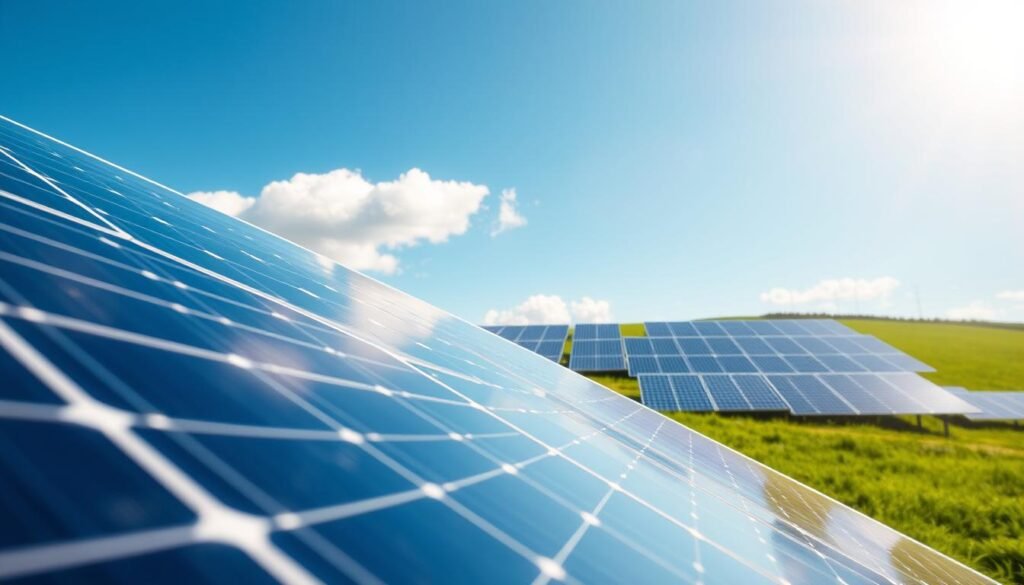
The photovoltaic effect changes light into electrical energy. This happens in materials like silicon, used in solar cells. When sunlight hits a cell, it excites electrons, creating an electrical current.
From Silicon Cells to Usable Power
Silicon cells are the core of solar panels. Made from silicon, a common and safe material, these cells turn sunlight into direct current (DC) electricity. Many cells form a panel, and panels make up a solar array.
The DC power from solar panels isn’t what homes and businesses use. So, it must be changed to alternating current (AC) electricity.
Understanding DC to AC Conversion
An inverter changes DC to AC power. This device is key for using solar panel electricity in homes and businesses. There are various inverters, like string, micro, and hybrid types.
| Inverter Type | Description | Application |
|---|---|---|
| String Inverters | Connect multiple solar panels together in a series | Residential and commercial solar systems |
| Microinverters | Convert DC to AC power at the individual panel level | Residential solar systems, with shading issues |
| Hybrid Inverters | Combine the functions of a string inverter and a battery charger | Residential and commercial solar systems with battery storage |
In summary, solar panels turn sunlight into electricity through the photovoltaic effect. They use silicon cells to make DC power, which is then changed to AC power by an inverter. Knowing this helps us see the value and function of solar energy systems.
Essential Components of Solar Power Systems
To use solar energy well, knowing the parts of a solar power system is key. A typical system includes solar panels, racking, inverters, and electrical gear. These connect the system to your home and the grid.
For more details on solar parts, check out solar components 101. It’s a great guide.
Solar Panel Types: Monocrystalline, Polycrystalline, and Thin-Film
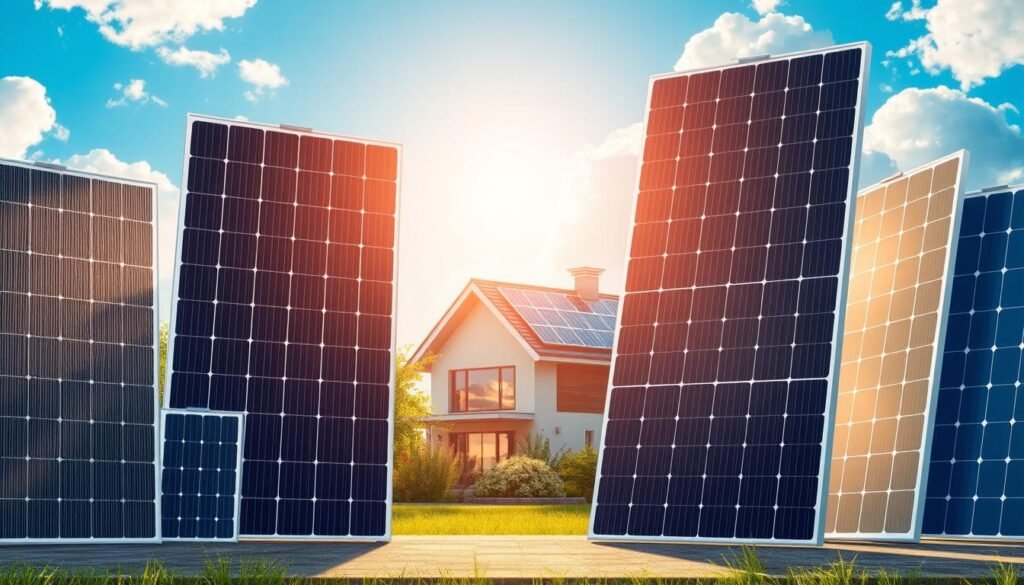
Solar panels are the most visible part. They come in monocrystalline, polycrystalline, and thin-film types. Monocrystalline panels are efficient and look sleek, making them popular for homes.
Polycrystalline panels are cheaper but less efficient. Thin-film panels are the least efficient but flexible for various uses.
Solar Inverters: String, Micro, and Hybrid Options
Solar inverters are key for changing DC power from panels to AC power for homes and businesses. There are string, micro, and hybrid inverters.
String inverters are common and cost-effective. Microinverters optimize each panel’s performance. Hybrid inverters offer both efficiency and flexibility.
Battery Storage Systems Like Tesla Powerwall and LG Chem
Battery storage systems are gaining popularity. They store extra energy for use at night or during outages. Brands like Tesla Powerwall and LG Chem provide reliable solutions.
These systems offer backup power and help lower peak demand charges. They work well with solar panels for more energy independence.
Balance of System Components
Other important parts of a solar system include mounting, wiring, disconnects, and monitoring systems. These ensure the system works safely and efficiently.
Proper installation and upkeep of these parts are vital. They help extend the system’s life and performance.
How Solar Power Systems Work for Residential Homes
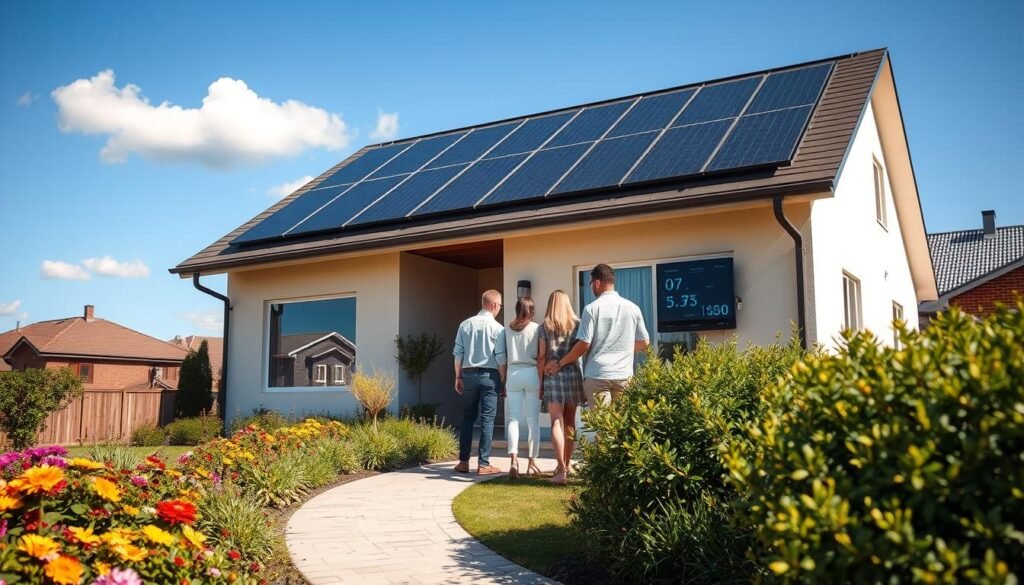
As people worry more about the environment, solar power for homes is becoming popular. It’s a clean, efficient, and affordable way to make electricity. Solar systems for homes help cut down on carbon emissions.
Grid-tied solar PV systems send electricity to your home’s panel. This power runs your home. Any extra goes back to the grid. This can lower your bills and let you earn credits through net metering.
Grid-Connected Solar Systems and Net Metering Benefits
Grid-connected solar systems are the most common for homes. They link to the grid and let you use grid power when needed. Net metering is a big plus, letting you sell extra energy and lower your bills.
- Reduced energy bills through net metering
- Increased energy independence
- Potential to earn credits for excess energy produced
Calculating Your Home’s Energy Requirements
To find the right solar system size, you need to know your home’s energy use. This is usually measured in kilowatt-hours (kWh).
Looking at your past bills can show your average monthly use. This helps solar installers design a system that fits your needs.
Peak Sun Hours and Energy Production Estimates
The energy a solar system can make depends on peak sun hours (PSH). PSH is when the sun is strongest, usually between 9 am and 3 pm.
Installers use PSH data to guess how much energy your system will make. This helps figure out the system’s size and how much power it can produce.
Backup Power During Grid Outages
If you want power when the grid is down, solar generators or systems like Tesla Powerwall can help. They store extra energy for use at night or during outages.
Understanding solar power systems for homes helps you make smart choices. It lets you enjoy the benefits of solar energy.
Powering Commercial Buildings with Solar Energy
Commercial solar installations are becoming a key part of the shift to cleaner energy. They offer businesses a green and cost-effective way to power their operations.
In Saskatchewan, most solar energy will come from big projects. This shows a big move towards bigger solar setups for businesses. Across the United States, more businesses are using solar energy to run their operations.
Rooftop Commercial Solar Installations
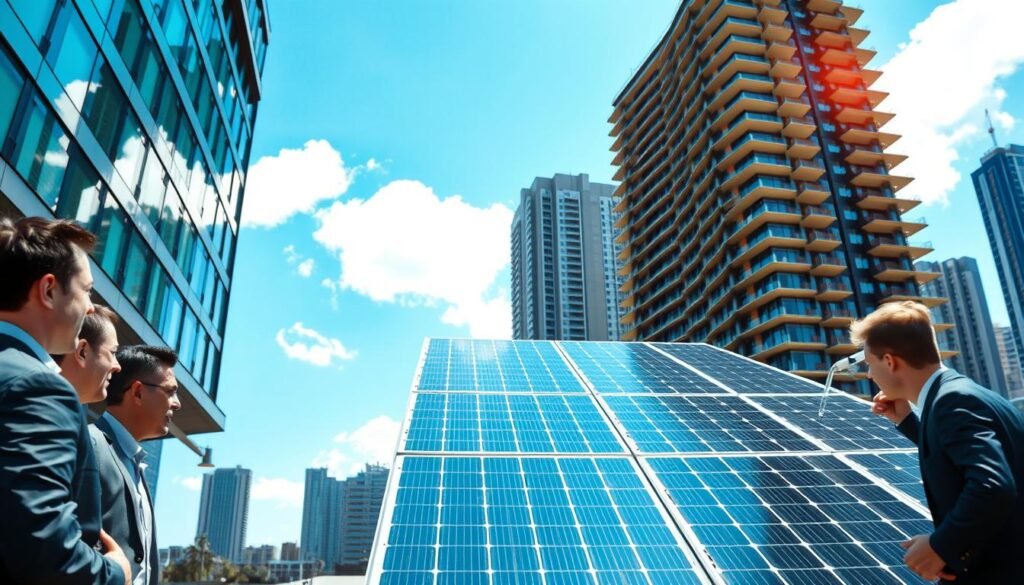
Rooftop solar is popular for commercial buildings, mainly in cities where space is tight. These setups can be tailored to meet a business’s energy needs. This reduces the need for grid power and cuts down on energy costs.
For instance, a big retail store can put solar panels on its roof. These panels can power the store’s daily needs like lights, coolers, and heating systems.
Ground-Mounted Systems for Large Properties
Ground-mounted solar systems are great for big properties with land. They can make a lot of electricity, perfect for businesses that use a lot of energy.
These systems are also easy to grow with your business. You can add more panels as your energy needs increase.
Solar Carports and Dual-Purpose Structures
Solar carports are a smart choice for businesses. They generate solar energy and offer parking for employees and customers. These structures can also help cool down cities.
They serve two purposes: providing shade for cars and making electricity.
Demand Charge Reduction for Businesses
Commercial solar installations help businesses save on demand charges. Demand charges are fees for the highest amount of electricity used in a short time.
By making their own electricity, businesses can lower their peak demand. This leads to lower demand charges and big savings.
| Type of Installation | Benefits | Typical Applications |
|---|---|---|
| Rooftop Solar | Space-efficient, reduces energy costs | Urban commercial buildings, retail stores |
| Ground-Mounted Solar | Scalable, high energy output | Large commercial properties, industrial sites |
| Solar Carports | Dual-purpose, provides shade and electricity | Businesses with large parking areas |
Complete Cost Analysis of Going Solar
Thinking about solar energy is a big step for homeowners and businesses. It’s important to know the costs involved. This includes the initial investment, ongoing expenses, and the savings you can make.
The cost of solar systems changes based on several things. These are the system’s size and type, and the components used. Understanding these costs helps you make a smart choice.
Residential Solar System Costs in 2024
In 2024, the cost of solar systems for homes can be between $15,000 and $30,000 or more. This depends on the system’s size, the quality of the panels, and the installation company.
- System size: Larger systems cost more upfront but may provide more significant long-term savings.
- Panel quality: High-efficiency panels are more expensive but can generate more electricity per square foot.
- Installation costs: Labor costs vary by location and installer.
Commercial Solar Installation Pricing
Commercial solar systems are bigger and more complex. This makes them more expensive. Costs can range from $50,000 to several million dollars for large installations.
Several factors affect commercial solar pricing. These include:
- System size and complexity
- Type and quality of equipment
- Installation company and labor costs
- Permitting and inspection fees
Price Per Watt and Total System Cost Factors
The price per watt is a key way to compare solar system costs. For homes, it’s usually between $2.50 and $3.50 per watt.
Several factors influence the total cost of a solar system. These include:
- Hardware costs (panels, inverters, mounting hardware)
- Soft costs (permitting, inspection, installation labor)
- Incentives and rebates that can reduce the overall cost
| Cost Component | Residential | Commercial |
|---|---|---|
| Hardware Costs | $8,000 – $15,000 | $40,000 – $200,000+ |
| Soft Costs | $2,000 – $5,000 | $10,000 – $50,000+ |
| Total Cost | $10,000 – $20,000 | $50,000 – $250,000+ |
Payback Period and 25-Year Savings Projections
The time it takes to get back your investment in solar systems varies. It depends on local electricity rates, system size, and available incentives.
On average, homeowners can see a return on investment in 5-10 years. Over 25 years, they can save $20,000 to $50,000 or more on electricity bills. This depends on their energy use and local rates.
Tax Credits, Rebates, and Financing Options
Investing in solar energy is now more affordable thanks to tax credits, rebates, and financing options. Governments and financial institutions are giving incentives to encourage solar power use. This is because the demand for renewable energy is growing.
Federal Solar Investment Tax Credit
The 30% Federal Solar Investment Tax Credit is a big help for those thinking about solar energy. It lets you deduct 30% of your solar system’s cost from your federal taxes. For example, a $20,000 system could get you a $6,000 tax credit.
To find out more about this credit and other solar incentives, check out Aisen Solar Energy.
State and Local Incentive Programs
Many states and local governments also offer incentives for solar energy. These can include rebates, property tax exemptions, and sales tax exemptions. For instance, some states give rebates for part of the system’s cost. Others offer incentives based on how much electricity you generate.
- Rebates for solar panel systems
- Property tax exemptions for solar energy systems
- Sales tax exemptions on solar equipment purchases
Solar Loans, Leases, and Power Purchase Agreements
If you can’t afford the upfront cost of solar, there are financing options. Solar loans let you borrow money for installations, often with good interest rates. Solar leases and PPAs mean you can host solar systems without upfront costs. You pay for the electricity instead.
| Financing Option | Description | Benefits |
|---|---|---|
| Solar Loans | Borrow money for solar panel installation | Own the system, tax benefits |
| Solar Leases | Lease solar panels from a third-party owner | Low or no upfront costs, fixed monthly payments |
| Power Purchase Agreements (PPAs) | Purchase electricity generated by the solar system | No upfront costs, predictable energy costs |
PACE Financing for Property Owners
Property Assessed Clean Energy (PACE) financing is another option for property owners. It lets you borrow money for solar installations and repay through your property tax bill. This option often has long repayment terms and low interest rates, making it appealing for solar adoption.
By looking into these tax credits, rebates, and financing options, you can make solar energy more affordable. Whether through federal and state incentives or creative financing, going solar is becoming easier and more accessible.
Key Benefits of Installing Solar Energy Systems
Using solar power has many benefits for the environment and your wallet. It helps cut down on the need for traditional energy. This leads to savings and helps the planet.
Eliminating or Reducing Monthly Electric Bills
One big plus of solar energy is lower or no electric bills. Solar panels make electricity from sunlight. This means less power from the grid.
For example, a home solar system can save $400 to $1,000 a year. This depends on how much energy you use and the system’s size.
Protection Against Rising Utility Rates
Utility costs can go up over time. Solar energy lets you make your own power. This protects you from rate hikes.
Environmental Benefits and Sustainability
Solar energy is clean and doesn’t pollute. It helps lower carbon emissions and fights climate change. Plus, it uses very little water to work.
Switching to solar is good for the planet. It reduces harmful emissions and saves water. This makes solar energy a key part of a green future.
Boosting Property Value and Market Appeal
Solar panels can make your property more valuable and appealing. They make homes and buildings look modern and attractive.
Research shows homes with solar panels sell for more. They also might bring in more rent. So, solar energy is a smart choice for property owners.
The Solar Installation Process From Start to Finish
Installing solar panels is a detailed process. It ensures a smooth switch to solar energy. This process is tailored to meet the energy needs of homes and businesses.
Initial Consultation and Energy Audit
The first step is a consultation with a solar expert. They assess your energy needs and check your property’s solar readiness. An energy audit is often part of this step.
The audit looks at your energy use and property details. The expert will discuss your energy goals. This info helps design a solar system that fits your needs.
Custom System Design and Proposal
After the audit, a custom solar system design is made. It considers your energy needs, roof size, and local codes. The proposal will detail the system’s size, cost, and energy output.
The proposal will list the solar panels, solar inverters, and other parts. It also breaks down costs and estimates the system’s payback time.
Permitting, Approvals, and HOA Requirements
Before starting, you need permits and approvals. This ensures your system meets local codes.
Homeowners’ associations (HOAs) might have rules for solar installations. Your installer will handle permits and ensure compliance.
Installation Timeline and Grid Interconnection
Installing the system takes a few days to a week. It depends on the system’s size and complexity. After installation, an inspection and grid connection follow.
Grid interconnection involves working with your utility company. It ensures your system is safely integrated into the grid. This might include using a hybrid solar inverter.
| Installation Stage | Duration | Key Activities |
|---|---|---|
| Initial Consultation | 1-2 hours | Energy audit, property assessment |
| System Design and Proposal | 1-3 days | Custom system design, proposal preparation |
| Permitting and Approvals | 1-4 weeks | Obtaining necessary permits, HOA approvals |
| Installation | 3-7 days | Solar panel installation, inverter installation |
| Grid Interconnection | 1-2 weeks | Inspection, grid connection, final testing |
Maintaining Your Solar System for Maximum Performance
To get the most from your solar investment, keep it well-maintained and monitored. A well-kept solar system produces more energy and lasts longer. This means a better return on your investment.
Cleaning Requirements and Best Practices
Cleaning your solar panels is key to remove dirt and debris. This can greatly reduce energy production. How often you need to clean depends on your location and the environment.
- Check your panels often for dirt or debris.
- Clean them gently with water and a soft brush or cloth.
- Stay away from harsh chemicals or abrasive materials that could harm the panels.
For most, cleaning every 6 to 12 months is enough. But, this can change based on local conditions like pollen counts or dust storms.
Monitoring System Output and Efficiency
It’s important to watch your solar system’s performance closely. Most systems have software or apps to track energy production in real-time.
Key things to watch include:
- Daily energy production.
- System efficiency.
- Any error messages or alerts from the inverter or monitoring system.
Regular checks help spot problems early. This could be shading issues, inverter faults, or panel damage. This allows for quick action.
Manufacturer Warranties and Service Agreements
Knowing about warranties and service agreements for your solar system is key. Most solar panels have a 25-year performance warranty. Inverters usually have a 5 to 10-year warranty.
| Component | Typical Warranty Period | Coverage |
|---|---|---|
| Solar Panels | 25 years | Performance guarantee, material defects |
| Inverters | 5-10 years | Equipment failure, performance issues |
| Mounting Systems | 10-25 years | Material defects, structural integrity |
Reviewing these warranties and knowing what’s covered helps plan for maintenance and repairs.
Expected Lifespan and Degradation Rates
Solar panels lose efficiency over time. The average loss is about 0.5% to 1% each year.
This means after 25 years, a panel will produce 75% to 87.5% of its original power. Knowing this helps plan for your system’s long-term performance.
Conclusion
The United States is moving towards renewable energy, and solar power is a key player. It’s good for homes and businesses. Solar energy cuts down on electric bills and helps the planet.
Knowing how solar panels work and the parts of a system is important. There are also incentives to help you start using solar energy. It can even increase your property’s value.
The solar industry is growing, with better technology and lower costs. If you’re thinking about solar, learn about installation, upkeep, and financing. Going solar means a cleaner, greener future for all of us.