
Solar lighting systems are everywhere today. You see them at resorts, country clubs, and shopping districts. They are also used in corporate offices and government buildings. Homeowners love them for their convenience and savings.
The quality of your outdoor solar lighting is key to its lifespan. High-quality lights can last 5 to 10 years. But, cheaper models might need to be replaced in just 1 to 2 years. This shows how important your choice is.
Learning to care for your solar lights can really help. By following the right maintenance tips, you can make your lights last longer. This means you get more value and spend less on new lights.
Keeping your lights in good shape is up to you. Whether you own a home or manage a business, knowing how to care for your lights is vital. Proper maintenance ensures they work well every night and last for years.
This guide will teach you everything about making your solar lights last longer. You’ll learn about the technology and how to maintain them. By the end, you’ll know how to keep your lights shining bright for years.
Key Takeaways
- High-quality solar lights last 5 to 10 years while budget models last only 1 to 2 years
- Proper maintenance directly extends your solar light lifespan and reduces replacement costs
- Strategic placement improves how well your solar lighting systems perform
- Keeping panels clean and free from obstructions maximizes energy collection
- Battery management and weather protection are critical for long-term durability
- Regular maintenance practices keep your outdoor solar lighting working efficiently
- Understanding your solar lighting systems helps you make better care decisions
Understanding How Solar Light Technology Works
Your solar lighting system has three main parts. They work together to give you light outside. Each part is important for catching sunlight, storing energy, and turning it into light. Knowing how these systems work helps you keep them running well and last longer.
Solar lights start working at sunrise and keep going all night. They go from sunlight to light through a complex process. Understanding this helps you spot and fix problems early.
The Role of Photovoltaic Cells in Energy Conversion
Photovoltaic cells are at the start of your solar light. They catch sunlight and turn it into electricity. These cells use special materials that react to sunlight.
These cells work all day, making charge no matter the weather. On sunny days, they make more electricity. The size and quality of these cells affect how much energy your system gets.
How Battery Storage Powers Your Nighttime Illumination
The electricity from solar cells goes to the battery. Here, it changes from electrical to chemical form. Your battery keeps this energy until it’s dark.
When it gets dark, a sensor turns on the lights. The battery’s job is to keep the lights on. Keeping the battery charged is key to good performance.
The Function of LED Bulbs in Solar Lighting Systems
LED bulbs are the last step in your solar light system. They take the electricity from the battery and make light. They do this very efficiently, wasting little energy.
- LED bulbs make 300 to 500 lumens of warm light
- They produce light at about 3000K color temperature
- LED technology is very efficient
- Inside, semiconductors make electromagnetic energy as light
LED bulbs last a lot longer than old bulbs. Solar lights use LED because they stay bright and use little energy. This makes your lights last longer at night.
Strategic Placement for Optimal Solar Light Performance
Where you put your solar lights is key to their success. Many think their lights are broken when they don’t get enough sun. But, the right spot can make a big difference in how well they work.
Direct sunlight is essential for your solar lights. They need hours of sun each day to charge. The more sun they get, the brighter they’ll shine at night.
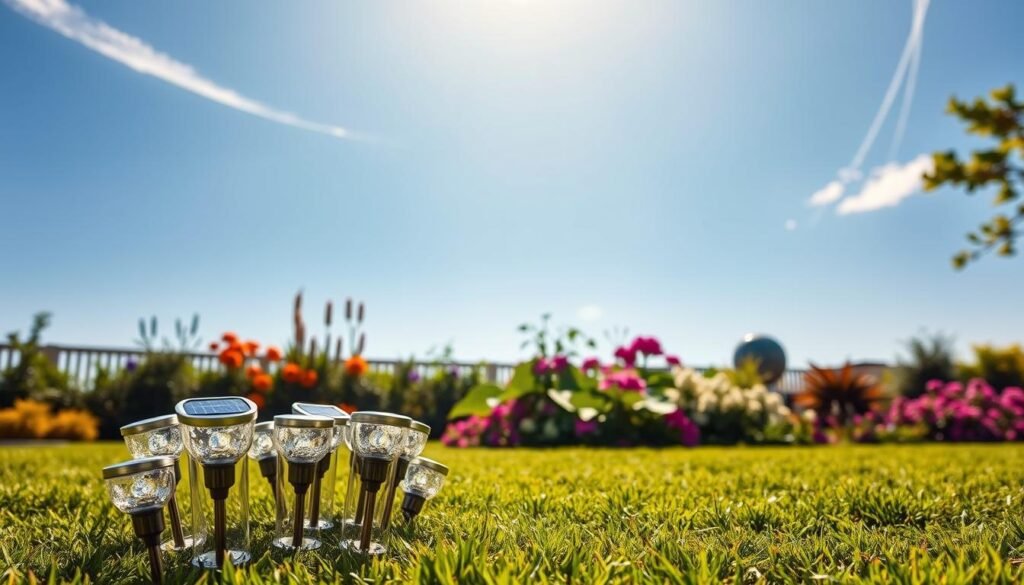
When picking a spot for your solar lights, look for areas that get sun all day. South-facing spots are best in the US because they get the most sun. Avoid places with shadows or near buildings.
Finding the Best Locations Around Your Property
Different solar lights need different spots. Take time to see where sun hits your yard at different times.
- Pathway lights work best in open areas along walkways where nothing blocks overhead sun
- Wall-mounted lights should face toward the sun’s daily path across your sky
- Garden lights need space away from tall plants that might grow and create shade later
- Deck and patio lights perform well in unshaded corners or open spaces
Planning for Long-Term Sunlight Access
Think about how your yard will change over time. Trees grow taller, and plants spread wider. Plan your solar light spots for the future.
| Location Type | Recommended Sunlight Hours | Performance Level |
|---|---|---|
| Open, unshaded areas | 6-8 hours daily | Excellent |
| Partially shaded (morning or evening) | 4-6 hours daily | Good |
| Mostly shaded or blocked | Less than 4 hours daily | Poor |
Your climate and location are important too. In cloudier areas, choose the sunniest spots. Where the sun shines more, you have more flexibility. Always choose spots with direct sunlight for the best performance.
Keeping Your Solar Panels Clean and Obstruction-Free
Your solar lights need clean panels to work well. Dust, dirt, and debris block sunlight, reducing their efficiency. This means your lights won’t shine as bright or last as long.
Weather, pollen, and nearby construction can make panels dirty. Without regular cleaning, your lights may not work properly at night. Cleaning your panels regularly is easy and keeps them working well.
Removing Dirt and Debris That Blocks Sunlight
Start by brushing off loose debris with a soft brush. Then, use a damp cloth with mild soap and warm water to clean the panels. Finish by drying them with a clean cloth to avoid water spots.
Clean your panels in the early morning or late evening when they’re cooler. This is safer and prevents damage. Avoid cleaning during the hottest part of the day.
- Brush away loose dirt with a soft brush
- Use warm soapy water and a damp cloth
- Dry with a lint-free cloth
- Clean during cooler parts of the day
- Monthly cleaning in dusty areas; quarterly in clean environments
Identifying and Eliminating Physical Obstructions
Keeping panels free from physical barriers is important. Check for things like overhanging branches or nearby walls that block sunlight.
Do a quarterly check on your solar lights. Look for new growth or shadows that have changed. Trim back branches and vegetation that shade your panels. If structures block sunlight, move your lights to a sunnier spot.
| Obstruction Type | Detection Method | Solution |
|---|---|---|
| Tree Branches | Visual inspection, shadow patterns | Trim branches back 3-5 feet |
| Growing Vegetation | Check for new plant growth nearby | Remove or relocate vegetation |
| Building Shadows | Observe shadow movement throughout day | Move light to unshaded area |
| Dust and Pollen | Visual inspection of panel surface | Clean with soft cloth and water |
Keeping panels free from obstructions helps them collect more energy. This means your lights will last longer at night. Clean panels also prevent damage to your batteries from incomplete charging cycles.
Battery Management Strategies to Extend Solar Light Lifespan
The battery is the heart of your solar lighting system. How you manage your batteries affects how long your lights work. With the right care, your solar lights can last 5-10 years, up from 1-2 years.
When you get new solar lights, charge them for 2-3 sunny days first. This helps them work better for a long time. Make sure the solar panels get full sun for hours before you use the lights at night.
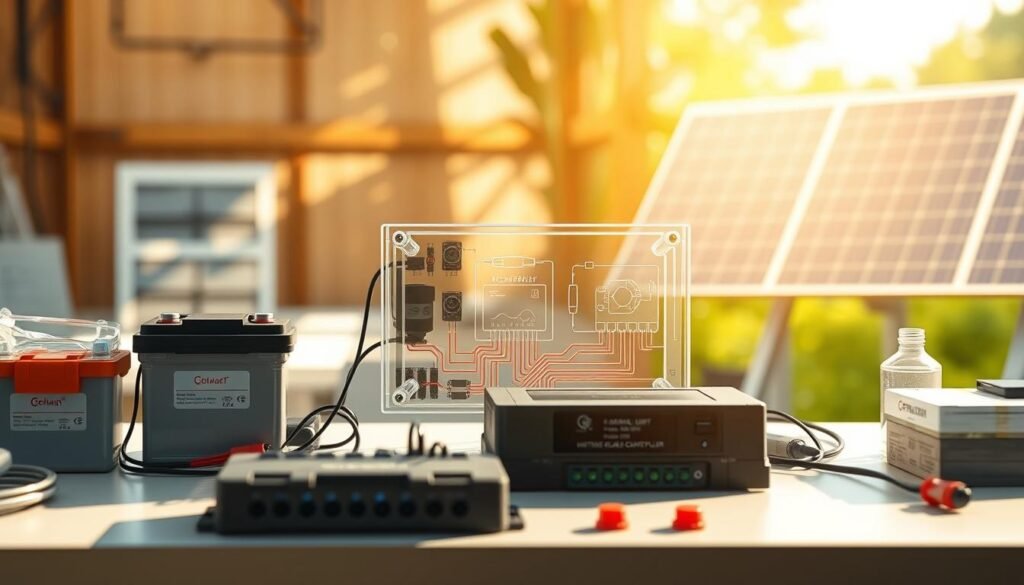
Every few months, do a full charge cycle. Turn off your lights on sunny days and let them fully charge for 2-3 days. This keeps your batteries working well.
Battery cycle life shows how many times you can charge and use them. Good lithium-ion batteries can handle over 2,000 cycles. This means they last 3-5 years. Less expensive batteries only last 500-1,000 cycles, which is much shorter.
Smart Battery Management Systems watch over your batteries. They check voltage, current, and temperature. This can make your batteries last up to 30% longer and keep them safe from damage.
| Battery Type | Cycle Life | Expected Lifespan | BMS Protection |
|---|---|---|---|
| Lithium-ion (Premium) | 2,000+ cycles | 3-5 years | Full monitoring and protection |
| Lead-acid Standard | 500-1,000 cycles | 1-2 years | Basic overcharge protection |
| Lithium-ion with Smart BMS | 6,000+ cycles | 5-8 years | Advanced voltage and temperature control |
Don’t let your batteries get too low. Being too low for too long can hurt them. Even when you’re not using your lights, keep them charged a little. Store them in a cool, dry place at 40-60% charge.
Look out for signs that your batteries need to be replaced. If your lights don’t last as long as they used to, it’s time for new ones. Most batteries need to be replaced every 2 years. But, with the right care and smart systems, they can last 3-5 years.
Here are some important battery management tips:
- Charge new batteries for 2-3 full sunny days before first use
- Perform monthly full-charge cycles to prevent capacity loss
- Avoid complete discharge for extended periods
- Use energy management systems to distribute power evenly
- Store batteries at 40-60% charge during off-seasons
- Monitor voltage and temperature with smart BMS technology
- Plan for battery replacement every 2-3 years for standard types
Knowing how to manage your batteries and charge them right keeps your lights working well. Good parts and care mean your batteries last longer. This saves money and keeps your outdoor areas bright.
Protecting Your Solar Lights From Extreme Weather Conditions
Your solar lights are made for outdoor use. But, extreme weather can harm them if not protected. Learning how rain, snow, and temperature changes affect your lights is key. This way, you can keep your solar lights working well for many years.
Managing Solar Lights During Rainy and Snowy Periods
Long rain and snow can harm your solar lights in two ways. First, clouds block sunlight, stopping your panels from charging. Second, moisture can damage the inside parts if it gets in. Heavy rain for days can drain your batteries, causing permanent damage.
Here’s what to do when it’s wet:
- Turn off your solar lights manually during long rainy periods to avoid battery damage
- Remove portable solar lights and store them indoors during severe storms
- Make sure your lights have an IP65 rating, which means they’re safe from water jets and dust
- Let your lights dry completely before turning them back on after wet weather
Choose weatherproof solar lights with durable, UV-resistant materials. These materials stay strong and look good through many seasons.
Temperature Considerations for Battery Longevity
Temperature affects your solar light batteries a lot. They work best between 32°F and 95°F. Below freezing, they slow down and lose power. Above 95°F, they degrade faster and can get damaged.
In cold areas, get ready for winter:
- Turn off your solar lights before the first hard freeze
- Remove batteries and store them indoors
- Keep batteries in a dry place at 40-60% charge
- Store equipment in a garage or basement to avoid freezing
Freezing batteries can cause permanent damage. In hot places, make sure your lights have good air flow and aren’t mounted on dark surfaces.
Quality IP65 hybrid solar inverter systems are built to withstand tough weather. They protect against dust, moisture, and extreme weather while working well. These systems show the high standards you should expect from your solar lighting, ensuring it works well no matter the weather.
The Importance of Quality Components in Solar Lighting Durability
Choosing high-quality solar lights means your outdoor lighting will last longer. The solar lighting market varies greatly in quality. Cheap products might be 40-60% less expensive upfront but often need to be replaced within a year or two.
Premium solar lighting, on the other hand, can last five to ten years. This makes them a better value over time.
Opting for durable components offers many benefits. High-quality solar panels, like monocrystalline ones, are 18-22% efficient. This is compared to cheaper polycrystalline panels at 13-16% efficiency. This means your lights charge faster and work better in dim light.
Battery quality is also key in your solar light investment. Top-notch lithium-ion batteries can handle over 2,000 charge cycles. Budget batteries usually last only 1,000-1,500 cycles. Quality products also keep LED lights cool, ensuring they stay bright even in hot weather.
Key Quality Indicators to Evaluate
Before buying, look for these important quality markers:
- IP65 or higher ingress protection rating for complete weatherproofing
- UL or ETL safety certifications confirming electrical safety testing
- Manufacturer warranties spanning two to five years
- Die-cast aluminum or stainless steel housing materials
- LED chips from recognized brands like Cree or Osram
Total Cost of Ownership Analysis
Don’t just look at the initial cost. Consider long-term expenses. A $150 premium solar lighting system can last eight years, costing $18.75 yearly. On the other hand, a $60 budget light lasting eighteen months costs $40 per year when replacements are included. Investing in quality products actually saves you money.
| Product Type | Initial Cost | Expected Lifespan | Annual Cost | Total 8-Year Cost |
|---|---|---|---|---|
| Budget Solar Lights | $60 | 18 months | $40 | $320 |
| Mid-Range Solar Lights | $100 | 4 years | $25 | $200 |
| Premium Solar Lighting | $150 | 8 years | $18.75 | $150 |
Quality manufacturers provide detailed product specs, good customer support, and replacement parts. Look for companies with commercial installations where reliability is key. Choosing high-quality solar lights protects your investment and ensures reliable outdoor lighting for years.
Preventing Heat-Related Lumen Decay in LED Fixtures
Heat is a big problem for your solar lights. When it gets hot inside, the light fades. This is called LED lumen decay. It happens because heat makes the LED chips and coatings wear out faster.
Keeping your lights cool is key. If they get too hot, they lose brightness fast. This can make them seem like they need to be replaced after just a few years.
Understanding Thermal Management Design
Good solar lights are designed to keep cool. They use materials like die-cast aluminum. This helps move heat away from the LEDs.
Look for these features when picking solar lights:
- Heavy aluminum die-cast bodies that absorb and disperse heat
- Ribbed or finned exterior designs for increased surface area
- Ventilation channels that allow natural air circulation
- No paint or coverings blocking heat dissipation pathways
Passive cooling is best because it doesn’t have moving parts. The right design keeps the lights cool, below 50°C (122°F).
How Operating Temperature Affects Light Output
Keeping LEDs cool is important for their brightness. Here’s how temperature affects them:
| Operating Temperature | Brightness After 50,000 Hours | Light Quality Impact |
|---|---|---|
| 50°C (122°F) | 95% of original brightness | Excellent performance maintained |
| 70°C (158°F) | 70-80% of original brightness | Noticeable dimming begins |
| 85°C (185°F) | 50-60% of original brightness | Significant light loss |
Heat damages the coatings that make white light. It also weakens the connections and the LED material itself.
To keep your lights bright, avoid enclosed spaces. Don’t block ventilation, and keep them away from dark surfaces. In very hot places, choose lights with bigger housings for better cooling.
Good thermal management is worth it. It makes your solar lights last longer and saves you money.
Regular Maintenance Practices for Long-Lasting Performance
Your solar lights need regular care to work well. A good maintenance schedule keeps them reliable for years. Just 15 to 30 minutes every quarter can prevent costly repairs.
Start with a monthly quick check. Spend five to ten minutes walking around your yard. Make sure all lights turn on at night. Look for any new blocks to the solar panels.
Every three months, do a deeper clean. Use a soft cloth and warm soapy water on the solar panels. Check the housing for damage and ensure batteries are charging right.
Place your solar lights where they won’t get bumped. Keep them away from lawnmowers and driveways. Use the right fasteners for your surface, like masonry anchors or wood screws.
Regular checks should also look for water damage. Check for condensation or corrosion inside light covers. If your lights don’t last as long as they used to, it’s time for a new battery.
| Maintenance Task | Frequency | Time Required | Key Actions |
|---|---|---|---|
| Visual Inspection | Monthly | 5-10 minutes | Check illumination, verify no obstructions, confirm secure mounting |
| Panel Cleaning | Quarterly | 20-30 minutes | Clean with soft cloth and warm soapy water, tighten hardware |
| Component Check | Quarterly | 20-30 minutes | Inspect housing, test battery performance, check seals |
| Comprehensive Servicing | Annually | 1-2 hours | Battery testing, deep cleaning, LED cover inspection, repositioning assessment |
Avoid using harsh cleaners or scrub pads on solar panels. These can scratch the panels and reduce efficiency. Also, avoid high-pressure washers and oils that block sunlight. When working on solar light care, do it in dry conditions to avoid electrical shorts.
Keep a maintenance log. Note when you did work, any issues, and when you replaced batteries. This helps you plan for replacements before problems get worse.
Seasonal needs change throughout the year. In fall, clear leaves and secure fixtures before winter storms. Spring is for thorough cleaning after winter. Summer is for checking shade problems. Cold climates may need winter protection or removal and storage.
Preventive maintenance extends your solar lights’ life. Catch small issues early, keep them working well, and maybe double or triple their lifespan.
Reducing Total Cost of Ownership Through Proper Solar Light Care
Your solar light investment is more than just a one-time buy. Understanding all costs over time shows that good care saves a lot. Costs include the first purchase, battery swaps, fixes, and new lights when old ones fail.
Good solar lights last 5 to 10 years with the right care. Cheaper ones might need a new one every 1 to 2 years. This big difference can save you a lot of money.
Let’s say you have 20 solar lights at home. They cost $600 to $1,200 at first. With care, they last 8 years and need a new battery at year 4 for $200. This makes your total cost $800 to $1,400 over 8 years, or $100 to $175 a year.
Without care, they only last 2 years. You’d need four new sets in 8 years, costing $2,400 to $4,800. That’s a 200% to 300% increase in cost.
For big buildings, the savings are even bigger. A place with 100 lights costs $5,000 to $15,000 at first. With good care, you save $10,000 to $30,000 over 14 years, not counting the cost of putting them in and taking them out.
| Maintenance Practice | Impact on Long-Term Value | Cost Savings Per Light |
|---|---|---|
| Regular panel cleaning (90-95% efficiency maintained) | Extends battery life by 1-2 years | $15-$25 per light |
| Weather protection and proper storage | Prevents premature fixture failure | $30-$60 residential; $50-$150 commercial |
| Strategic placement with adequate sun exposure | Prevents replacement due to poor performance | $40-$100 per light over 8 years |
| Battery management and rotation | Optimizes charging cycles | $20-$40 per light |
Spending 2 hours a year on maintenance saves $300 to $1,500. This is a 500% to 2,500% return on your time, making it very valuable.
To find your TCO, add up the costs: (Initial Price + Battery Replacements + Replacements + Labor) ÷ Years. This shows why good care is key for long-term savings.
- Regular cleaning keeps panels working well
- Battery care makes them last longer
- Protecting from weather stops damage
- Placing lights right keeps them working
- Regular checks avoid big costs
How you care for your solar lights affects their value. By following these tips, you make your lights a reliable, cost-effective choice that saves money every year.
Conclusion
You now have the tools to make your solar lights last 5 to 10 years. The tips in this article help keep your lights working well. By placing them in sunlight, cleaning them, managing batteries, and protecting them from weather, you follow the best practices.
These simple steps can make a big difference. They require little effort but offer great results. This way, you can enjoy your lights for a long time.
Proper care can make a huge difference in how long your lights last. Small issues caught early can prevent big problems. By following these tips, you save money and get more value from your solar lights.
Start checking your solar lights today. Look at where they are, how clean they are, and their battery age. Create a maintenance plan based on what you’ve learned. This will help your lights work better and save you money.
By taking these steps, you’ll get the most out of your solar lights. They will provide reliable light for many years. Start now to enjoy your outdoor lighting for years to come.