
Outdoor solar lights are a smart choice for homeowners. They brighten yards without the high costs of electricity. Plus, they’re easy to set up and save money over time.
Your garden or backyard needs lighting that’s both good-looking and functional. Solar lighting makes your outdoor space welcoming for fun and relaxation. It’s perfect for lighting paths or creating a cozy atmosphere for evening gatherings.
When picking solar lights for your garden, it’s important to know what’s out there. The market offers many styles and levels of performance. Your task is to find the best solar lights that fit your needs and preferences.
This guide will teach you all about outdoor solar lights. You’ll learn how they work, the types available, and what features are important. By the end, you’ll be ready to choose the right lights for your yard.
Key Takeaways
- Solar lights need no wiring or electrical connections to your home
- Battery storage determines how long lights stay on after sunset
- Brightness levels vary based on lumen output and solar panel size
- Weather-resistant designs keep your lights working year-round
- Placement of solar panels affects charging efficiency and performance
- Different styles suit various outdoor spaces and personal tastes
- Regular cleaning maintains optimal solar panel output
Understanding How Solar Lights Work for Your Outdoor Space
Before you buy solar lights for your garden or backyard, learn how they work. Solar lights capture sunlight, store energy, and light up the night. Each step is key to lighting up your outdoor space without using the grid.
Solar Panel Technology and Energy Conversion
The heart of solar lights is their photovoltaic cells. These cells turn sunlight into electrical energy during the day. The better your solar panels, the more power your lights can make and save.
Your solar panels need direct sunlight for 6 to 8 hours a day. Sunny days give more energy than cloudy ones. Knowing your local weather helps pick the right solar lights.
Battery Storage and Runtime Expectations
Solar lights have rechargeable batteries that save energy captured during the day. Good systems use lithium-ion or NiMH batteries. The battery’s size decides how long your lights will shine at night.
Here’s what you can expect with good sunlight:
- Full charge gives 6 to 12 hours of light
- Cloudy days cut runtime by 30 to 50 percent
- Winter means shorter light times
- Positioning lights right makes them work better
Automatic Dusk-to-Dawn Operation
Modern LED solar lights have dusk-to-dawn sensors. These sensors turn your lights on when it gets dark and off when it gets light. This means you don’t have to turn your lights on or off.
This feature saves battery power and keeps your space lit at night. It’s perfect for homes and businesses.
Ready to find great solar lighting options? Check out LED solar lights for reliable outdoor lighting. They’ll fit your needs and climate.
Types of Solar Light Options for Gardens and Backyards
Your outdoor space needs different types of lighting for different purposes. Solar lights come in many varieties, each for specific uses around your home. Knowing the different solar lighting categories helps you choose the right one for your garden or backyard. Whether you want to light a pathway, create ambiance, or improve security, there’s a residential solar light for every need.
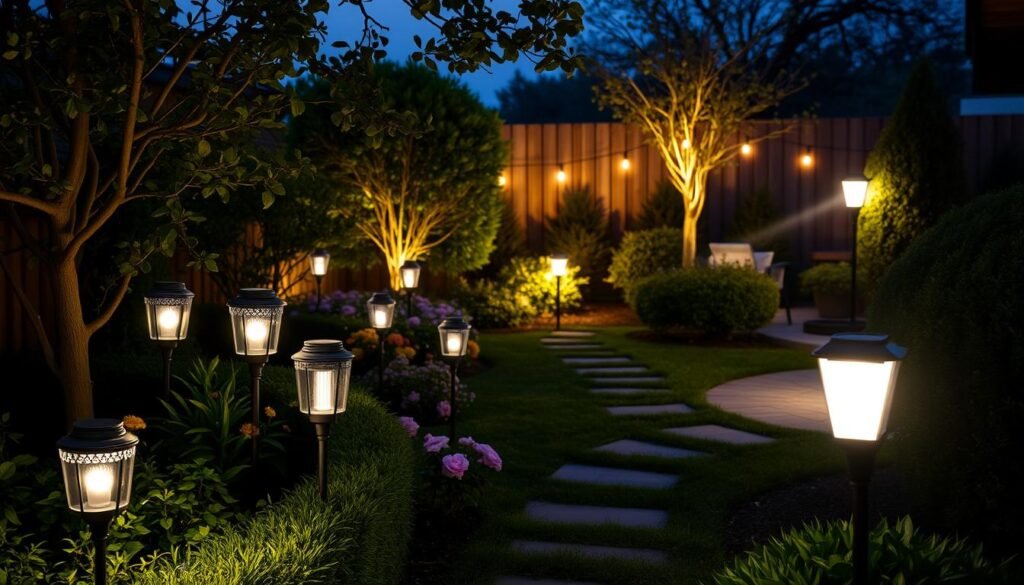
Solar lighting categories include several main groups based on function and style. The most common garden light varieties serve different purposes in your outdoor space. Each type brings its own benefits and creates distinct effects in your yard.
- Landscape and Path Lights: These stake-in-ground lights illuminate walkways and garden beds. They provide steady, low-level lighting for safety and guidance.
- String and Fairy Lights: These decorative outdoor lighting options feature small bulbs along wires. They create warm, inviting ambiance for patios and entertaining areas.
- Spotlights: These powerful lights highlight specific features like trees, sculptures, or architectural details. They work well for accent lighting and security purposes.
- Fence and Wall Lights: These compact lights mount on fence posts or walls. They mark boundaries and provide uplighting or downlighting effects.
- Solar Lanterns: These portable lights hang from hooks or sit on tables and patios. They offer decorative, soft-glowing illumination for outdoor gatherings.
- Deck and Stair Lights: These specialized lights mount on stair risers or post caps. They ensure safe navigation on elevated surfaces.
Before selecting your solar light types, identify your main goals. Do you need bright illumination for safety along a pathway? Are you creating an entertainment space that needs warm, ambient glow? Do you want to highlight landscape features or boost security around your home? Most homeowners combine multiple solar lighting categories to create well-balanced outdoor spaces.
Explore outdoor lighting options to see specific product examples that match your needs. Different residential solar lights offer varying brightness levels and installation methods. Your choice depends on your yard’s layout, your lighting goals, and your preferred aesthetic style.
Solar Landscape and Path Lights for Walkways and Garden Beds
Solar landscape lighting makes your outdoor spaces shine after dark. These lights are key to any solar lighting design. They guide you safely and add beauty to your property.
They range from simple stake lights to more advanced bollard lights. Each type meets different needs for walkways, garden beds, and borders.
Solar path lights are vital for safety and beauty. They prevent falls and make your property welcoming. These lights are perfect for driveways, garden borders, and paths.
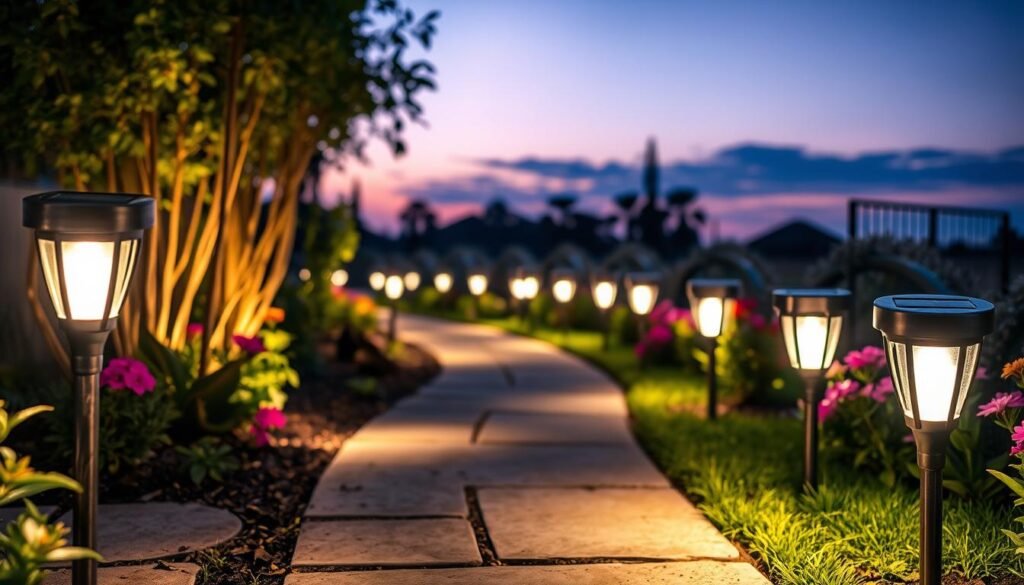
Stake Light Features and Placement
Stake lights are a top choice for homes. They have a spike base for easy installation. Their height varies from 12 to 36 inches, based on your needs.
When picking stake lights, consider a few things:
- Stake length should be 6-8 inches for stability
- Adjustable heads let you direct light where needed
- Shorter models (12-18 inches) are great for borders
- Taller stakes (24-36 inches) light up main paths better
- Light patterns range from full circles to focused beams
For best results, space your lights 6-8 feet apart for continuous light. For a softer look, space them 10-12 feet apart. Place lights on alternating sides for depth and less energy use.
Bollard and Marker Light Options
Bollard lights offer a strong look. They are 18-36 inches tall and light up your yard well.
Bollard lights are perfect for:
- Defining driveway edges and property lines
- Lighting long paths for safety
- Creating a professional entrance
- Adding light to patio areas
- Marking pool areas and raised garden beds
| Light Type | Height Range | Best Use | Spacing |
|---|---|---|---|
| Stake Lights | 12-36 inches | Garden beds, subtle borders | 6-10 feet apart |
| Bollard Lights | 18-36 inches | Driveways, property lines | 8-12 feet apart |
| Marker Lights | 6-12 inches | Low-level pathway illumination | 4-6 feet apart |
Choose between warm white (2700-3000K) and cool white (4000-5000K) lights. Warm tones are cozy and traditional. Cool white is better for clear visibility on paths.
Your solar lights need little care but work well for years. Make sure bollard and stake lights get full sun to last longer. This ensures your lights work well all year.
Solar String and Fairy Lights for Decorative Ambiance
Turn your outdoor area into a magical spot with solar string and fairy lights. These lights add warmth and beauty to your garden, patio, or pergola without needing electricity. Pick between fairy lights and festoon lights based on your space and lighting needs.
Fairy lights have small LED bulbs on thin wire, giving a soft, twinkling look. They’re great for decorating trees or lattice but aren’t for reading or dining. Festoon lights have bigger bulbs and are spaced 12 to 20 inches apart. They offer both beauty and useful light for your outdoor gatherings.
- Cable length from solar panel to first bulb (aim for at least 6 to 10 feet)
- Total string length matching your measurement area
- Weatherproof rating of IP44 or higher
- Bulb material—glass for authenticity or plastic for durability
- Available lighting modes and dimming options
- Remote control convenience for hard-to-reach panels
Hang your pergola lighting 8 to 10 feet up, with a gentle sag. This look is natural and makes your outdoor space better for parties.
| Light Type | Bulb Size | Spacing | Best Use | Lighting Function |
|---|---|---|---|---|
| Fairy Lights | 5mm or smaller | Closely spaced | Decorative accents on trees and railings | Purely decorative |
| Festoon Lights | Large Edison-style | 12-20 inches apart | Dining areas and patios | Decorative and practical illumination |
| String Lights | Medium sized | Moderately spaced | General outdoor entertaining | Balanced ambiance and visibility |
Good solar string lights have different lighting modes like steady, flashing, and fading. Remote controls are handy if your solar panel is far from your party area. Make sure your lights are weatherproof to last through all seasons.
Key Features to Consider When Selecting Solar Lights
Choosing the right solar light for your outdoor space is key. Not all solar lights perform the same. Knowing what to look for helps you avoid disappointment.
Look at brightness levels, weather resistance, and smart features like motion sensors. This ensures your investment lasts for years.
Brightness Levels and Lumens Output
Brightness is measured in lumens. This number shows how much light your solar light produces. Different spaces need different brightness levels.
Lower lumens are good for soft ambiance. Higher outputs are for security and pathway marking.
Think about your needs when choosing lumens output. For garden accents, 10 to 25 lumens are enough. For path marking, 50 to 100 lumens are best.
For walkways and task areas, choose 100 to 200 lumens. For security and spotlight effects, go for 200 lumens or higher.
Don’t assume more lumens means better results. Too bright lights can glare, disturb neighbors, and drain batteries fast. The Royal Bulb Solar Light Collection offers flexible options with 120 lumens for single head units, 240 lumens for double head designs, and 360 lumens for triple head configurations. Choose the right brightness for your purpose.
Weather Resistance and IP Ratings
IP ratings protect your solar lights from the elements. Understanding this code helps you choose weather resistant lights. The IP rating system uses two numbers following the letters “IP.”
The first digit (ranging from 0 to 6) shows protection against solid particles like dust and debris. The second digit (ranging from 0 to 8) indicates protection against liquids like rain and snow.
| IP Rating | Protection Level | Best Use Cases |
|---|---|---|
| IP44 | Protection against splashing water and small debris | Covered outdoor areas and partially sheltered locations |
| IP54 | Full protection against dust and water splashing | General outdoor use in gardens and pathways |
| IP65 | Complete dust protection and water jet resistance | Fully exposed areas with heavy rain and snow exposure |
| IP67 | Temporary immersion protection in water | Areas prone to flooding or standing water accumulation |
For covered areas like under eaves, an IP44 rating works fine. General outdoor use in your garden or along pathways requires at least IP54 protection. If your solar lights will sit in fully exposed locations experiencing heavy rain and snow, choose IP65 or higher ratings. Waterproof solar lights with these higher ratings ensure reliable performance through harsh weather conditions.
Motion Sensors and Lighting Modes
Motion sensor lights add convenience and save battery power. They activate only when movement is detected. These smart features let you customize how your lights behave throughout the night.
- Activation-only mode: Light switches on instantly when motion is detected, then turns off after a set time
- Continuous glow mode: Provides steady, low-level illumination all night with no motion sensor activation
- Smart hybrid mode: Maintains dimmed light until motion triggers brightness boost for enhanced security
- Timer mode: Automatically shuts off lights after a predetermined period to protect nocturnal wildlife
- Manual override: Lets you turn lights completely off when not needed
The 4lite Antheia LED solar-powered decorative spike light demonstrates excellent motion sensor design with three distinct lighting modes. You can program it to activate only upon detecting movement, provide continuous low-level glow, or fade to dimmer illumination until nearby motion is detected. It carries an IP54 rating, making it durable enough for year-round outdoor use.
Look for motion sensor lights with adjustable sensitivity settings and detection ranges between 10 and 30 feet. These adjustments help you fine-tune performance for your specific space. The T-SUN LED solar spotlight delivers impressive brightness at 250 lumens while maintaining excellent weather resistance through its IP65 rating. When you explore solar light features and options, you’ll find models that combine multiple capabilities to match your unique outdoor lighting requirements.
Quality construction matters when selecting long-term outdoor lighting solutions. Examine housing materials like cast aluminum and stainless steel, which outlast plastic components. Check lens quality by looking for glass or high-grade polycarbonate that resists yellowing and scratching. Reputable manufacturers typically offer warranties spanning 1 to 5 years, indicating confidence in their products’ durability and performance reliability.
Choosing Between Modern and Traditional Solar Light Styles
Your outdoor lighting choice is more than just brightness and battery life. It’s about matching your home’s style and your personal taste. Modern and traditional solar lights can change how your garden looks. Knowing the difference helps make your outdoor space feel complete and thoughtful.
Modern solar lights are all about simplicity. They have clean lines, geometric shapes, and simple surfaces. You can find them in matte black, brushed nickel, or sleek metallic finishes. They look great with modern homes, mid-century modern, and industrial buildings. The solar panel blends in with the fixture, making your garden look neat.
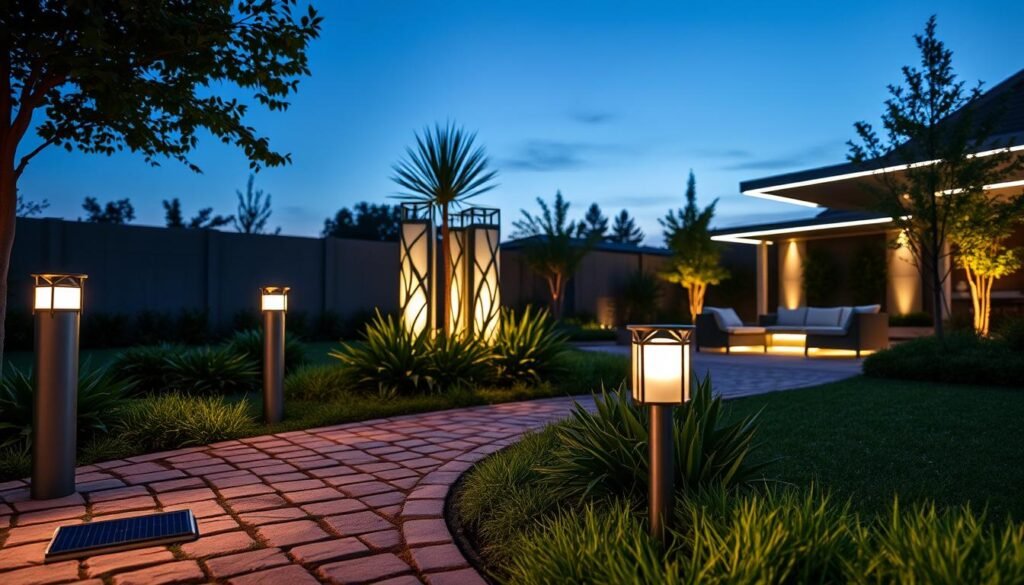
Traditional solar lights have a different vibe. They’re inspired by old designs like Victorian lanterns and colonial post lights. These lights have ornate metalwork, decorative details, and finishes that look like aged bronze or wrought iron. They often have bulb-shaped LEDs that remind you of old gas lights, adding warmth to your outdoor spaces.
| Feature | Modern Solar Lights | Traditional Solar Lights |
|---|---|---|
| Design Approach | Minimalist, geometric, clean lines | Ornate, detailed, decorative elements |
| Finish Options | Matte black, brushed nickel, metallic | Aged bronze, copper, wrought iron |
| Best Architectural Styles | Contemporary, industrial, mid-century modern | Colonial, Victorian, craftsman, farmhouse |
| Light Appearance | Simple LED sources, minimal visual impact | Bulb-shaped LEDs, vintage aesthetic |
| Panel Integration | Seamlessly built into fixture | Often visible as separate component |
When picking between styles, look at your home’s exterior. Check your door hardware, house numbers, and lights. Choose solar lights that match these details for a cohesive look. Also, think about your garden design. Formal gardens look good with classic lights, while modern gardens suit modern lights.
You don’t have to stick to one style. Mixing styles can add interest. For example, modern path lights can lead to a traditional home if you use consistent finishes. If you’re not sure, modern lights are versatile and won’t clash with most homes.
Solar Panel Size and Charging Efficiency for Your Climate
Your garden solar lights need three main things: the right solar panel size, enough sunlight, and the right climate. Knowing these helps you choose lights that shine bright all night. The right mix of these factors ensures your outdoor space is well-lit or dimly lit.
The efficiency of solar charging is key to your lights’ performance. Newer panels charge better than old ones. For example, trapezoid-shaped panels charge 60 to 80 percent more than flat ones. The Contemporary Square Solar Path Light charges eight times more than usual lights, lighting up your garden for up to two nights.
Sunlight Requirements and Seasonal Performance
Your solar lights need six to eight hours of direct sun each day to fully charge. Direct sunlight means no shadows from trees or windows. Shade cuts charging power a lot—a fifty percent shade can reduce it to twenty-five percent.
Seasonal changes affect your lights’ performance. In colder months, they last less because of shorter days and lower sun. Southern states get more sun, so lights work better all year. Northwestern and northeastern areas need bigger panels and stronger batteries for cloudy days. Some lights can last two to three nights on one charge, even in cloudy weather. Knowing about solar panel sizes helps pick the right lights for your climate.
Placement Strategies for Maximum Solar Exposure
Where you place your solar panels is critical. Southern-facing spots in the Northern Hemisphere get the most sun all year. But, the sun’s angle changes with the seasons, so a sunny spot in summer might be shaded in winter.
For lights with separate panels and cables, you can place them for best sun exposure. Then, put the light where you need it. This is great for shaded areas.
- Place panels in south-facing locations for year-round sun
- Keep panels away from tree canopies and building shadows
- Allow six to eight hours of direct sunlight daily
- Check shade patterns throughout seasons before installation
- Use cable-connected panels to separate charging from lighting areas
- Clean panels regularly to maintain charging efficiency
Climate affects which solar lights work best for you. Sunny areas need smaller panels. Cloudy places need high-efficiency panels with big batteries. All lights need forty-eight hours of sun before use to fully charge. More sun means more power stored, lighting up your space longer.
Installation Methods and Mounting Options for Different Solar Lights
Setting up solar lights in your garden or backyard is easy. You don’t need an electrician or expensive tools. This makes it great for DIY projects, even if you’re new to home improvements.
Choosing the right mounting option depends on where you want to place your lights. Knowing each method helps you get the best results for your outdoor lighting.
Ground Stake Installation for Pathway Lighting
The ground stake is the most common choice for easy path and landscape lighting. You’ll need almost no tools and just a few minutes per light. Charge your solar light in direct sunlight for at least 48 hours before placing it in your garden.
Find your desired location and push the stake into soft soil. If your ground is hard, water the area first to soften it, or create a small pilot hole. Insert the stake at least 4 to 6 inches deep to keep your light stable during wind and weather.
On sloped areas, angle the stake perpendicular to the ground surface. This ensures your light sits level and shines properly. The ground stake method works beautifully for creating defined pathways and highlighting garden beds throughout your property.
Wall Mount and Elevated Installation
Wall mount options provide permanent placement for your solar lights. They typically deliver brighter illumination than ground-level fixtures. These mounting options attach directly to exterior walls, fences, or posts using screws and brackets.
Position wall-mounted lights about 5 to 7 feet above ground for general lighting needs. Make sure your solar panel faces south and avoids shadows from roof overhangs or trees. Use the correct fasteners for your surface—masonry screws for brick or stone, exterior wood screws for wooden surfaces.
A wall mount setup gives your backyard a finished, professional appearance. It keeps lights secure and stable.
Pier Mount and Post-Top Placement
Pier mount fixtures sit on top of flat surfaces like deck posts, pillars, or fence posts. This mounting method offers clean aesthetics and works well for defining spaces around patios and decks. Most pier mount designs use a simple screw-down base plate that attaches to your post top.
Ensure the surface is level, clean, and dry before installation. Some models include adapters that fit different post sizes, giving you flexibility with your existing outdoor structures. Pier mount lights provide elevation that spreads illumination across wider areas.
String Light Setup for Covered Areas
String lights need mounting points at both ends and sometimes in between for longer runs. Use outdoor-rated hooks or eye screws to secure them. For pergolas or covered patios, install mounting points 8 to 10 feet high and allow slight sag in the line.
Position the solar panel where it gets the most sunlight throughout the day.
Testing and Adjusting Your Lights
After you complete your solar light installation, test everything for one or two nights. This approach lets you adjust positions if light patterns aren’t quite right. You might discover unexpected shade problems or realize you want lights in different locations.
Making small adjustments early saves time and frustration.
- Charge new lights for 48 hours in direct sunlight before use
- For ground stake installation, insert 4-6 inches into soil
- Water hard ground first to make stake insertion easier
- Position wall lights 5-7 feet above ground level
- Face solar panels south for maximum sun exposure
- Keep mounting surfaces clean and dry before installation
- Test lights for 1-2 nights before finalizing positions
The beauty of DIY solar lights lies in their flexibility and ease. Your mounting options range from simple ground stakes to permanent wall mounts, fitting every space in your yard. No wiring lights eliminate complicated electrical work, making outdoor lighting accessible to everyone.
Maintenance Tips and Caring for Wildlife While Using Solar Lights
Solar lights add beauty and function to your outdoor spaces. But, they need regular care to work well. Simple tasks keep your system running and protect the environment.
Proper care makes your lights last longer and work better. Solar lights need little upkeep compared to other lights. A few smart steps keep your setup running well and safe for wildlife.
Protecting Nocturnal Animals and Insects
Solar lights have a smaller environmental impact than other lights. But, they can affect nocturnal animals. Bats, moths, and others need darkness to find food and move around.
Choosing warm white lights helps. These lights cause less disruption to animals and insects. Point your lights down to reduce light pollution and keep the focus where you need it.
- Turn off your solar lights before bedtime to give nocturnal creatures uninterrupted darkness
- Leave some garden areas completely unlit to provide refuge for light-sensitive species
- Use motion sensors for security lights instead of constant illumination
- Keep lights away from ponds, bird feeders, and natural wildlife corridors
- Choose the minimum brightness necessary for your purpose
Dimmer settings are better for the environment. They let you enjoy outdoor ambiance while reducing stress on wildlife. This way, you meet your needs and respect wildlife’s space.
Cleaning Solar Panels for Optimal Performance
Cleaning solar panels is key. Dust, pollen, bird droppings, and leaves can cut charging efficiency by 20-40%. Regular cleaning keeps your lights bright and working well.
| Season | Cleaning Frequency | Additional Notes |
|---|---|---|
| Growing Season (Spring/Summer) | Every 2-4 weeks | Pollen and debris accumulate quickly |
| Winter Months | Once per month | Snow and ice may require gentle removal |
| After Storms | As needed | Clean after dust, rain, or wind events |
Follow these steps for effective solar light maintenance:
- Use a soft, damp cloth or sponge with mild soap and water
- Avoid abrasive cleaners or scrubbing pads that scratch surfaces
- Let soapy water sit on stubborn deposits for a few minutes
- Rinse thoroughly with clean water
- Dry completely with a soft cloth
While cleaning, check for damage, loose connections, or moisture. Make sure seals and gaskets are intact to prevent water damage. Quality solar lights can handle rain, wind, hail, and extreme temperatures.
Batteries inside your lights last 1-3 years, depending on quality and use. If your lights seem dim, the batteries might need replacing. Most solar lights use standard AA or AAA NiMH batteries that you can easily swap out. Check your manual for specific instructions.
When storing lights for winter or during home projects, clean them first. Remove batteries to prevent corrosion, and store them in a dry place away from extreme temperatures. Proper storage protects your investment and ensures quick activation when needed.
A professional approach to solar light maintenance combines routine cleaning with wildlife concerns. Your care keeps lights working well and shows responsible stewardship of your local ecosystem. Small actions like turning off lights before bed and choosing warm-toned bulbs protect insects and nocturnal animals without sacrificing beauty and safety.
Conclusion
Choosing the best solar lights for your garden or backyard is easy when you know what you need. First, decide what you want from your outdoor lighting. Do you need it for safety, security, or to enhance the atmosphere?
Once you have your goals, pick the right type and brightness. Professional reviews from Consumer Reports and BBC Gardeners’ World Magazine can help. They test many brands and highlight key differences.
Your solar lighting investment is worth it if you choose quality products. Make sure the solar panels are large and get plenty of sun. Look for strong weather resistance and good IP ratings in the fixtures.
Most solar lights come with warranties of one to five years. This shows the manufacturer’s confidence in their products. Choosing well-made products saves you money by avoiding frequent replacements and repairs.
When choosing outdoor lighting, balance style with performance. Modern or traditional designs can match your home, but don’t forget about functionality. Features like adjustable brightness and motion sensors offer more control and save battery power.
Keep your solar panels clean all year to ensure they work well. By using your lights wisely and choosing eco-friendly options, you help protect wildlife and reduce light pollution.
Solar lighting technology has come a long way, providing reliable and attractive options. Take your time to compare and invest in quality fixtures that meet your needs. Solar lights save on electricity and are good for the environment, making them a smart choice for any homeowner.