
Reliable power storage is key for your business. Even short outages can stop production and harm your bottom line. A commercial lithium battery keeps your equipment running and saves you from lost revenue and safety risks.
Lithium batteries offer more energy and last longer than lead-acid ones. They fit in smaller spaces and need less replacement. This means fewer service calls and lower costs over time.
When picking a commercial lithium battery system, cost matters. A 48V 5.12 kWh unit costs around $1,290–$1,490. Add-ons like cabling and racks can add hundreds more. Knowing these costs helps you plan and choose the right system.
Go for vendors with U.S. experience and UL-certified products. Systems with quality cells, strong battery management, and hybrid inverters are reliable. They keep your operations running smoothly and maintenance low.
Key Takeaways
- Commercial lithium battery systems reduce downtime and support critical loads.
- Higher energy density and longer life lower total cost of ownership.
- Plan for module and accessory costs when budgeting commercial energy storage.
- Select UL-tested products and experienced U.S. suppliers for dependable performance.
- Efficient battery systems enable compact installations and fewer service visits.
Why reliable commercial power matters to your business
Even short power outages can hurt your business a lot. They lead to lost sales, stopped production, and expensive repairs. Your business needs constant power for things like sales, heating, and automated systems.
Keeping your business running is key. Backup power systems help reduce downtime and losses. A good plan means less time lost and less risk to important tasks. Your contracts and agreements often require this level of reliability.
Cost of downtime and interrupted operations
Downtime can cost a lot of money. In stores, lost sales add up fast. In factories, stopped lines mean waste and delays. Hospitals face big risks when life-saving devices fail.
Knowing these costs helps you see why investing in strong solutions is worth it.
Safety, productivity, and regulatory considerations
Stable power is critical for safety and following rules. Emergency lights, life-saving systems, and monitoring must keep working. With more automation, you need power even more.
Not following rules can lead to fines and damage to your reputation.
Why distributed generation and backup systems are essential for commercial facilities
Commercial power needs are different from homes. You need multiple layers of protection: generators, batteries, and smart controls. Distributed generation helps avoid single failures and eases grid pressure.
Lithium-ion systems work well with generators for efficient backup power. This supports your most critical needs.
Designing for reliable commercial power keeps your business running smoothly. It protects your people, revenue, and operations in a changing grid world.
How lithium battery technology is transforming commercial energy storage
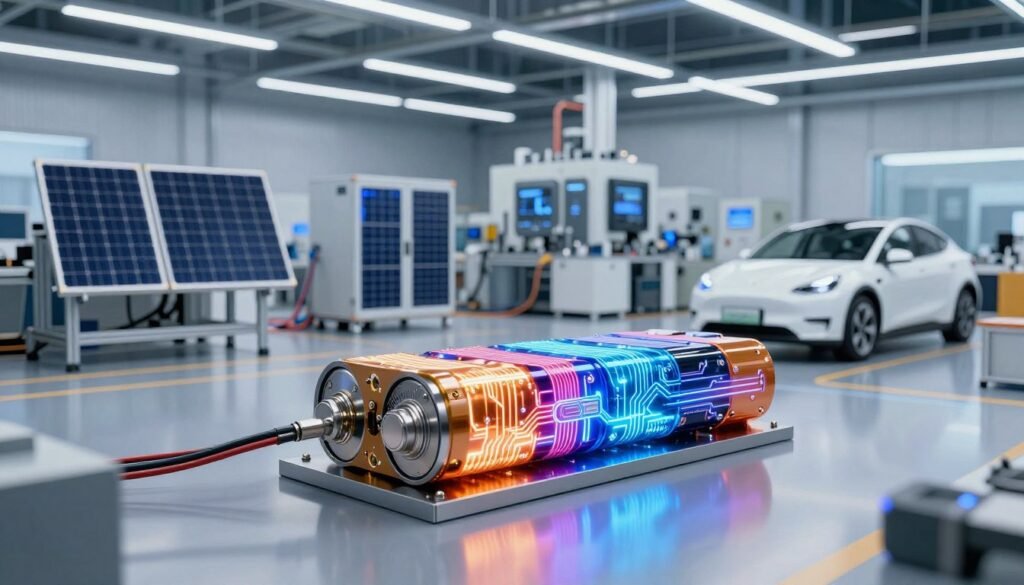
You need storage that fits your facility and keeps critical systems running. Modern lithium battery technology packs more power into smaller cabinets. This is more than legacy lead-acid or NiCd systems.
This higher energy density lowers your footprint. It gives you more runtime or frees floor space for operations.
Energy density and footprint advantages over lead-acid and NiCd
Lithium systems have 150–220 Wh/kg energy density. Lead-acid systems have about 30–40 Wh/kg. This means lithium systems are lighter and easier to install.
They also cost less to ship. You can find real-world product specs and deployment examples through suppliers. Check out this technical overview for more information.
Fast charge/discharge capabilities for critical loads
When a transient event hits, you need immediate power. Fast charge lithium chemistries support high C-rate charge and discharge. This means systems respond quickly to switchover and peak shaving demands.
You can run automated equipment and sensitive processes with minimal interruption. The chemistry and inverter control handle rapid ramps.
Rapid cycling also supports renewable pairing. Commercial solar-plus-storage projects rely on fast response to smooth cloud ramps and capture midday generation. Vendors marketing commercial solutions emphasize the fast charge lithium advantage in both grid-tied and islanded scenarios.
Advanced battery management systems (BMS) and smart controls
A robust battery management system is the control center for safe, efficient operation. A good BMS monitors cell voltages, balances cells, limits currents, and manages thermal conditions. This extends usable life.
Those functions reduce losses under heavy loads and protect against imbalance during fast charging. Smart controls and system-level software tie the BMS to inverters and energy management platforms. This integration lets you schedule peak shaving, prioritize backup circuits, and view state-of-health metrics for predictive maintenance.
Commercial vendors commonly publish UL-tested modules and certified BMS implementations. Check detailed product pages such as the manufacturer examples found at commercial ESS resources.
Use these capabilities to lower demand charges, stabilize voltage for sensitive equipment, and extend cycle life. Maintain compact, reliable energy storage for your site.
Key performance benefits of commercial lithium battery solutions

When you look at commercial lithium battery systems, think about what they can do for you. They last longer, which means you don’t have to replace them as often. This saves you money and keeps your projects running smoothly.
Don’t just look at the price tag. Think about the total cost over time. By understanding the cost of each part, you can see how much you’ll save in the long run. This helps you compare the initial cost to the long-term benefits.
Check the usable capacity of the battery. With the right design, lithium batteries can give you more power when you need it. This means you can use less energy overall, saving you money.
Energy efficiency is important for your monthly bills. Lithium batteries lose less energy, so you get more power to your load. This helps you save on electricity costs and manage your energy use better.
Make sure your system is reliable for commercial use. Look for batteries with good management systems and strong housings. These help keep the system running well, even when it’s used a lot.
After you install the system, use tools to monitor its performance. Look for systems that can grow with your needs. The right design will help your battery last longer and perform better over time.
For more information on commercial lithium battery solutions, check out the high-voltage options from Aisen Solar Energy at commercial high-voltage lithium battery.
Designing a commercial battery system that fits your needs
First, understand your electrical needs. Identify key equipment, usual usage, and the longest possible outage. Knowing these helps size your battery bank and inverter correctly. This ensures your system works well without wasting money.
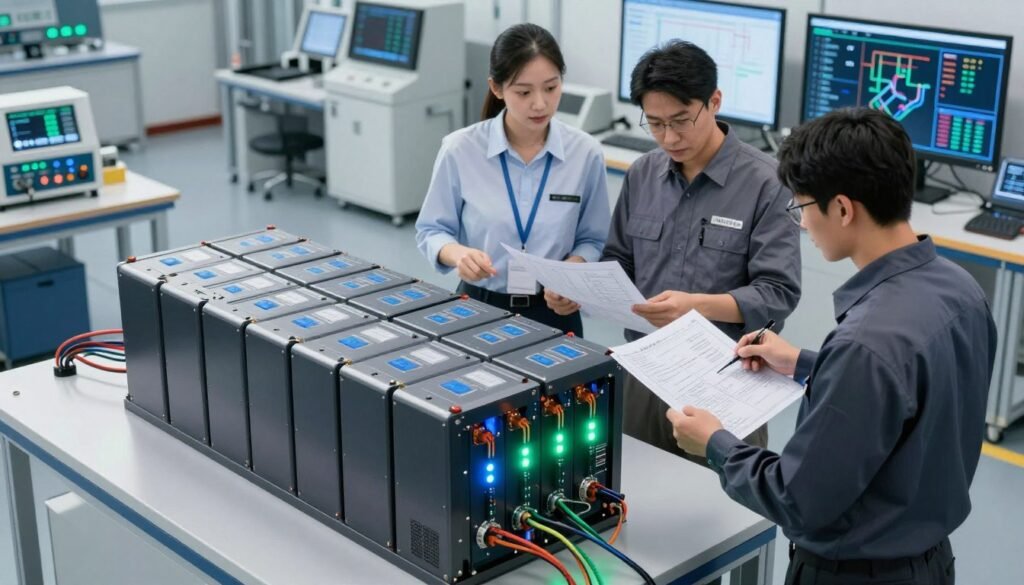
Assessing load profiles and runtime requirements
Make a list of each circuit and its power use. Then, sort them by importance. This helps you choose the right battery size and inverter type. Remember to consider inverter efficiency and temperature to estimate energy needs accurately.
Plan for two types of loads: essential and nonessential. This strategy saves money while keeping operations running during outages.
Scalability: modular systems and parallel kits for growth
Opt for modular battery systems for easy expansion. You can add more units or racks without replacing old parts. This approach makes adding capacity predictable and affordable.
Think about the cables and bases you’ll need for future growth. Modular systems make upgrades quicker and reduce downtime.
Site considerations: footprint, ventilation, and safety zones
Check the site’s floor loading, clearances, and maintenance access. Lithium batteries take up less space than lead-acid, but you’ll need room for air and safety zones. Follow guidelines for thermal management and safety distances to ensure safety.
Work with suppliers who know hybrid inverters and full system assembly in the U.S. for faster approvals. Visit solar generator resources to find certified solutions that meet your needs.
| Design Element | Key Action | Impact on System |
|---|---|---|
| Load profiling | Inventory circuits and runtime targets | Accurate battery bank sizing and inverter selection |
| Runtime requirements | Model outage scenarios and efficiency losses | Reliable autonomy during worst-case events |
| Modular battery systems | Specify add-on modules and parallel kits | Scalable capacity with predictable costs |
| Site safety | Plan ventilation, clearances, and floor loading | Compliant installations and reduced risk |
| Supplier selection | Choose UL-tested, U.S.-experienced vendors | Smoother permitting and certified final assembly |
Integration with renewables and hybrid power architectures
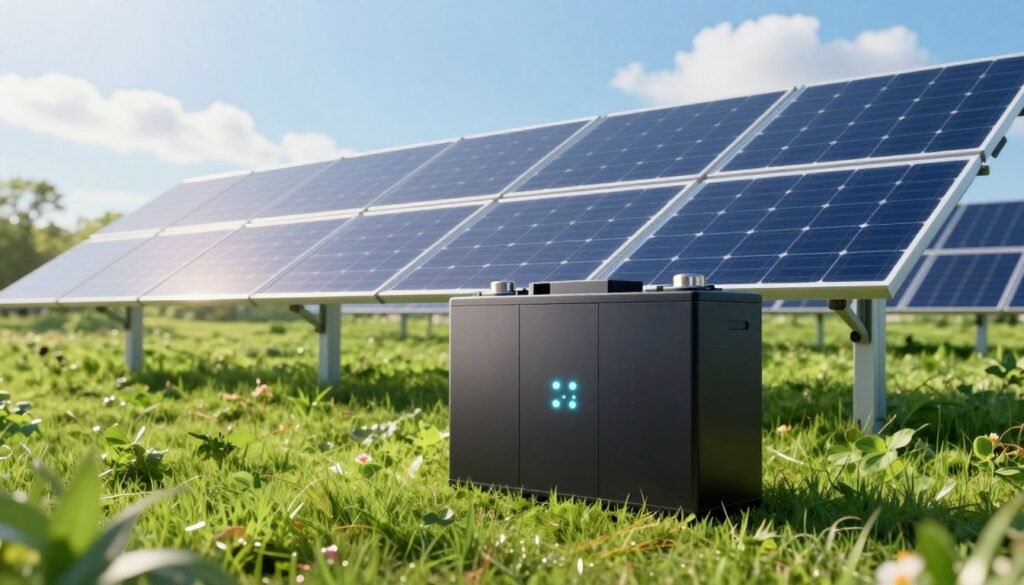
Pairing commercial lithium battery storage with solar arrays boosts resilience and cuts costs. A battery plus solar setup stores energy for later use, supports systems during outages, and meets green goals. Remember to budget for extra costs like cables and kits for a smooth system.
Choose a hybrid inverter that fits your battery and system needs. A top-notch hybrid inverter from a trusted vendor reduces setup risks. Look for UL-certified parts from a Tier-1 OEM for reliability and long life. Check out Aisen Solar Energy for compatible modules and inverters.
Commercial projects use energy arbitrage to buy or store cheap energy and sell it when prices go up. You can also use peak shaving to cut down on demand charges. Combining these strategies can boost your investment return by sizing your system right.
Design choices impact both cost and performance. Consider module types like Powerwall-style packs or LifePO4 batteries for compatibility with your inverter. Choose inverter sizes from 1.2 kW to 11 kW and larger units for commercial needs. Make sure the BMS fits your charge patterns and load profile.
- Pairing: battery plus solar for daytime capture and evening dispatch
- Controls: hybrid inverter with guaranteed OEM compatibility
- Value: energy arbitrage and peak shaving to lower operating costs
| Component | Typical Options | Why it matters |
|---|---|---|
| Batteries | Powerwall-style 2.5–16 kWh, LifePO4 12.8V/25.6V packs | Scalable capacity, long cycles, BMS protection for reliability |
| Hybrid Inverter | 1.2 kW to 11 kW off-grid and all-in-one models | Enables grid-tied, islanding, and smart dispatch strategies |
| OEM Grade | Tier-1 OEM parts and UL-certified modules | Improves uptime, serviceability, and warranty support |
| Operational Modes | Energy arbitrage, peak shaving, backup | Reduces utility costs and smooths demand peaks |
| Accessories | Comm cables, power cables, rack bases, parallel kits | Critical for installation, commissioning, and expansion |
Safety, testing, and regulatory compliance for commercial deployments
When planning commercial battery systems, you need a clear path to compliance. Start by choosing manufacturers and integrators with UL certification for both battery modules and complete assemblies. This certification reduces permitting issues and shows you meet U.S. safety standards.
Look for third-party testing reports on thermal, mechanical, and electrical stress. Check for cycle testing, abuse tests, and environmental exposure results. These details support claims about battery safety and give you confidence during inspections.
Design system protections around a robust battery management system. A modern BMS will alert you to cell imbalance, overtemperature, and overcurrent events. This gives you layers of system monitoring to detect issues before they become emergencies.
Fire mitigation needs both passive and active measures. Use spacing, fire-rated containment, and compartmentalization as recommended by manufacturers and local fire codes. Add detection and suppression where codes or risk assessments require it to strengthen defenses against fires.
Define maintenance protocols based on expected duty cycles and site conditions. Scheduled inspections for connections, cooling, and ventilation prevent faults. Routine firmware updates for BMS and inverter control units maintain safe charge/discharge profiles and extend useful life.
Train onsite staff on alarm response and safe shutdown procedures. Combine remote system monitoring with field checks to catch anomalies early. This approach lowers the chance of service interruptions and supports long-term reliability.
Use the table below to compare key compliance activities, typical responsible parties, and expected cadence. This helps you assign tasks and track results.
| Compliance Activity | Who Is Responsible | Typical Frequency | Primary Objective |
|---|---|---|---|
| UL certification review and documentation | System owner and AHJ | Before installation and for major upgrades | Confirm product meets U.S. safety standards |
| Third-party performance and abuse testing | Supplier and independent lab | At procurement and for new product lines | Validate durability and battery safety under stress |
| Fire mitigation design and implementation | Fire marshal, installer, manufacturer | During design and at commissioning | Reduce fire spread and protect adjacent assets |
| BMS firmware updates and verification | Manufacturer and service provider | Quarterly or per release schedule | Maintain safe charge/discharge and system monitoring |
| Visual inspections and electrical torque checks | Facility maintenance team | Monthly to quarterly | Prevent loose connections and thermal hotspots |
| Thermal imaging and diagnostics | Certified technician | Semi-annually or after load changes | Detect early temperature excursions |
| Full functional and emergency drills | Owner, local responders | Annually | Validate response plans and maintenance protocols |
Cost considerations and return on investment for lithium systems
Choosing commercial battery systems involves comparing upfront costs to long-term benefits. It’s important to look at the total cost of ownership (TCO) to make fair comparisons. Even though lithium batteries might cost more at first, they often need less maintenance and last longer.
When planning a system, consider specific costs. For example, the ETHOS 48V 5.12 kWh battery module costs between $1,290 and $1,490. Add to that the cost of accessories like parallel kits and cables, which can be around $252 per kWh. These numbers help you understand the initial and ongoing costs.
Think about how long the battery will last and how it compares to lead-acid batteries. A longer lifespan means fewer replacements, which saves money. This can lead to a better return on investment over 10 to 15 years.
Use a TCO table to compare different options. Include costs for the battery, accessories, installation, replacements, and maintenance. This way, you can see the total financial picture, not just the initial cost.
| Line Item | Example Value | Notes |
|---|---|---|
| Battery module | $1,290–$1,490 | ETHOS 48V 5.12 kWh |
| Accessory pricing | $252/kWh or $290–$320 per kit | Parallel kit, cables, rack base |
| Installation labor | $500–$1,500 per rack | Depends on site prep and electrician rates |
| Expected replacements | One replacement in 10–15 years | Based on cycle life and depth of discharge |
| Maintenance | Low annual cost | Minimal scheduled service with BMS monitoring |
Ask about UL testing and Tier-1 OEM components from vendors. Certified products might cost a bit more upfront but are less likely to fail early. This can make your long-term savings and ROI look even better.
Try different scenarios to see how changes in cost and lifespan affect your investment. Consider energy savings, reduced downtime, and lower maintenance. You’ll see how lithium systems can be a smart financial choice for businesses.
Which commercial sectors gain the most from lithium battery adoption
Every sector needs power systems that can handle critical tasks. Lithium batteries offer reliable, quick storage. They fit well in areas where keeping things running is key.
Healthcare needs constant power for life-saving gear and tests. Switching to lithium batteries means better backup power. They’re compact, recharge fast, and cut down on risks during power outages.
Data centers and IT spaces need quick backup to keep servers running. Lithium batteries provide fast, reliable backup. They also save money in the long run, keeping your systems online.
Manufacturing plants lose a lot when power goes out. Battery packs that handle heavy use and quick changes help. Retail and schools also benefit, keeping systems running and lights on while going green.
Lithium batteries help all these areas run smoothly and use less energy. They cut down on downtime, make maintenance easier, and help meet green goals.
Selecting vendors and specifying components for dependable performance
Choosing the right partners is key to a reliable commercial energy system. Look for vendors with a long history in the U.S. They should have clear documentation and a track record of successful systems. Your choice should consider product maturity, certification, and service depth in the U.S.
Choose hybrid inverter manufacturers that publish UL listings and third-party test reports. Look for brands like SMA, Schneider Electric, and Huawei. They have a strong presence in multiple markets, making it easier to get permits and start using the system.
Opt for systems with Tier-1 OEM components to avoid unexpected failures. When a vendor names Tier-1 OEM suppliers for key parts, you know what to expect. This makes repairs and spare parts easier to manage.
Make sure service agreements meet your needs for uptime. Ask for multi-year warranties that cover defects and capacity loss. Good warranties will tell you what to expect at the end and how long repairs will take.
Check if vendors have local support in the U.S. before you sign. Local teams can respond faster and deliver parts quicker. Ask about regional service centers, certified technicians, and service level agreements.
Use the checklist below to compare vendors during procurement. Score each item to make vendor selection clear and consistent.
| Criteria | Why it matters | What to ask vendors |
|---|---|---|
| Experience and track record | Indicates product maturity and fewer field issues | Years in market, U.S. and international installs, client references |
| Hybrid inverter manufacturers | Compatibility with PV, generators, and controls | Model UL listings, tested topologies, firmware update policy |
| Tier-1 OEM components | Higher reliability and easier sourcing of spares | List of cell and component suppliers, traceability, batch testing |
| Warranties | Protects performance and defines remedies | Length, capacity guarantees, transferability, service response |
| Local support US | Speeds repairs and supports compliance | Local engineers, spare-parts inventory, SLA response times |
| Third-party certification | Facilitates permitting and risk reduction | UL, IEC, and independent lab reports for modules and systems |
Conclusion
Choosing commercial lithium battery solutions can help you store power reliably and cut costs. These systems work without interruption, last longer, and hold more energy than older types. They support your business’s ongoing success, safety, and green goals.
When planning your budget, consider the cost of modules and accessories. For example, 48V 5.12 kWh modules usually cost around $1,290–$1,490. Accessories and parallel kits might add $252 per kWh or $290–$320 for cabling. Adding installation and integration costs upfront helps you plan better for your energy storage needs.
To get the best results, team up with experienced vendors. Look for those who offer UL testing, top-quality components, strong warranties, and U.S.-based support. A well-chosen lithium system will meet your needs for reliable and efficient power storage.