
Morning darkness and earlier sunrises have made walking to school or transit less safe in many U.S. towns. Parents are hesitant to let kids walk in the dark. Teachers also notice students are less alert in the mornings.
These changes highlight the need for better lighting near schools, crosswalks, and commuter paths. Different latitudes mean sunrise times vary across regions, adding to the problem.
Municipal solar lighting is a practical solution. It provides consistent, energy-efficient lighting without the need for expensive trenching or grid upgrades. This case study looks at how a municipality tackled technical choices, permits, and community opinions to improve safety.
Small changes can spark big debates in neighborhoods. Adding or removing a light can divide residents and raise legal questions. Early talks and clear messages helped project leaders gain trust and avoid legal issues in recent solar lighting projects.
Strong governance is also key. Lessons from national alerts and accountability cases show the importance of clear roles and regular checks. For solar street lights, this means having maintenance plans, regular checks, and open reporting. This way, residents know who to turn to if a light goes out.
Key Takeaways
- Morning darkness after clock shifts increases demand for reliable lighting at school routes and transit stops.
- Solar street light installations deliver energy-efficient street lights with lower installation disruption than wired options.
- Early public engagement reduces controversy and helps address permitting and liability concerns.
- Defined maintenance and governance build community trust in municipal solar lighting projects.
- Technical validation and routine monitoring are essential for long-term reliability and public safety.
Project Overview and Objectives
The town started a solar street light pilot to make mornings safer at school crossings and transit stops. Parents worried about safety during early morning commutes, affecting students’ alertness. Planners looked at latitude and sunrise patterns to place lights fairly in neighborhoods.
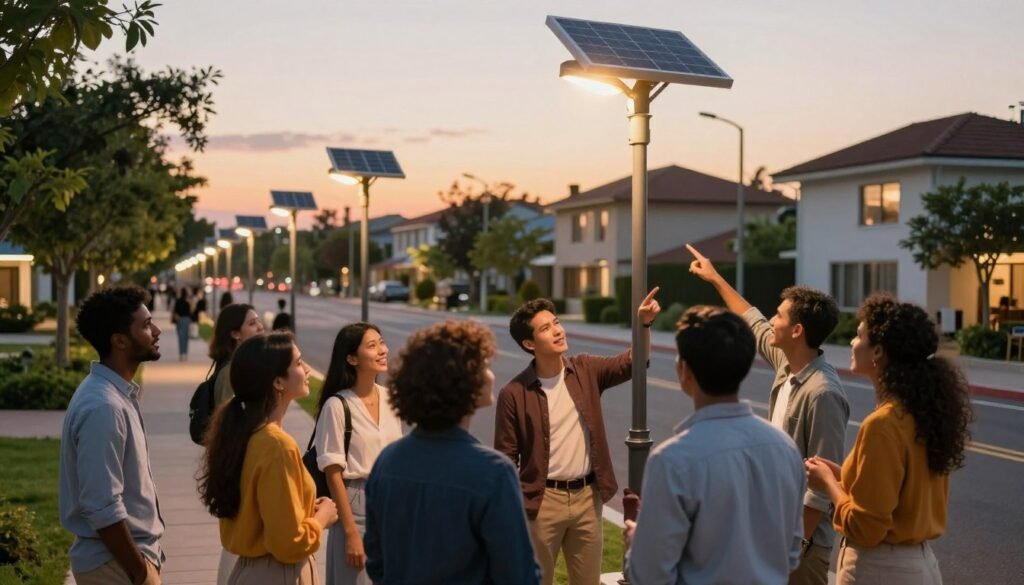
They began by explaining safety and code rules to avoid resistance. City staff met with residents to discuss liability and installation rules. This clear talk helped make community-driven lighting workable and accepted.
Community and municipal drivers
Concerns were about keeping pedestrians safe near schools, sidewalks, and transit points during dawn and dusk. Rural and northern areas got priority because of later sunrises. Outreach focused on safety and following local lighting rules.
Municipal leaders linked the project to emergency communications and reliability. They planned tests like national drills to build trust. Public meetings included traffic engineers and school officials to align goals with daily routines.
Project goals and KPIs
The project had clear goals: cut city electricity spending, reach specific kWh savings, and keep systems running over 98%. Lighting standards followed IES lux levels at sidewalks and crossings. Maintenance included yearly checks and remote alerts for faults.
Safety goals included better visibility on school routes and fewer near-miss incidents. Community satisfaction would be checked with surveys after installation. The project aimed to reduce carbon emissions, showing estimated metric-ton reductions over five years.
Solar street light selection and technical design
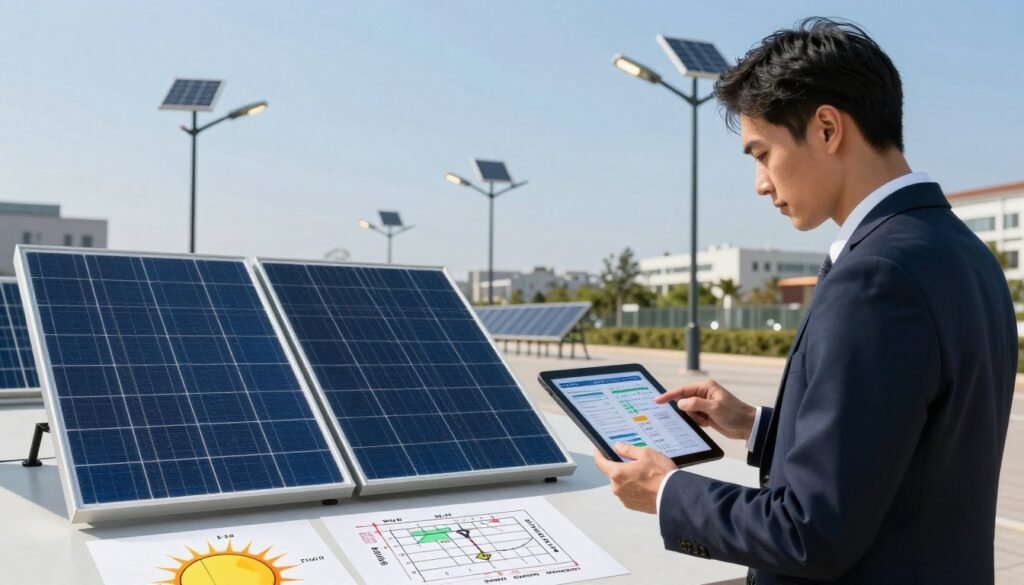
When picking street lights, first figure out what areas need light. Look at school zones, parks, bus stops, and busy roads. Also, remember that the sun rises later in the north, so adjust light schedules for early morning.
Control systems and smart features
Use smart features like dimming and motion sensors to save energy. These features are great for busy times. Plus, remote monitoring helps catch problems fast and cuts down on maintenance costs.
For areas where light might bother homes, choose lights with special optics. Opt for warmer colors like 3000K–4000K to reduce glare and blue light.
Site assessment and illumination requirements
Do a lighting check during the darkest times to see if your plan works. Use real light levels to place lights right. This ensures everyone can see well.
Focus on the most dangerous spots for more light. Use less light in quiet areas. This way, you keep everyone safe without bothering neighbors too much.
Component selection
Choose the right LED lights for your needs. For big lights outside, use aluminum to keep them cool. For smaller lights, plastic might be better.
Make sure your solar panels can handle the local sun. In places with less sun, use stronger panels. Also, pick batteries that last a few days to cover cloudy days and winter.
Plan your solar panel size based on how much sun you get. In areas with less sun, use bigger panels and tilt them more. For quick setups or emergencies, use batteries that can be charged fast.
Look at different suppliers to find the best fit for your project. Check their certifications, how fast they deliver, and how they make things. You can see options and compare at supplier listings.
Use smart controls to save energy. Set lights to turn on and off with the sun, dim when not needed, and brighten up when people are around. This makes your lights last longer and work better all year.
Installation process and project management
Planning is key to keeping the project on track and neighbors happy. Schedule the solar street light installation around the best daylight times and school calendars. This avoids long periods with little sunlight and less disruption to school mornings.
Make sure each step has a clear owner by including inspection and test plans. This way, every milestone is well-planned and executed.
Permitting and regulatory considerations
Begin the permitting process early. You’ll need approvals for electrical, structural, and public safety. Prepare detailed plans and equipment specifications for these reviews.
Keep all permits and inspection records handy. This helps address neighbor concerns and proves compliance with local rules.
Construction and deployment steps
Start with site preparation, then move to pole foundation, panel mounting, wiring, and commissioning. Use a checklist for each step and include inspection points before moving forward.
Plan work during months with good daylight to get accurate commissioning data. Break tasks into daily packages to fit the crew’s capacity. Set aside extra days for unexpected weather, utility issues, or underground surprises.
Test the lighting, shielding, and control system during commissioning. This ensures the system meets the design standards.
Community engagement during rollout
Engage the community through various channels. Send out notices, post updates online, and hold open houses or demos. This lets neighbors see the lights and shielding firsthand.
Work with local schools and transit to avoid busy times. Use clear signs and a schedule at the work site. Treat outreach like a public safety notice with regular updates and a contact for questions.
Performance outcomes and monitoring data
The project used remote monitoring and automated controls to track lighting in real time. A dashboard showed uptime, battery charge, and fault alerts. This helped managers fix issues quickly and reduce truck rolls.
Energy and cost savings
Teams logged kWh reduction to show savings over the old grid system. They compared meter reads to find the payback period for solar lights. This included savings from avoiding trenching and lower utility bills.
Reliability and uptime
The data showed solar lights were reliable in all weather. Battery performance was tracked during low sun periods. Remote alerts helped fix issues fast. Uptime data helped plan for seasonal tests and drills.
Public-safety and community impact
Clearer crossings and faster outage reports were seen. Teachers and the community shared their positive experiences. For more details, visit AISEN Solar for system design and activation.
| Metric | Baseline (Grid) | Solar System | Notes |
|---|---|---|---|
| Average monthly kWh | 1,200 | 300 | Measured kWh reduction recorded by meters |
| Average uptime | 99.0% | 98.5% | Solar lighting reliability maintained with remote alerts |
| Response time to faults | 48 hours | 12 hours | Monitoring data for street lights enabled faster dispatch |
| Estimated payback | N/A | 6–8 years | Payback period solar street lights based on energy and O&M savings |
- Track measured kWh reduction monthly to refine schedules.
- Use remote alerts to maintain solar lighting reliability during storms.
- Collect local safety feedback to document public safety improvements.
Lessons learned and best practices
This section shares key lessons from solar street light projects. It covers design, procurement, project management, and community relations. It aims to help teams plan similar projects.
Design and procurement lessons
Battery size is critical in areas with short days and long storms. Larger batteries and higher panels prevent outages during storms.
When buying, write specs for your area. Use climate data and cloud cover to set panel and battery needs. Choose brands like Cree or Philips for reliable performance.
LED lights should be bright but not too harsh. The right optics balance safety and comfort for neighbors.
Project management and community relations
Start talking to the community early. Cities like Portland and Charlotte found this reduces opposition. Explain the benefits of new lights as safety and fairness.
Be ready for legal issues. Talk to lawyers before buying and placing lights. This avoids costly problems later.
Track progress with clear metrics. This builds trust and speeds up approvals for future projects.
Operational best practices
Start monitoring solar lights from the start. Remote monitoring helps find problems fast and keeps costs down.
Adjust light schedules for schools and seasons. Smart dimming saves batteries and keeps streets safe.
Do regular tests and updates like drills. This keeps residents calm and checks systems without stress.
| Area | Best Practice | Expected Benefit |
|---|---|---|
| Design | Specify battery oversizing and panel uplift by site latitude | Resilience during multi-day storms and winter months |
| Procurement | Use local-climate technical specs and vendor performance proofs | Fewer warranty claims and better vendor accountability |
| Community | Engage early; frame upgrades as safety and equity | Higher public support and faster approvals |
| Operations | Implement operational monitoring for solar lights and automated alerts | Faster repairs and lower lifecycle costs |
| Maintenance | Schedule adaptive lighting and regular system-wide tests | Optimized energy use and sustained public confidence |
Conclusion
This study shows solar street lights do more than save energy. They make communities safer, help schools, and make daily life easier. By using the right panels, batteries, and LEDs with smart controls, they work well and save a lot of energy.
Success comes from good governance and clear talk. It’s important to involve the community early and test things openly. This way, everyone feels included and trusts the project.
For public areas, using strong housings protects the lights from the weather. Teams that plan everything from start to finish make sure the lights work well and meet everyone’s needs.
For more on durable products for outdoor use, visit solar flood light. These options are great for big, community-focused lighting projects and green public lighting systems.