
You’re looking into a smart solar garden light project for a public or commercial space in the U.S. This intro tells you what a solar garden light system is and why it’s good for saving on energy and upkeep. It combines solar panels, LED lamps, batteries, and controllers into one system. This avoids problems like damaged lines and power outages.
Going for a smart solar garden light means no electricity use at night, less CO2 emissions, and better resilience during storms and blackouts. Data shows LED bulbs last 8 to 10 years, and batteries need checks every 5 to 7 years. Many reports say maintenance drops by 40%–60% over 5–10 years.
The initial cost is higher because of the panels, batteries, poles, and smart controllers. But, you save on trenching and monthly bills, making it a good investment over time. You also get options like DarkSky-compliant fixtures and controls that reduce light pollution while keeping things safe and looking good.
Key Takeaways
- Solar garden light systems are closed and avoid grid outages by storing solar energy on-site.
- Smart solar garden light installations reduce electricity use and support city sustainability goals.
- LED fixtures last 8–10 years; batteries commonly require service or replacement every 5–7 years.
- Maintenance needs typically fall 40%–60% versus traditional lighting, improving long-term costs.
- Higher upfront costs can be offset by solar lighting ROI, incentives, and avoided trenching expenses.
Project Overview and Objectives
You’re planning to upgrade the lighting in your area with solar power. This project will replace old lights with new, self-powered ones. You’ll decide on the number of lights, battery size, pole types, and smart controls for each location.
This project will look at costs over 5 to 10 years. It will compare the initial cost of the solar setup to the savings on utility bills and less maintenance over time.
The main goals are to save money on energy and reduce maintenance. You aim to avoid digging up streets, cut down on service visits by 40% to 60%, and make the lights and batteries last longer.
You’ll work with local planners and parks departments to match budgets and schedules. Commercial property managers will check the lights’ look and how often they work. Residents want the lights to be on and safe for everyone.
| Scope Element | What You Should Specify | Why It Matters |
|---|---|---|
| Fixture Count & Layout | Number of solar garden lights per park, spacing, and lumen targets | Ensures safe light levels while optimizing hardware cost |
| Power System | Solar panel wattage, battery Ah, and controller type | Determines autonomy, night coverage, and resilience |
| Installation Costs | Poles, foundations, labor, and permitting | Drives upfront budget and payback timing for the U.S. solar lighting project |
| Operational Metrics | Maintenance intervals, expected battery life, and monitoring | Supports municipal solar lighting objectives for lower lifecycle costs |
| Stakeholder Roles | Municipal planners, property managers, resident feedback loops | Aligns procurement, maintenance, and public acceptance |
Use the table to explain the trade-offs in the project to decision makers. Clear plans in the project scope will help get approvals faster and make buying easier.
When you share the U.S. solar lighting project, focus on the goals like saving on utility bills, reducing maintenance, and improving battery and light performance.
Why Choose Solar garden light Solutions
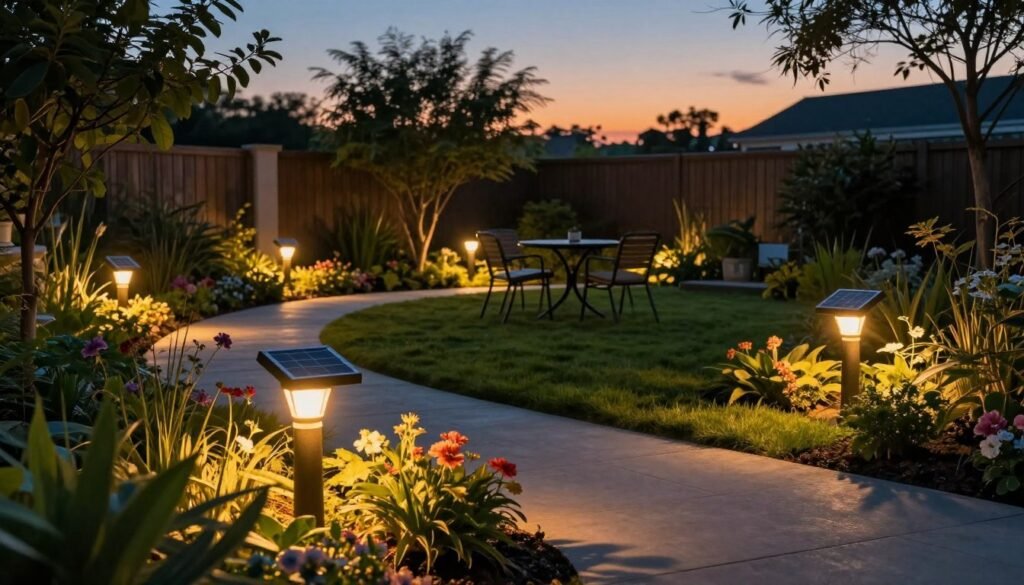
You’re looking for lighting that saves money and keeps places safe during power outages. Solar garden lights cut down on monthly bills and reduce your risk of power failures. They offer the freedom of not relying on the grid and predictable costs.
Advantages over grid-powered lighting
Solar lights don’t have electricity bills because they use sunlight and store energy. They don’t need trenches or complex wiring, making installation quick and easy. Smart controls and sensors help save energy, reducing maintenance costs over time.
These systems are designed to work independently, avoiding grid failures. This means fewer service calls and less chance of disruptions. They keep areas lit during storms and emergencies.
Environmental benefits and municipal goals
Choosing solar helps reduce CO2 emissions. Replacing traditional lights with solar ones can lower a city’s carbon footprint. This supports local sustainability goals.
Switching to solar shows in your sustainability reports, with lower emissions and reduced peak demand. It helps meet climate goals and shows public value in choosing green solutions.
Use cases where solar lighting is preferable
Solar lights are great for parks where digging would harm plants or increase costs. They’re perfect for areas with poor underground infrastructure or where excavation permits are hard to get.
Panel sizes adjust to local sunlight, so areas with lots of sun need smaller panels. You can pick fixtures and lighting styles to fit the look and safety needs of public spaces.
For product examples and suppliers, check out trusted vendors and products at best-selling solar garden light. This helps you compare features, warranties, and costs for your project.
System Components and Smart Features
Your smart solar garden light system has four main parts: solar panels, batteries, LED lights, and mounts. Each part affects how well the system works, how easy it is to maintain, and its cost. This section helps you pick the right parts for your garden and local lighting rules.
Solar panels: sizing, efficiency, and placement best practices
Choose high-efficiency monocrystalline panels that meet your lighting needs and have some extra for cloudy days. Make sure they get direct sunlight and are tilted right for your location to get the most sunlight all year.
Think about any shadows from trees or buildings when placing panels. The right spot can cut down on battery needs and make your lights work better all year.
Batteries and battery management systems: expected life (5–10 years) and maintenance needs
Battery life for solar lights can be 5 to 10 years, depending on the type and how often they’re used. Lithium iron phosphate (LiFePO4) batteries often last longer and handle more charge than lead-acid ones.
Use a good battery management system to keep batteries safe from overcharging and deep discharging. Check batteries yearly and watch their temperature to make them last longer and save on replacement costs.
LED fixtures and intelligent controls: adaptive dimming, motion sensors, DarkSky considerations
LED lights are known for their long life and steady brightness. Use them with smart dimming that lowers light when it’s quiet and goes up with motion sensors. This saves energy.
Choose DarkSky solar lights if you need to protect the night sky. These lights reduce glare and meet safety and community rules.
Mounting, pole selection, and vandalism/resilience design
Choose poles and mounts that fit your site’s wind and look. Use fixed anchors to avoid digging and make moving easier. The material you pick affects how long it lasts and how often you’ll need to fix it.
Keep your lights safe with vandal-resistant designs, tamper-proof parts, and lockable batteries. Strong poles and hidden fasteners help prevent theft and reduce service visits.
| Component | Key Feature | Typical Life | Maintenance |
|---|---|---|---|
| Solar panels | High-efficiency monocrystalline, optimized tilt | 20–25 years | Annual cleaning, shading checks |
| Batteries | LiFePO4 with BMS for charge control | 5–10 years | Annual health check, temperature monitoring |
| LED fixtures & controls | Adaptive dimming, motion sensors, DarkSky-compliant optics | 8–10 years | Sensor calibration, occasional lens cleaning |
| Mounting & poles | Galvanized or powder-coated steel, anti-tamper fixes | 15–30 years | Structural inspections, bolt torque checks |
Installation Process and Cost Breakdown
You’ll get a clear picture of costs and steps before work starts. A detailed solar garden light cost breakdown helps you understand the components. This includes panels, batteries, LED fixtures, poles, and smart controllers. The upfront cost is higher than traditional lights because of batteries and quality solar modules.
Use tools like the residential solar calculator to estimate costs. It helps you figure out generation, panel count, and installation cost per watt for your site.
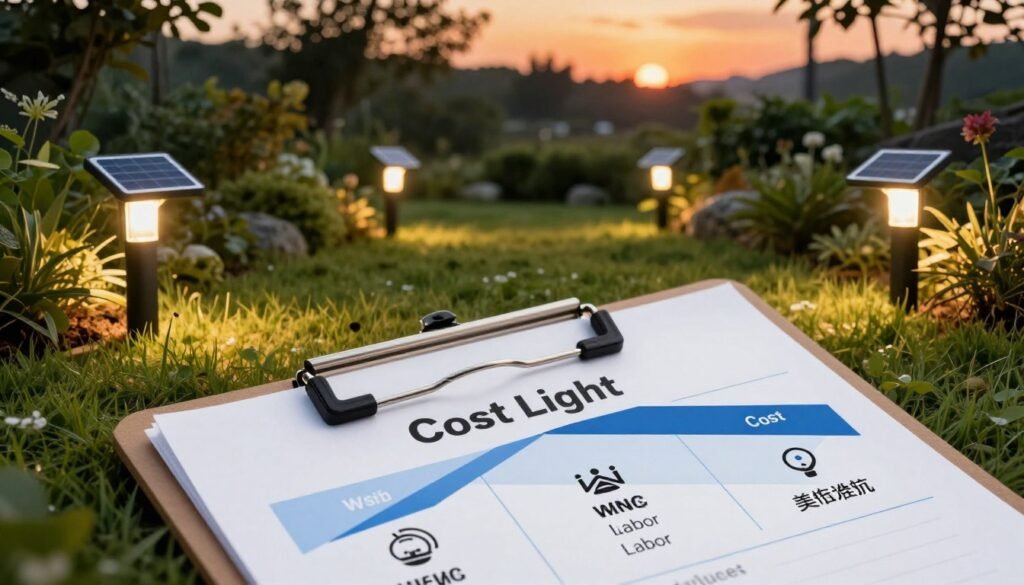
Upfront cost components
Panels are sized to meet lumen output and autonomy targets. Batteries are the biggest cost because you’ll replace them every 5–10 years. LED fixtures and poles vary by finish and vandal-resistance features.
Charge controllers and smart controllers add to the cost if you need adaptive dimming or telemetry. Labor covers foundations, anchoring, and system commissioning.
Installation logistics and labor
Trenchless lighting installation is a big benefit. It saves time and prevents landscape damage. Work moves faster with fewer utility-coordination delays.
Typical labor for a trenchless installation is lower than for a full grid tie. You also avoid repaving or sod replacement costs.
Finance, incentives, and payback
Federal, state, and local programs can lower your net price. Check solar incentives US offerings, municipal sustainability grants, and utility rebates for outdoor lighting. Incentive availability, local solar resource, and project scale influence payback and ROI.
Include avoided electricity charges and lower maintenance when calculating lifecycle savings.
Cost breakdown table
| Component | Typical Range (per fixture) | Notes |
|---|---|---|
| Solar panels | $150–$600 | Depends on wattage and efficiency; sized to lumen goal |
| Batteries | $200–$1,200 | Largest recurring capital; lifespan 5–10 years |
| LED fixtures & optics | $100–$500 | Quality LEDs extend useful life and reduce maintenance |
| Poles & mounting | $100–$800 | Vandal-resistant options raise cost |
| Smart controllers/telemetry | $75–$400 | Adaptive dimming and remote monitoring improve uptime |
| Installation labor | $150–$700 | Trenchless projects sit at the lower end of this range |
| Permits & engineering | $50–$500 | Varies by municipality and project complexity |
Steps for a reliable installation
- Consult a professional solar installer for a site review and engineered design.
- Use LiDAR and PVWatts-style modeling to confirm productive area and yearly kWh per panel.
- Finalize panel count, battery capacity, and expected installation cost ($/W) before ordering.
- Schedule trenchless lighting installation where terrain and layout allow to save time and cost.
- Complete commissioning and set up remote monitoring for performance tracking.
Your final budgeting should include financing options. Programs like interest-free local loans or municipal credit can make the project more affordable. When you weigh solar lighting installation costs, factor in solar incentives US, avoided utility bills, and lower maintenance to see project-level returns.
Performance Results: Energy Savings and Reliability
Solar garden lights save a lot of energy compared to regular lights. They use high-efficiency LEDs and smart controls. This means less money spent on electricity for lighting.
Smart dimming and motion-boost strategies help save energy. They also keep paths safe and bright. Proper sizing is key to avoid wasting energy.
It’s important to follow a detailed plan to measure and verify energy savings. This plan should match industry standards. The M&V guidance helps in choosing the right methods and setting up a solid baseline.
Reliability of solar lights depends on choosing the right parts and setting them up correctly. Proper sizing and a battery management system ensure lights work during outages. Even in extreme weather, they keep going.
Real-world data looks at how much light solar lights produce, how long they last at night, and how long the battery lasts. Design lights to meet safety standards. Use adaptive dimming to save energy at night and extend battery life.
| Metric | Typical Design Target | Field Measurement Range |
|---|---|---|
| lumen output solar lights (initial) | 2,000–4,000 lm fixture | 1,800–3,800 lm steady with dimming strategies |
| Night hours covered | Dusk-to-dawn (10–14 h) | 8–14 h depending on weather and dim profile |
| battery autonomy solar garden lights | 2–4 days of autonomy | 2–5 days measured in seasonal tests |
| Operational availability | >99% uptime targeted | 95–99% uptime in multi-site trials |
Allow time for the lights to settle before measuring. Use calibrated meters to check light levels. Data loggers help track on/off cycles and energy use.
- Make sure site conditions are stable and similar for accurate results.
- Keep track of operating hours and changes separately from energy savings.
- Include data from occupants when using controls based on their presence.
These steps help measure energy savings and reliability of solar lights. Clear data on light output and battery life guide in planning and running installations.
Maintenance Comparison and Lifecycle Costs
When comparing ongoing costs, clear numbers are key. Solar garden lights need battery checks every 5–7 years, annual cleaning, and occasional checks. LED modules last 8–10 years, so re-lamping is rare. These tasks make planning easier for property managers and municipal crews.
https://www.youtube.com/watch?v=WgxxVtZ5DWM
Looking at service frequency and labor time, solar lights show a big difference. They need 40%–60% less routine work over 5–10 years. This means fewer line troubles and no trench repairs, cutting down on costs.
Annual costs show the savings. Solar lights cost about $50 a year to maintain, while traditional lights cost $100–$120. This gap grows in areas with high electrician rates or frequent outages.
When looking at lifecycle costs, consider battery replacements, avoided bills, and lower repair costs. Add in incentives and no need for new trenches for installs. This shows the long-term value of solar lighting, more so in areas with high utility rates or wiring costs.
Below is a concise comparison to help you budget and plan maintenance cycles.
| Item | Solar System | Traditional Grid System |
|---|---|---|
| Annual routine checks | 1 inspection, panel cleaning | 2–3 inspections, fixture and wiring checks |
| Battery / Component replacement | Battery every 5–7 years, occasional controller swap | Ballast or driver replacement every 5–8 years, frequent lamp changes |
| Estimated annual maintenance cost | $45–$60 | $100–$120 |
| Labor drivers | Planned service visits, less emergency work | Higher emergency calls for wiring and power faults |
| Impact on lifecycle cost | Lower total OPEX when electricity and trenching costs are high | Higher OPEX from power bills and more frequent repairs |
| Effect on solar lighting ROI | Improved ROI where maintenance labor and energy prices are significant | Longer payback, higher ongoing expenses |
Use this comparison to plan your procurement and maintenance schedules. Focus on battery warranties and service contracts to control costs. This approach ensures lower maintenance costs and a stronger ROI for solar lighting over time.
Case Examples and Evidence from Similar Projects
Looking at municipal and commercial projects can show real impacts. Below are examples of how solar deployments avoided big civil works, cut bills, and saved CO2. These show the benefits of solar lights on a large scale.
Municipal park retrofit outcomes
The Whitecliff Park retrofit in Crestwood, Missouri, replaced old wiring with Fonroche SmartLight solar streetlights. This avoided costly trenching and repaving and cut utility bills. Staff said the light quality improved, and DarkSky fixtures reduced light pollution.
The batteries were sized for at least a decade, and LED fixtures have a 20+ year life. These features lower maintenance costs and support strong lifecycle economics in similar projects.
Commercial district implementations
For retail corridors or office parks, solar lighting cuts electricity use sharply. In many districts, electricity demand fell by about 30% after switching to solar street lights.
Business areas got better looks and steady light. Lamp swaps and ballast failures almost vanished, reducing nighttime outages and freeing maintenance crews.
Quantified industry metrics
Industry studies show clear savings. One set of projects saw maintenance drop by over 50% in two years. Replacing 1,000 grid lights with solar avoids about 400 metric tons of CO2 yearly, showing solar’s CO2 savings.
Use these metrics to compare options for your project: maintenance dollars saved, battery life, lumen retention, and avoided utility charges. These figures match outcomes in solar garden light case studies and Crestwood Whitecliff Park solar reports.
| Metric | Typical Grid Lighting | Solar Garden Lighting |
|---|---|---|
| Annual electricity cost per 1000 fixtures | $30,000 | $0 |
| Maintenance events per year (per 1000 fixtures) | 120 | 50 |
| Battery replacement interval | Not applicable | 8–10 years |
| Estimated annual CO2 avoided (per 1000 fixtures) | 0 metric tons | ~400 metric tons |
| Expected LED life | 8–12 years | 20+ years |
These examples and metrics help justify investment decisions. Look at the Crestwood Whitecliff Park solar retrofit and other commercial solar lighting results. They show how solar lights and lower costs meet municipal and private goals.
Conclusion
Smart solar lighting offers big savings. It has lower costs over time, lasts longer, and needs less upkeep. This means you save money on electricity and maintenance.
These lights cut down on routine service by 40%–60%. They can save you about $50 a year, compared to traditional lights. This helps your budget and makes lights last eight to ten years.
Smart solar garden lights are easy to install and maintain. They don’t need trenching or complex wiring. They also work well during power outages and help reduce carbon emissions.
Real examples, like park upgrades, show their benefits. They save money on electricity and maintenance. This money can be used for other important things, making parks safer and more attractive.
Even though solar lights cost more upfront, they pay off in the long run. Incentives and no utility bills help. Plus, batteries last 5–10 years, making the investment worthwhile.
Learn more about choosing the right components and design at Solar garden light solutions. This will help you plan your project with confidence.