
This case study looks at how a custom solar power system and a UPS for home use kept electricity flowing for a rural home in Ivy Todd, Norfolk. It also shows how a family in California prepared for emergencies. The aim is to demonstrate how a solar array, battery storage, PS power control system, and UPS can make a home’s power reliable and secure.
The story highlights two installations. The White family in Powerguard’s off-grid setup includes 12 × 420 W panels, a 15 kVA PS power control system, and a 930-Amp battery bank. City Prepping’s urban setup features Rich Solar Mega panels, Pytes V5 batteries, and an EG4 Kilowatt PV hybrid inverter. AmpereX offers local service and warranty, promising cost savings and support.
Key Takeaways
- A solar array and battery bank can replace diesel for many rural homes.
- UPS integration ensures seamless automatic switchover for critical loads.
- System design must balance panel output, battery capacity, and inverter/PS capabilities.
- Local vendors like Powerguard, City Prepping, and AmpereX provide proven components and support.
- Well-engineered off-grid solar solutions reduce operating costs and improve resilience.
Project Overview: Residential Off-Grid & Backup Power Objectives
This project focuses on two homes with different needs. One home in Norfolk was built in a barn and needed off-grid power because it was too expensive to connect to the grid. The other home in California wanted a system that could handle power outages and rising energy costs.
Project background and homeowner goals
The White family in Norfolk wanted reliable power for their home. They chose solar power for its low cost and environmental benefits. In California, City Prepping aimed for a system that could grow and be ready for emergencies.
Site context and constraints
The Norfolk home had no nearby power lines. So, it was designed to be fully off-grid with lots of battery storage and a backup generator. The California home stayed connected to the grid but faced frequent power cuts and high costs. It was designed to work independently and expand as needed.
Scope of work: solar array, battery storage, PS control system, and UPS integration
The project included solar panels and battery systems for each home. The White family’s home had 12 solar panels and a big battery bank. City Prepping’s home had 20 panels and a system that could send power back to the grid.
Both homes used UPS systems for smooth power transitions. They also had backup generators for when the sun wasn’t shining. The systems used lithium batteries and special inverters to meet safety standards.
For more on backup power options and solar generators, see this supplier overview: solar generators and off-grid equipment.
Challenges: Reliability, Cost, and Environmental Concerns
Remote properties face tough choices without grid service. They must weigh practical limits, long-term costs, and safety rules. Planning involves balancing initial costs with ongoing expenses and local permits.
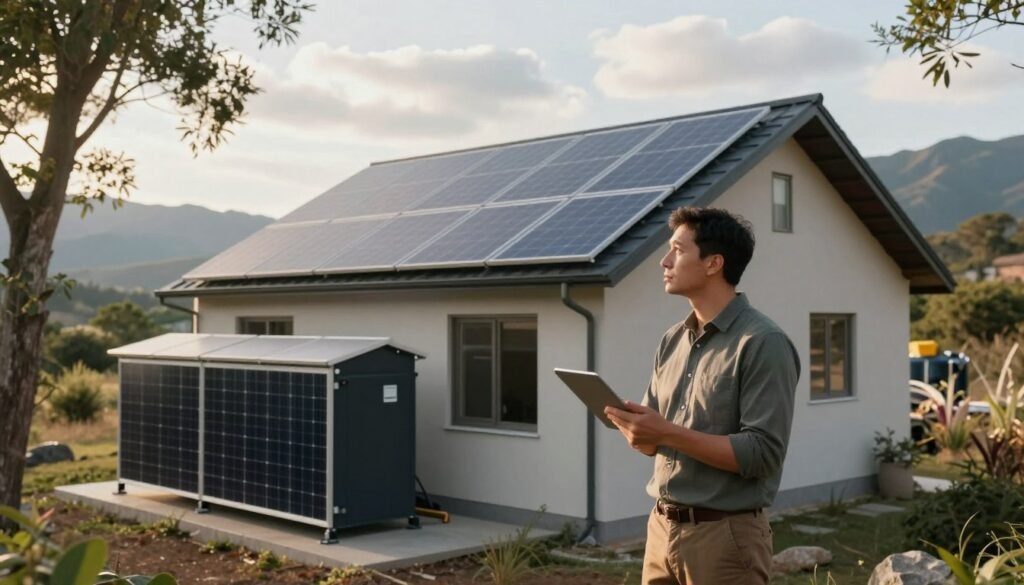
No grid access and high cost of grid extension
Extending lines to the grid is often too expensive for homes. The cost of grid extension can be more than the value of years of electricity. So, on-site generation becomes a better choice.
Designs start with full off-grid systems. They are sized for construction and home needs. A modular system allows homeowners to increase capacity as needed, without major changes.
Operational costs and environmental impact of diesel generators
Diesel generators have high costs for fuel, filters, oil, and maintenance. These costs add up fast, making them less economical for long-term use.
Diesel emissions also go against sustainability goals. Many use generators only for emergencies. This reduces fuel use and shifts daily power to solar and batteries.
Need for scalable, code-compliant solutions that meet local permitting
Local authorities require certified equipment and clear documentation. In California, UL-listed battery systems and inverters speed up approval. This lowers inspection issues.
Modular battery packs and UL-tested inverters help with permits. They allow safe expansion. Choosing components with warranties and service options supports reliability and compliance.
For practical examples and support, check out Aisen Solar Energy. They offer design, warranty, and maintenance options for homeowners.
System Design: Solar Panels, Battery Storage, and Power Control
Creating a good solar system plan starts with matching your daily energy needs with what panels can produce. First, list all your energy needs. Then, choose the right panel size and number to meet those needs. For example, you might need 12 panels of 420 W each for 5.04 kW, or 20 panels of 550 W for more energy.
Place panels in sunny spots, ideally facing south. If using special bifacial panels, also consider reflective surfaces.
Using existing structures can save money and time. For instance, putting panels on container roofs or carports is cost-effective. Make sure panels are in the right spot by doing a shading analysis and checking local sunlight levels.
Think about panel tilt, wind load, and how easy it will be to maintain them from the start.
Solar array selection and placement strategies
Choose the right panel type for your site. Bifacial panels can capture more energy if the ground reflects a lot of light. Higher-wattage panels mean fewer strings and less complexity. Arrange strings to minimize shading and mismatch effects.
Also, consider how many inputs your inverters or MPPTs need to avoid overloading charge controllers.
Battery sizing and chemistry considerations for long-term reliability
To size batteries, start with your daily Wh needs and how many days you want backup. Use depth-of-discharge and system efficiency to find Ah at the chosen voltage. For critical loads, it’s wise to oversize slightly to extend battery life.
For example, a 930-Ah battery at 12 V can power essential circuits for hours when sized for three days of autonomy.
Choosing the right battery chemistry affects costs over time. Lithium-ion batteries like Pytes V5 offer better efficiency and longer life. Lead-acid batteries might be cheaper upfront but need more maintenance and deeper derating for longevity. Consider expected cycles, warranty, and replacement costs when picking chemistry.
Role of the 15 kVA PS power control system and UPS integration
A 15 kVA PS power control unit manages energy flow between PV, batteries, and loads. It ensures safe charging, prevents overloads, and reduces battery stress during high-demand times. It works with inverter logic to switch between solar and battery modes smoothly.
UPS integration ensures a smooth transition for critical circuits. The UPS handles sudden changes and keeps AC power on for important loads while the PS rebalances energy sources. Add automatic generator start/stop logic for longer low-solar periods to limit manual actions and protect batteries.
For detailed guidance on sizing components and controllers, check this guide from Leonics: PV system component sizing. It covers panel generation, controller margins, and how to size batteries and inverters for detailed designs.
solar power system: Components, Capacity, and Performance Expectations
This setup explains the key parts of a solar system and how they turn sunlight into energy for homes. It talks about the number and size of panels, battery size, and how long they last. It also covers the inverter UPS and other power control gear.
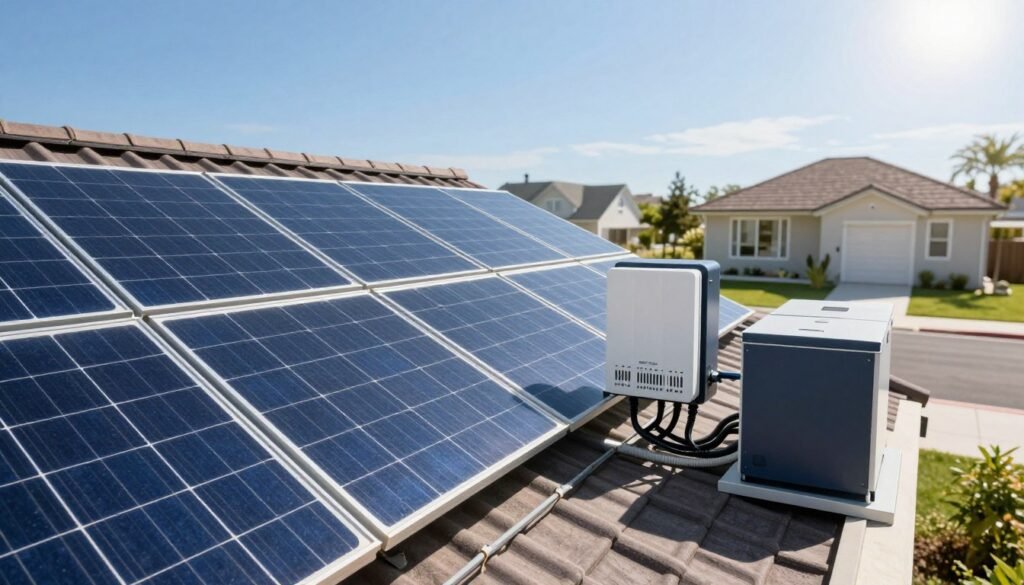
Choosing the right solar panels is key. A small example has 12 panels of 420 W each, making a 5.04 kW system. On sunny days, this system can make 20–30 kWh of energy, depending on the season and sun direction.
For bigger needs, a 20-panel setup with 550 W panels can make about 11 kW. This means more power for bigger loads, faster battery charging, and better performance on cloudy days.
Battery banks turn the energy from panels into usable power. The White family’s 930-Amp battery bank supports their home for hours. How long it lasts depends on what they use it for.
Modular batteries like the 20 kWh Pytes V5 offer clear capacity and predictable use. Designers must think about how deep to discharge the battery and the inverter’s efficiency. This helps figure out how much energy is available each day.
An inverter UPS controls when to switch to battery power and what to keep running. Modern hybrid inverters, like the EG4, switch fast to keep important devices running smoothly.
Power control systems manage which loads to keep running and when to start a backup generator. This keeps the batteries healthy and ensures critical loads keep working.
| Example | Array Nominal (kW) | Approx. daily kWh | Storage | Expected battery runtime (essential load) | Inverter/UPS behavior |
|---|---|---|---|---|---|
| White family | 5.04 | 20–30 | 930-Amp battery bank | Many hours to days, depending on load | Millisecond switchover, prioritized circuits, gen fallback |
| City Prepping | 11.0 | 40–55 | 20 kWh Pytes V5 modular bank | Defined usable hours based on 20 kWh usable capacity | Fast transfer, staged charging, documented reliability |
Installation & Implementation: Site Work and Best Practices
Having a solid installation plan helps avoid delays and saves money. Begin with a site survey to check roof strength, wind risks, and waterproofing. Also, look at shading and cleaning access.
Use this info to plan panel layout, wiring, and safety zones. This ensures a smooth installation process.
Using existing structures can make installation faster and cheaper. For example, mounting panels on shipping container rooftops saved time. Before starting, make sure the containers can handle the load and meet codes.
Choosing the right panel tilt and racking is key for long-term performance. Consider local snow loads, drainage, and maintenance access. Use corrosion-resistant hardware and flashings to protect the roof for decades.
Safety and following codes are essential. Use UL-listed battery enclosures and inverters, like Pytes V5 models, if needed. Keep all necessary documents ready for inspectors.
Testing solar systems is a detailed process. Check PV output, battery charge, inverter timing, and generator integration. Document everything and teach the homeowner how to use the system.
Monitoring solar systems adds value. Install remote devices and set up inverter portals for real-time data. This helps catch issues early and reduces downtime.
Plan for preventive maintenance based on the manufacturer’s advice. Schedule inspections, battery checks, updates, and generator service. Keep track of when parts need to be replaced for warranty purposes.
Choose suppliers with local support for faster service. Companies with local showrooms and techs can help quicker. This boosts reliability and homeowner trust.
Results: Energy Independence, Cost Savings, and Reliability Improvements
This project made two homes more energy independent. The White family now has a 10KW/10KWh system that meets most of their needs. City Prepping also goes off-grid and keeps important circuits on during blackouts, ready for the grid when needed.
Using less fuel and needing less maintenance saved a lot of money. Not using diesel generators as much cut down on costs and reduced service needs. For city homes, this means saving money over nine years, and almost free electricity for 20 years.
Everyday life is more reliable with this setup. Automatic switches and high-capacity batteries ensure power when the grid fails. Smart systems and long-lasting batteries mean less chance of system failure.
Even when the sun is low, a backup generator kicks in. This makes the system very reliable without relying too much on fossil fuels. The solar system, inverter, and battery keep the essentials running smoothly.
Using less diesel also means less pollution and better air quality. This helps homeowners meet their green goals. By using solar power directly, more carbon is saved.
Choosing long-lasting lithium batteries makes the system even better. For more on battery life and smart systems, visit Aisen Solar Energy.
| Metric | Typical Result | Impact |
|---|---|---|
| Energy independence | Full off-grid or hybrid-ready operation | Reduced generator reliance; sustained critical loads |
| Cost savings solar | 30–40% lower electricity expense; ~9-year payback | Lower monthly bills; long-term savings |
| Reliability improvements | Seamless switchover; ≥6000 battery cycles | Minimal interruptions; extended system life |
| Environmental benefits | Significant reduction in diesel use and emissions | Cleaner onsite air; smaller carbon footprint |
- Reduced generator hours cut fuel spend and service costs.
- Smart BMS and active balancing protect battery health and performance.
- Hybrid-ready designs keep options open for future grid ties.
Comparative Case Notes: Preparedness-Focused and Urban Resilience Examples
Two examples show different ways to build resilience. One focuses on being ready for urban wildfires. The other shows how to make rural areas off-grid using existing buildings. These examples show how design, parts, and service differ.
Preparedness-focused deployment
City Prepping set up a modular system with five Pytes V5 battery modules for 20 kWh. They used 20 Rich Solar Mega bifacial panels and an EG4 Kilowatt PV hybrid inverter. This made an 11 kW solar array ready to export power quickly after getting permits.
The system was designed for safety, meeting UL 9540, UL 1973, and 9540A standards. It aimed for smooth operation during power shutoffs and could grow to support more hybrid systems later.
They expected the system to provide steady backup and to pay for itself in about nine years. The Pytes V5 modules came with a 10–12 year warranty, showing reliability.
Rural off-grid conversion example
The White family turned a small site into an off-grid spot. They used container-mounted panels and a big battery bank. Their setup had 12 × 420 W panels (about 5.04 kW), a 930-Amp battery bank, and a 15 kVA PS power control system.
They reused a shipping container’s rooftop to save money and speed up the setup. A generator was kept for emergencies, while solar and battery power handled daily needs. This made the site fully off-grid.
Using less diesel, they cut costs and made the site more reliable. Local techs helped with setup and upkeep through established services.
Service and warranty considerations
Look for vendors with good warranties and local support. Retail warranties usually last five years. But, Pytes warranties last 10–12 years, affecting costs over time.
Many countries have shown low failure rates for Pytes modules. Local shops and service centers offer support, including inspections, claims, and repairs.
| Use Case | Key Components | Primary Benefit | Warranty / Support |
|---|---|---|---|
| Urban preparedness | 20 × 550W bifacial panels; 5 × Pytes V5 (20 kWh); EG4 hybrid inverter | Seamless backup during planned shutoffs; modular growth | 10–12 year Pytes warranty; regional service centers |
| Rural off-grid | 12 × 420W panels (5.04 kW); 930-Amp battery; 15 kVA PS | Full off-grid capability; reduced fuel dependence | Local installer support; standard retailer warranties (5 years) |
| Lifecycle planning | Component-level replacements; modular batteries | Lower total cost of ownership; predictable maintenance | Manufacturer warranty solar storage and local service networks |
Conclusion
This review shows that a good solar power system is key. It needs the right size PV array, big batteries, and strong power control. This setup gives reliable backup power and saves on fuel and maintenance.
A case study shows how solar can help rural areas. By using container arrays and a 15 kVA system, they avoid expensive grid extensions. This also cuts down on generator use.
Urban areas also benefit from solar. Modular, UL-certified lithium systems like Pytes V5 are great. They are scalable and meet code standards, improving permits and ROI.
Key takeaways include designing based on real needs and choosing certified batteries. Make sure the system has automatic transfer logic and a backup generator. Think about costs, warranties, and local support before buying.
If you’re following this study, start by checking your energy needs. Get professional advice and compare certified parts. This will help you find the best solution for your home.