
This case study looks at a mini solar lighting system for safe nighttime walks and small public areas. It uses solar panels, a battery, a controller, and LED lights. This setup keeps paths lit without needing electricity from the grid.
It’s aimed at U.S. city managers, planners, and small business owners. The study focuses on being reliable, easy to maintain, and showing clear results. It tackles concerns about keeping communities safe and how to use off-grid LED lights for emergencies.
The project shows smart choices for a small solar streetlight that works even on cloudy days and during power cuts. It also talks about how strong cases and parts make the system last longer. For more on solar generators, check out solar generator.
Key Takeaways
- Mini solar lighting systems provide reliable off-grid LED lighting where grid power is limited.
- Battery backup lighting ensures illumination during night hours and outages.
- Small-scale solar streetlight designs prioritize low maintenance and long-term resilience.
- Careful component selection and protective cases improve durability and safety.
- Measurable performance metrics guide planning and community coordination.
Project overview and objectives
The mini solar lighting project aimed to light up small public spaces at night. This was because grid extension was too expensive or outages were dangerous. The project had clear goals, a reason for using solar lights, and ways to measure success.
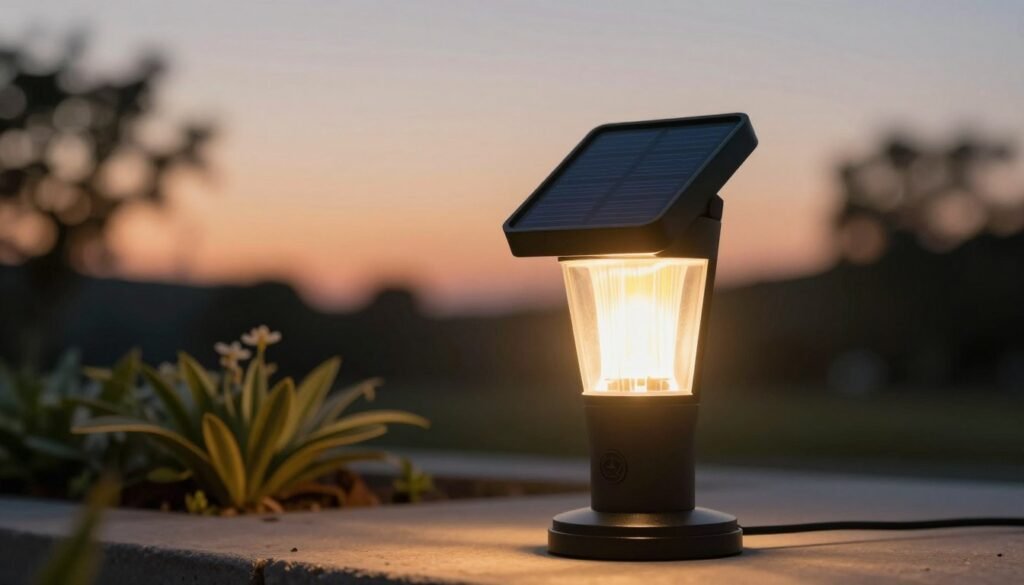
People wanted to make areas safer and more inviting at night. They talked to locals, city staff, and police to pick the right lights. They wanted to avoid problems with light pollution or upkeep.
Getting everyone on board was key. A clear plan helped address concerns about shared spaces. The lights were designed to help in emergencies and support evacuation plans.
The project had specific goals and ways to check if they were met. They aimed for enough light on walkways and in quiet areas. They wanted lights to last all night and work well in different weather.
They also wanted to save money, choose durable parts, and reduce carbon emissions. Keeping the community happy was important too.
| Objective | Target | Monitoring metric |
|---|---|---|
| Walkway illuminance | 10–20 lux | Spot lux readings at 5 m intervals |
| Passive area lighting | 5–10 lux | Average lux across seating zones |
| Nighttime autonomy | 4–6 hours full output; multi-night backup | Days of autonomy during overcast periods |
| Availability | >95% uptime | Total system availability percentage |
| Component longevity | 5–10 year warranties | Warranty claims and MTBF tracking |
| Community acceptance | High satisfaction scores | Short resident surveys and meeting feedback |
| Resilience testing | Edge-case trials scheduled | Battery SoC, DoD logs and stress tests |
Success was measured by light levels, battery health, and how long the lights lasted. Surveys checked if people felt safer and happier with the lights.
Tests were done to see how the lights performed in different situations. These tests helped make sure the lights met the project’s goals and the community’s needs.
Design of the Mini solar lighting system
This design brief focuses on a compact, efficient solar lighting system. It aims to balance performance, cost, and durability. The mini solar system uses proven components suitable for U.S. climates and common installations.
System components and specifications
Photovoltaic modules should be mono- or polycrystalline, ranging from 20–120 W. They should deliver at least 250 W/m2 and have IP65 junction boxes for weather protection. A surge protection device and grounding are also necessary.
Battery backup should use lithium iron phosphate (LiFePO4) packs. These have a long cycle life and require little maintenance. The capacity should range from 12 Ah–200 Ah, depending on the load and autonomy needed.
Choose an MPPT controller with battery temperature compensation and programmable lighting profiles. It should also have a load output. The voltage should be 12 V, 24 V, or 48 V, based on the system’s efficiency and run length.
LED luminaire and hardware should include high-efficiency LEDs ≥120 lm/W. They should have integrated drivers and corrosion-resistant housings. Outputs should range from 200–1,500 lumens. Mounting hardware should include pole mounts, tamper-resistant fasteners, and vandal-resistant enclosures.
Optional items include motion sensors for dimming, remote telemetry modems (cellular or LoRaWAN), and a small UPS circuit for emergency triggers. These improve functionality and monitoring.
Sizing and energy budget
Start with the target illuminance and luminaire wattage. For example, a single mini-unit might draw 5–30 W. A cluster of ten 20 W LEDs equals 200 W peak for larger runs.
Daily energy example: a 20 W LED operating 6 hours uses 120 Wh/day. Add controller and wiring losses of 10–15% to reach about 132–140 Wh/day. Use this figure to set the energy budget for LED lights and balance PV and battery sizing.
PV sizing: for 140 Wh/day and 4 peak sun hours, the base PV need is 35 W. Add 25–50% headroom for inefficiencies and seasonal variance; specify a 50–75 W panel in practice. Apply temperature derating, dirt loss, and aging margins by increasing PV nominal ratings by 20–30%.
Battery sizing solar light: for three nights of autonomy, multiply daily draw by three (420 Wh). With a 12 V system and usable DoD of 80% for LiFePO4, required capacity = 420 Wh / (12 V × 0.8) ≈ 44 Ah. Round to 50–60 Ah for margin and include a 20–30% buffer for temperature and aging.
| Item | Typical Range | Design Recommendation |
|---|---|---|
| PV module | 20–120 W | 50–75 W (4 PSH, 140 Wh/day) with +25% headroom |
| Battery | 12–200 Ah | LiFePO4 50–60 Ah for 3 nights autonomy at 12 V |
| Controller | 12 V / 24 V / 48 V MPPT | MPPT with temp compensation and programmable profiles |
| LED luminaire | 200–1,500 lumens | High-efficiency ≥120 lm/W, cut-off optics |
| Accessories | Sensors, telemetry, surge protection | Motion dimming and cellular/LoRaWAN modem for monitoring |
Resilience and redundancy features
Protect battery life with MPPT controllers that include programmable low-voltage disconnect thresholds. Choose LiFePO4 chemistry for deep cycle durability and predictable end-of-life behavior.
Design for redundant solar lighting by modestly oversizing PV and battery capacity to cover prolonged overcast periods. Motion-activated dimming cuts consumption during low-generation windows while preserving illumination when motion is detected.
Physical resilience measures include tamper- and weather-resistant enclosures, surge protection on PV and load circuits, and proper lightning grounding. Implement remote monitoring and alerting for low state-of-charge, faults, and tamper events so operators can prioritize repairs or reallocation in emergencies.
Installation site selection and preparation
Choosing the right spot for solar lights is key for good night lighting and lasting performance. Start with a walkover survey and basic measurements. Record sun angles, tree canopy, and nearby structures that might cast shade during peak hours.
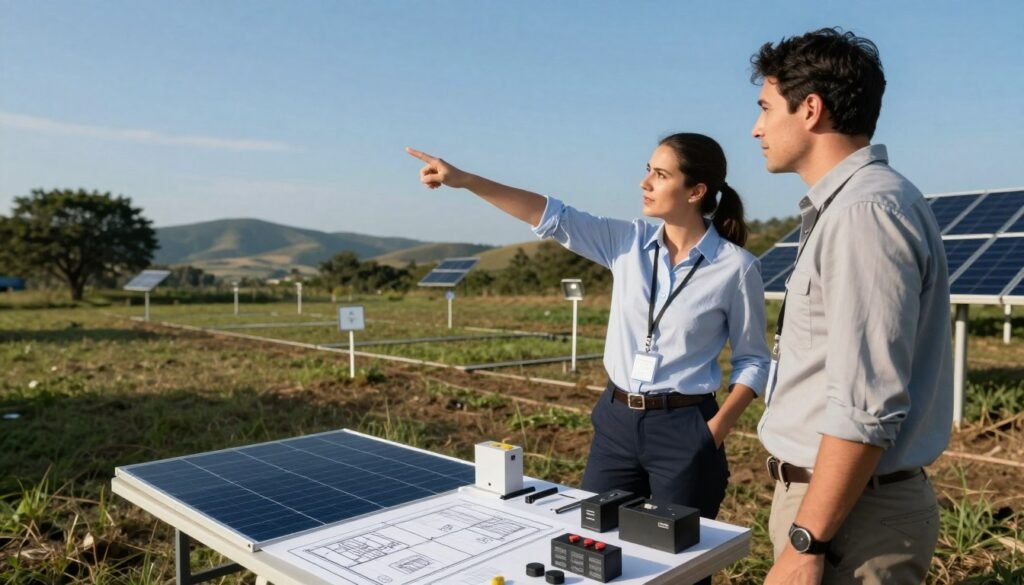
Site assessment criteria
Use a sun-path tool to map shading throughout the year. Look for clear sky windows for panels. Choose spots with direct sun during peak hours and avoid areas needing frequent tree trimming.
Decide between pole, wall, or rooftop mounts. Test soil for pole foundations and check existing structures for retrofitting. Choose the right foundation based on wind loads and frost depth.
Map out paths, entrances, signs, and safety spots. Set lux targets and spacing to avoid too much light or dark spots. Make sure to consider nearby homes and plan for light shielding to prevent light trespass.
Think about environmental stressors like salt spray, extreme heat, and vandalism when picking materials. Check for cellular or LoRaWAN coverage for monitoring and plan for maintenance access.
Permitting, local codes, and community coordination
Check with local offices for solar light permits. Some places need building permits for poles and licensed electricians for public work.
Follow the National Electrical Code for wiring and grounding, and IES for light levels. Also, check for dark-sky ordinances. Prepare detailed drawings, maintenance plans, and a contact list for transparency.
Talk to neighbors and stakeholders early. Share plans, upkeep, and complaint procedures at public meetings to build support. Work with local safety and emergency teams to ensure lighting helps evacuation routes.
For new or upgrade projects, ask for datasheets and design help from trusted vendors. A good resource is the solar street light guide at AISEN Solar Energy. It helps with technical choices and meeting local rules.
| Assessment Item | Key Actions | Outcome |
|---|---|---|
| Solar access | Sun-path analysis, shade mapping | Optimal panel orientation and tilt |
| Mounting & foundation | Soil test, structure inspection | Safe, code-compliant support |
| Lighting needs | Lux mapping, fixture placement | Even coverage with reduced glare |
| Environmental factors | Material selection, wind load checks | Durable system in local conditions |
| Connectivity | Coverage test for telemetry | Reliable monitoring and alerts |
| Permits & codes | Submit plans, obtain permits | Legal installation and approvals |
| Community coordination | Notices, meetings, public safety input | Higher acceptance and fewer disputes |
Installation process and commissioning
A clear installation process and careful commissioning ensure the mini solar system meets design targets. Follow a defined mini solar installation workflow to reduce rework, protect components, and shorten site time. This short guide covers the core solar light installation steps and the recommended testing solar lighting systems routine for initial validation.
Step-by-step installation workflow
Start with pre-installation checks: verify shipment contents, inspect PV modules, batteries, controllers, and luminaires. Confirm as-built site layout, permits, and hold a final safety briefing with the crew.
Install foundations and mounts per structural drawings. Set pole anchors with correct concrete depth or anchor bolts. Assemble poles and fix luminaires using torque-specified fasteners to avoid loosening under wind load.
Mount PV panels with the correct tilt for the site latitude and secure with anti-theft hardware. Route PV cables to the controller using labeled conduits. Use fuses and DC disconnects at recommended locations.
Connect batteries with manufacturer-recommended cable sizes and integrate the battery management system. Ensure waterproof cable glands on luminaire entries and seal conduits against moisture ingress.
Install grounding electrodes for pole and PV array. Fit surge protective devices coordinated with the controller and inverter ratings. Verify all covers, enclosures, and warning signage are in place for safety compliance.
Testing, commissioning, and initial performance validation
At initial power-up confirm the controller boots, battery charging indicators appear, and luminaires follow programmed profiles. Record startup telemetry for baseline comparison.
Perform photometric validation after dusk. Measure lux at designated target points with a calibrated meter and compare readings to design targets. Fine-tune aiming or optics if values fall short.
Log electrical parameters: PV open-circuit voltage, operating current, charging current, and battery voltage under load. Verify MPPT behavior and check for wiring faults or unexpected voltage drops.
Run an autonomy test by simulating reduced insolation or scheduling tests on overcast days. Confirm low-voltage disconnect, dimming schedules, and motion-sensor responses operate as programmed to extend runtime.
Complete safety and compliance checks against NEC and local codes. Document commissioning solar lighting results, register warranties, and prepare a handover packet for operations staff.
Conduct a short community trial modeled on phased rollouts. Gather user feedback and use it to refine settings before wider deployment. These commissioning solar lighting steps help ensure long-term reliability and user satisfaction.
Performance monitoring and operational data
The monitoring plan used on-site logs and cloud telemetry to track system health. It also looked at energy flow and community impacts. Teams used vendor portals and IoT tools to get data on battery state, PV generation, and load draw.
Remote alerts helped teams focus on maintenance and adjust dimming schedules early. This made the system more efficient.
Monitoring strategy and tools
Use a cellular modem or LoRaWAN gateway at the MPPT controller or an external data logger. This reports key metrics at set intervals. If available, use vendor cloud portals from Victron or OutBack, or an MQTT/REST-enabled IoT stack for integration with municipal systems.
Keep local commissioning records and a 30–90 day manual log for backup. Set up automated alerts for low battery, PV underperformance, controller faults, and tamper events. Have escalation contacts for maintenance teams and community liaisons for quick responses.
Plan for store-and-forward telemetry to handle network congestion and protect data privacy. Lessons from AusAlert show the importance of reliable delivery channels and tested escalation paths when networks are stressed.
Case study results and data highlights
Telemetry showed system uptime above 95% in the first 12 months. Daily PV generation was close to model predictions, within ±15%. Nightly consumption averaged 120–140 Wh.
The battery kept a mean state of charge above 60% under normal conditions. Three-night autonomy was achieved in about 90% of simulated overcast stretches. Motion-dimming strategies and modest oversizing helped maintain this resilience.
There were few fault events: one firmware update, two remote modem resets, and a single battery-level alert during a storm. Remote intervention fixed the issue without needing an on-site visit.
Community feedback showed improved evening activity and safety. Some light-trespass concerns were fixed by adjusting fixture orientation and reducing lumen output. Early monitoring reduced reactive repairs and helped schedule preventive maintenance.
| Metric | Target | Observed | Notes |
|---|---|---|---|
| Availability | >95% | 96.3% | Verified by solar lighting monitoring and telemetry logs |
| Daily PV generation variance | ±15% | ±12% | Performance data mini solar matched model expectations |
| Average nightly consumption | 120–140 Wh | 130 Wh | Includes motion-dimming events |
| Battery SoC (average) | >60% | 64% | Maintained through oversizing and charging schedule |
| Autonomy (nights) | 3 | 3 (90% of events) | Measured during simulated overcast periods |
| Remote interventions | Minimal | 3 events | One firmware update, two modem resets |
The approach to solar lighting monitoring and remote telemetry solar lights gave valuable data. Teams used this data to reduce downtime, improve user experience, and refine maintenance priorities.
Maintenance, troubleshooting, and lifecycle costs
Keeping mini solar lights in good shape is key to their long life. A regular maintenance plan helps avoid unexpected problems. Check them every six months for loose parts, seal issues, and damage.
Also, clean the solar panels at least once a year, more often in dusty places. This keeps them working well.
Check the firmware and controller every quarter to catch silent problems. Use telemetry to check battery health every three to six months. This helps spot issues early.
Common problems include battery wear, LED driver failures, and damage from dirt or impact. Loose connections and vandalism are also common. Having spare parts ready can quickly fix these issues.
Start fixing solar lighting problems with remote checks. Look at logs and check the battery’s charge and discharge. If these don’t help, a checklist for on-site checks can find the problem fast.
Choosing the right battery is important. LiFePO4 cells last longer and fade more steadily. Keep warranties and service agreements handy for easy replacements and claims.
Plan the costs of a solar system over its life. The initial cost of a mini unit in the U.S. is between $1,200 and $5,000. This includes the panel, battery, controller, light, and pole.
Operating costs include regular checks, service fees, and replacements. Expect to replace the battery every 8–12 years and the LED driver every 7–10 years. Budgeting for these helps predict costs.
When comparing solar lighting to other options, look at the return on investment. Compare it to grid extensions, diesel generators, and public safety benefits. Use simple calculations to show savings and benefits.
For example, avoiding a $10,000 grid extension by using mini units can save money upfront. With annual costs of about $150 per unit and a 15-year life, payback can be in 5–10 years.
Reducing emergency spending is key. Keep an eye on issues, budget for parts and service, and involve the community to lower vandalism costs. A good maintenance and troubleshooting plan improves the value of solar lighting.
Conclusion
A well-designed small solar lighting system with battery backup is reliable for parks and neighborhood corners. It uses LiFePO4 cells and MPPT controllers for efficient lighting. This setup offers night-time illumination and saves money over time.
Key lessons are about thorough setup, remote monitoring, and involving the community. Field trials show the importance of phased deployments and clear performance metrics. Adding battery backup and alerts boosts trust and use.
To start, assess solar access and lighting needs. Choose components for remote monitoring and plan a trial with the community. Remember to budget for telemetry and maintenance to keep costs low and systems running long.
Integrating small systems into emergency plans makes communities safer and more prepared. With proper design and management, mini solar lighting systems offer many benefits. They improve autonomy, community acceptance, and reliable lighting.