A mid-sized plastic parts factory in Kanpur used about 500 kW of power each month. They paid ₹18–20 lakhs for electricity before turning to solar. Spectra Solar Power set up a 500 kW rooftop PV system to lower costs and boost reliability.
The system had around 1,500 panels, inverters, and mounting. It also included optional battery storage. Costs ranged from ₹2.2–2.5 crore for a grid-tied system to ₹3.2–3.5 crore with batteries.
After installation, the results were impressive. The factory saved about 70–80% on electricity bills. This meant saving ₹12–15 lakhs each month, or around ₹1.5 crore annually.
Spectra Solar Power handled everything from site survey to maintenance. This shows how a focused solar installation can quickly pay off and offer ongoing benefits.
This case study matches global examples like IKEA and ALDI Australia. They’ve seen big savings and brand boosts from large solar systems. NREL also points to cost drops by 2030. Adding storage to solar systems can be worth it for extra resilience.
Key Takeaways
- A 500 kW industrial PV system can cut factory electricity bills by 70–80% and yield fast payback.
- Total installed cost varies: grid-tied systems ~₹2.2–2.5 crore; with batteries ~₹3.2–3.5 crore.
- End-to-end services from experienced installers reduce execution risk and improve performance.
- Pairing solar power system installations with storage increases resilience but raises upfront costs.
- Commercial solar case study examples and NREL data show long-term declines in solar costs and benefits from scale.
Project overview: background, objectives, and site profile
The project started with a goal to cut down on high energy bills for a plastic parts maker in Kanpur. The factory runs all day, leading to big energy needs during the day. They wanted to save money and keep costs steady for 20 years.
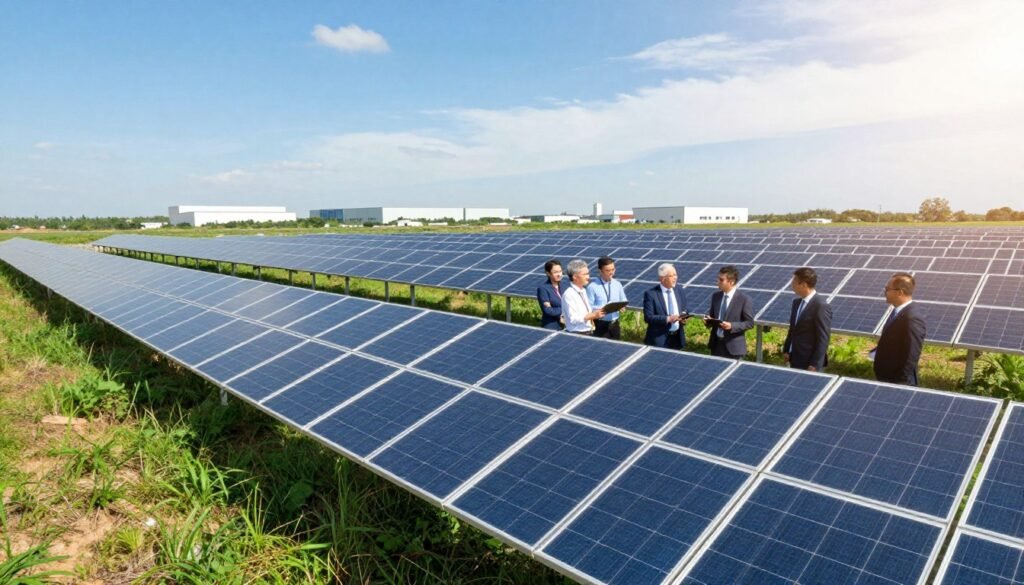
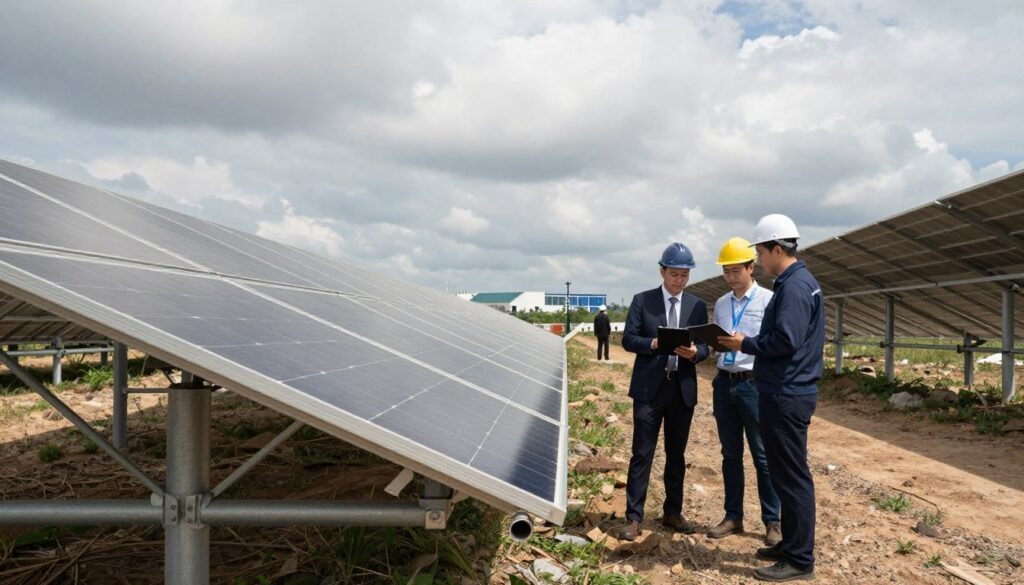
The team looked at the roof’s condition, size, and any shadows. Spectra Solar Power did a detailed check. They found the roof was strong enough and the sun was right for a 500 kW system.
The factory uses a lot of energy for molding, cooling, and other machines. This makes it perfect for solar power. It helps lower bills, keeps costs stable, and protects against power price changes.
The project aimed to see how much energy bills could be cut. They wanted to know how much power the solar system would make and how often it would work. They also looked at how fast they could get permits and connect to the grid.
They looked at two options: connecting to the grid or using batteries. They checked if the roof could hold the solar panels and how to install them. They also looked at the costs of getting permits and connecting to the grid.
They used past projects to figure out how much power the roof could handle. They combined data on sunlight, energy bills, and roof details to suggest the best system size. This plan fits the factory’s needs and goals.
Challenges encountered during industrial solar deployment
Big projects often face financial hurdles. The cost of a 500 kW solar setup can be in the crores. This includes the price of panels, inverters, mounting, and batteries.
Many owners wait until they understand financing options. Companies like Spectra Solar Power help explain these choices. This makes the initial cost easier to handle.
Financial and upfront cost barriers
High upfront costs are a big challenge. Projects need a lot of money for materials and installation. Without the right financing, payback times can be long.
Here’s a quick look at the costs involved:
| Cost Element | Typical Range (INR, 500 kW) | Notes |
|---|---|---|
| Panels | 1.5–1.7 crore | Largest single line item; panel efficiency affects area needed |
| Inverters / Controllers | 40–50 lakhs | Must match factory load profiles for reliability |
| Mounting & Installation | 30–40 lakhs | Structural reinforcement increases cost on some roofs |
| Batteries (optional) | 70 lakhs–1 crore | Off-grid or resiliency additions significantly raise costs |
| Ancillary & Commissioning | 10–15 lakhs | Wiring, meters, testing, and labor |
| Total (grid-tied) | ≈2.2–2.5 crore | Baseline for many industrial solar barriers |
| Total (with batteries) | ≈3.2–3.5 crore | Used when night-time load shifting is required |
Technical and site constraints
Technical issues can limit solar projects. Things like roof space, shading, and structure affect how many panels can be used. A good roof might support about 1,500 panels.
Connecting to the electrical grid is also tricky. Transformers and switchgear must handle high loads. Adding tracking arrays or batteries can improve efficiency but increases costs.
Engineers can overcome these challenges by carefully planning. They consider the site’s layout and local climate to optimize the system.
Regulatory, permitting, and incentive complexity
Getting permits for commercial solar projects can be slow. Inspectors and utility teams need detailed documentation to ensure compliance.
Applying for rebates and understanding feed-in tariffs adds to the workload. Local consultants help navigate these issues. They reduce delays and help capture incentives.
Learn more about these challenges at challenges facing the solar industry. It covers permitting and supply chain issues in detail.
System design and components of the industrial installation
The goal of an industrial rooftop plant is to meet load profiles and maximize yield. It must also fit within budget constraints. A good solar system design combines panel layout, inverter architecture, and balance of system needs.
Working with structural engineers and the utility early on helps avoid surprises. This makes the installation process smoother.
Solar panels and module selection
For a 500 kW system, we chose about 1,500 industrial-grade modules. These modules are high-efficiency and come with strong warranties. They also have low temperature coefficients and slow degradation.
Costs were estimated based on local market rates. We considered long-term yield and warranty claims.
Large retailers like IKEA and ALDI prefer proven manufacturers. This ensures consistent supply and better performance. The choice of modules affects array layout and inverter decisions.
See more about solar generators here: solar generator cases.
Inverters, balance of system, and monitoring
Choosing between central and string inverters depends on factory needs. For a 500 kW system, inverter and controller costs were significant. They must handle peak demand and fault-ride-through.
Industrial inverters work with modern plant controls. This supports ramp rates and safety interlocks.
The balance of system includes transformers, cabling, and monitoring hardware. Budgeting for these items increased the soft-cost estimate. Continuous tracking helps with maintenance and fault isolation.
| Component | Typical Cost Range (approx.) | Key Specification |
|---|---|---|
| Solar modules | $150,000–$175,000 | High-efficiency, 20–25 yr warranty, low temp coefficient |
| Inverters & controllers | $50,000–$65,000 | Central or string, islanding detection, factory-grade protections |
| Balance of system | $12,000–$20,000 | Transformers, combiner boxes, cabling, safety gear |
| Mounting structures | $40,000–$50,000 | Wind-rated, corrosion-resistant rooftop frames |
| Monitoring & controls | $10,000–$15,000 | Real-time SCADA, alerts, O&M dashboards |
| Optional battery storage | $90,000–$130,000 | Cycle life, warranty, DOD, AC/DC coupling choices |
Mounting, electrical integration, and optional battery storage
Mounting systems must meet wind-load codes and roof structure. Budgeting for reinforcement avoids redesigns and keeps timelines on track. Proper module tilt and spacing prevent hotspots.
Electrical integration ties the array to existing switchgear and utility interconnection. Detailed drawings and coordination with the utility are key. This step avoids costly rework and ensures smooth activation.
Adding commercial battery storage increases costs but offers resilience during outages. Battery choice depends on cyclical lifetime, warranty, and compatibility with inverters. Design teams must decide between AC-coupled and DC-coupled architectures.
Installation process and project management approach
This phase shows how engineering, procurement, and construction worked together. They kept the factory running while installing the new system. A clear EPC solar workflow was followed, linking design, procurement, and on-site tasks.
Scheduling was key, focusing on critical production times. Rooftop work was done in phases to reduce downtime.
Engineering, procurement, and construction workflow
Site surveys were done first, leading to structural and electrical plans. Engineers made detailed drawings for construction. These matched the procurement plan for all needed parts.
Procurement used contracts with top manufacturers for parts. This ensured timely delivery and warranties.
Construction was done in separate zones to avoid conflicts with plant operations. System checks were done before handover, with full documentation for the operations team.
Quality assurance, safety, and maintenance planning
Quality checks included component inspections and system tests. Test reports and warranty documents were kept together. A maintenance plan was set for regular checks and cleaning.
Safety was a top priority, with plans for fall protection and electrical safety. Regular safety talks and site-specific plans helped keep the site safe. A maintenance plan was made to ensure the system runs smoothly.
Stakeholder communication and training
Project managers used a communications register to track progress. Weekly meetings were held with all involved to solve problems fast.
Training was given on system monitoring and maintenance. This was for in-house staff and vendors, ensuring they could handle issues and keep the system running well.
Results: measured cost reduction, performance, and operational benefits
The 500 kW plant showed clear gains in cost, uptime, and brand image. It saved between ₹12–15 lakhs each month. This adds up to about ₹1.5 crore yearly, with a payback in 2–3 years.
Big companies like IKEA and Melbourne Airport show the power of scale. They generate a lot of power and enjoy many solar benefits.
Energy production and bill savings
The factory’s annual power generation cut its utility bills by 70–80%. This led to better cash flow and a quick return on investment. Big projects show how much power can be made, saving money and reducing grid costs.
Operational resilience and reliability gains
Combining PV with storage reduced downtime and kept important systems running. This made the factory more reliable, even during power outages. The owner saw fewer interruptions and felt more secure about the grid.
Ancillary benefits: branding, compliance, and carbon reduction
Commercial solar projects boost a company’s green image and property value. They also help meet new rules. Seeing solar power on site makes clients happy and helps win contracts.
For more on solar projects and tracking savings, visit Aisen Solar Energy.
| Metric | Observed Result | Impact |
|---|---|---|
| Monthly savings | ₹12–15 lakhs | Improved cash flow and shorter payback |
| Grid offset | 70–80% | Significant industrial bill reduction |
| Payback period | 2–3 years | Accelerated ROI for capital investments |
| Operational uptime | Reduced outage downtime | Enhanced solar operational resilience |
| Environmental impact | CO2 reductions linked to MWh displaced | Carbon reduction industrial solar |
Financial analysis and ROI scenarios
Understanding the financial side is key for owners to see the value of investing in solar. This section breaks down costs, financing options, and expected returns. It helps owners make smart choices for industrial solar projects.
Cost breakdown and financing options
For a 500 kW project, costs vary. Panels cost between ₹1.5–1.7 crore. Inverters and controllers are ₹40–50 lakhs. Mounting and installation add ₹30–40 lakhs.
Additional costs include the balance of system, transformer, and monitoring for ₹10–15 lakhs. Battery packs can increase the total to ₹3.2–3.5 crore for off-grid systems. Grid-tied systems cost around ₹2.2–2.5 crore.
Financing options include buying, leasing, PPAs, bank loans, and vendor financing. Spectra Solar Power helped clients with tax benefits and subsidies. Owners should compare loan rates, PPA terms, and lease escalators to maximize cash flow.
Payback, IRR, and sensitivity analysis
Monthly savings of ₹12–15 lakhs translate to ₹1.5 crore annually. This leads to a quick payback period of 2–3 years for grid-tied systems. This supports a strong return on investment for many.
Sensitivity analysis is critical. It tests how changes in energy prices, system degradation, and production affect ROI. Scenario modeling shows how changes in incentives or lower costs impact industrial solar ROI by 2030. Adding storage can extend payback but improve value through peak shaving and demand-charge reduction.
Long-term lifecycle costs and O&M considerations
O&M costs are relatively low compared to initial costs. Routine maintenance, inverter replacements, and battery swaps are key expenses. Warranties on panels and inverters influence replacement timing.
Large companies like IKEA and ALDI use maintenance contracts and remote monitoring. This preserves production and expected returns. For systems with energy storage, owners should consider battery cycling and expected replacements in lifecycle modeling.
| Item | Typical Cost (INR) | Notes |
|---|---|---|
| Panels | 1.5–1.7 crore | Main capital driver; long warranties |
| Inverters/controllers | 40–50 lakhs | May require replacement once or twice |
| Mounting & installation | 30–40 lakhs | Site-specific labor and civil works |
| BOS, transformer, monitoring | 10–15 lakhs | Includes safety and telemetry |
| Optional batteries | 70 lakhs–1 crore | Raises cost; adds resilience value |
| Grid-tied total | 2.2–2.5 crore | Faster solar payback period |
| Off-grid with batteries | 3.2–3.5 crore | Longer payback; higher resilience |
For detailed lifecycle modeling and battery durability data, review manufacturer specs and practical project examples. See lithium battery solutions for commercial and industrial ESS deployments. This information supports strong ROI forecasts and realistic O&M budgets.
Conclusion
The Kanpur factory case shows how solar power can change a big expense into a valuable asset. A 500 kW system cut bills by 70–80%, saving ₹12–15 lakhs each month. It also had a payback of 2–3 years for grid-tied setups.
Spectra Solar Power played a key role from start to finish. They helped achieve these savings and reduced outages with storage.
Examples from IKEA, ALDI, and others show big solar systems work well. They generate more power, save money, and cut emissions. These cases stress the importance of skilled installers and smart planning.
Policy and market structure are key for more solar use. Studies say clearer rules, better financing, and good rates will help solar grow. For U.S. businesses, solar projects bring economic benefits, resilience, and help the environment.