
This US outdoor lighting case study shows a smart way to light up pathways, small parks, and home courtyards. It uses a mini solar lighting system. This approach is energy-efficient, cuts down on costs, and supports green goals when grid access is hard or too pricey.
The system combines small PV modules (10–100 W) with lithium batteries for 1–3 nights of power. It also has high-efficiency LED lights (3000–4000K) and smart controllers. These components aim for high performance and reliability.
Components are picked for their toughness and easy upkeep. This includes outdoor solar lights, solar pathway lights, and strong charge controllers and inverters. For protection and support, product details and weather-resistant cases are used. These come from suppliers like Aisen Solar: solar generator cases and accessories.
Key Takeaways
- A mini solar lighting system is a cost-effective choice for outdoor lighting.
- Energy-efficient solar lighting uses high-efficiency LEDs, MPPT controllers, and lithium storage for reliable power.
- Small-scale solar lighting is perfect for lighting up pathways, courtyards, and small parks with limited grid access.
- Performance goals include >85% storage round-trip efficiency and ≥120 lm/W luminaire efficacy.
- Durable, weather-resistant parts and good ventilation lower upkeep and extend life.
Project overview and objectives for an outdoor mini solar lighting system
This project aims to create a small, energy-saving solar lighting system for public areas. It outlines how to choose the right spots, set goals, and manage the budget. The goal is to light up outdoor spaces well while keeping costs and environmental impact low.

Context and site selection
Places like urban parks, residential areas, paths, and small parks are good spots. These areas are chosen because it’s expensive to add electricity. The best spots get lots of sunlight and have little shade.
Solar power changes with the seasons in the US. Places in the north might need bigger panels or more batteries. In the south, smaller panels work better.
Before starting, check local rules, dark-sky policies, and how to maintain the lights. Make sure the lights are secure and won’t get stolen. This helps save money in the long run.
Goals and performance targets
The main goals are to light up areas safely and nicely from dusk to dawn. The lights should not use electricity from the grid and work for a few nights without sunlight. Aim for one to three nights of use under cloudy skies.
Specific goals include lighting paths well, keeping light even, and paying back the investment in three to six years. This depends on local help and electricity prices. Keeping track helps meet these goals.
Important metrics to watch include how much energy is made each day, battery charge levels, and how long the lights last. These help improve the system and handle any problems.
Stakeholders and budget framework
People involved include city parks, homeowners, facility managers, designers, and suppliers. Working together helps set achievable goals.
The budget includes costs for panels, batteries, lights, controllers, and installation. It also covers permits and a 10–15% extra for unexpected costs. Options for paying include upfront, city funds, contracts, and rebates.
To manage risks, assume less sunlight, plan for battery replacement, and budget for permit delays. Including budget and stakeholder plans early helps avoid problems later.
Design and component selection for Mini solar lighting system
A small system needs careful selection to meet its goals. This includes choosing the right panel size, energy storage, LED lights, and control electronics. This ensures the system works well in real-world settings.
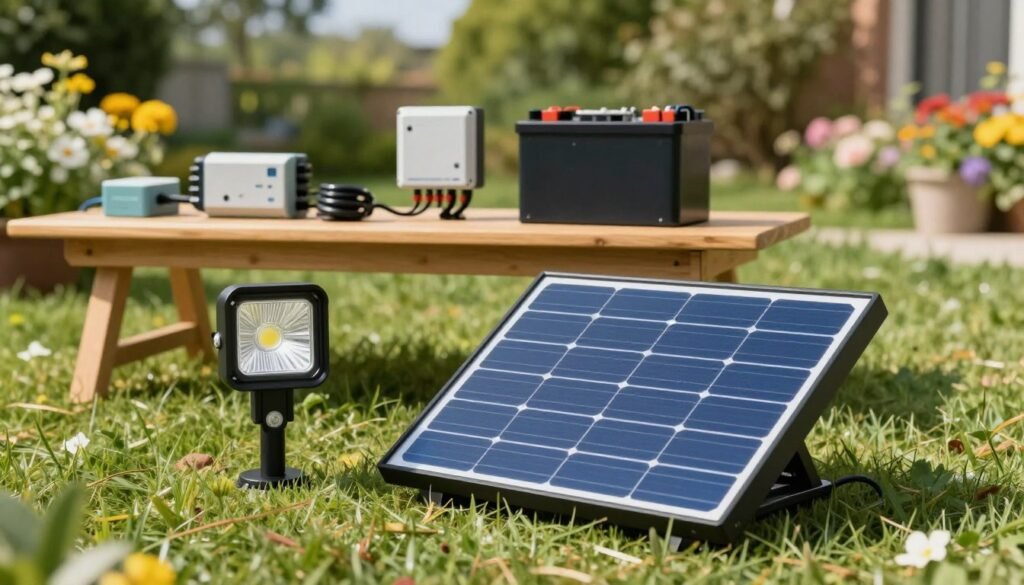
Solar panel selection and sizing
Opt for high-efficiency monocrystalline panels or compact modules. They should fit well in small spaces. To size the panels, add up the nightly energy needs of the LEDs in Wh/night.
Add the number of autonomy nights (1–3) and divide by the site’s peak sun hours. Then, apply a system derate (0.75–0.85). This method helps determine the needed panel rating for each fixture cluster.
For example, a pathway luminaire using 10 Wh/night with three nights autonomy and four peak sun hours per day needs about 12.5 W of panel rating per cluster. Use a 0.8 derate. Modular arrays are good for future upgrades and redundancy. Choose IP65+ junctions and tempered glass with anti-reflective coating for durability.
Battery and energy storage strategy
Choose LiFePO4 batteries for their long cycle life, safety, and stable performance. Size the storage to meet the autonomy nights with an 80% usable depth-of-discharge. Allow BMS reserve. Include temperature compensation for cold climates and plan for heating where needed.
Expect a service life of 3,000–5,000 cycles. Plan for replacement at roughly 5–10 years based on use. The battery strategy should include a BMS with overcurrent, overtemperature, and short-circuit protection. It should comply with UL 9540A or applicable local standards.
LED fixtures and optics for efficient outdoor illumination
Specify LED luminaires with a system efficacy of at least 120 lm/W. Choose a color temperature between 3000–4000K for comfortable outdoor light. Aim for CRI ≥70 when color rendering matters for security or amenity paths.
Match beam distributions to geometry: Type II/III for linear walkways, Type V for open plazas. Use cutoff shielding and appropriate LED outdoor optics to minimize uplight and meet dark-sky requirements. Choose IP66 fixtures with corrosion-resistant hardware to withstand weather and reduce maintenance.
Program adaptive dimming: full output at dusk, then step down to 50–70% during late-night hours. This extends autonomy and reduces cycling stress on batteries.
Controller, MPPT charge regulation, and smart controls
Pick MPPT charge controllers sized for the panel operating voltage and peak current. This maximizes extraction in variable sun and partial shade. An MPPT controller solar lighting setup improves energy harvest compared with simple PWM regulators.
Integrate smart controls supporting dusk/dawn sensing, astronomic scheduling, motion-triggered boosts, and telemetry for state-of-charge and fault reporting. Choose communications such as LoRaWAN, cellular, or Zigbee depending on site scale and infrastructure for remote fleet management.
Ensure controllers include surge protection, over-voltage and under-voltage safeguards, and meet UL or IEC outdoor equipment standards. Good mini solar component selection reduces field failures and simplifies operations.
| Component | Recommended Spec | Key Benefit |
|---|---|---|
| Solar panels | Monocrystalline, anti-reflective tempered glass, IP65 junctions | High energy yield per area, durable in outdoor conditions |
| Batteries | LiFePO4 with BMS, 80% usable DoD, temperature compensation | Long cycle life, safer chemistry, predictable replacement window |
| LED fixtures | ≥120 lm/W, 3000–4000K, CRI ≥70, IP66 | Efficient light output, good color, weather-resistant |
| Optics | Type II/III for paths, Type V for open areas; cut-off designs | Uniform illumination, reduced glare and light trespass |
| Controller | MPPT rated to panel current, surge protection, remote comms | Maximized harvest, remote diagnostics, safety protections |
Installation process, commissioning, and performance monitoring
Having a clear plan for installation helps avoid surprises and speeds up the process. Start with a site survey to plan the layout of panels and poles. Make sure to trim any vegetation and mark the locations of batteries and controllers before pouring the foundations.
Site preparation and mounting workflow
Make sure the foundations and pole footings meet local codes and structural requirements. Use hardware that prevents theft and secure battery boxes. Install poles, attach fixtures, and position panels as planned.
Plan the installation around good weather and crane availability for tall poles. Record the exact locations and angles of panels for future use. A careful installation sequence helps avoid delays and keeps costs steady.
Electrical integration and safety compliance
Follow the National Electrical Code for all low-voltage PV work. Use fuses for DC strings and specify the right breakers. Label all components as required.
Get the necessary electrical and structural permits. Coordinate inspections with local authorities and utilities if needed. Always follow safety protocols and train crews properly.
Commissioning tests and baseline measurements
Do a pre-commissioning check to ensure everything is working right. Verify voltage, current, wiring, and MPPT operation. Record the initial energy output and battery charging.
Measure the light output and lux levels at the target areas. Track the battery’s state of charge over 7–14 days. Test the system under different conditions to confirm its safety features.
Make a detailed commissioning report. Include diagrams, settings, and initial performance data. This report helps with future audits and warranty claims.
Performance monitoring and O&M plan
Use remote telemetry to collect important data like energy output and battery state. Set up alarms for low battery or system failures. This ensures quick action.
Plan regular maintenance like cleaning panels and checking connections. Update firmware and test battery capacity annually. Keep a list of spare parts and set service response times.
Use data to improve the system, like adjusting dimming schedules. A good O&M plan keeps the system running smoothly. For more information, visit best quality all-in-one solar street light.
Cost-benefit analysis, energy savings, and sustainability outcomes
When we look at mini solar lighting, we see both financial and environmental benefits. We need to compare the initial cost with the long-term savings. It’s also important to track how much energy we save and plan for maintenance.
Capital expenditure and payback modeling
The costs start with the PV modules, batteries, and LED lights. We also need controllers, mounts, and civil work. Labor, permits, and a 10–15% extra for surprises add up too.
Then, we have to think about replacing batteries and drivers later on. This adds to the total cost over time.
When we calculate payback, we look at how much we save on the grid and less maintenance. For example, saving $270 a year on electricity can pay back the $2,000–$5,000 cost in 3–6 years with the right incentives.
Operating expense reduction and lifetime performance
After the initial cost, we save money on electricity and less upkeep. But, we do have to clean the panels and replace batteries and controllers now and then.
We design these systems to last 10–15 years. We replace batteries every 5–10 years. By tracking how much energy we make, we can plan when to replace them.
We also look at how changes in sunlight, battery life, and electricity prices affect our savings. This helps us understand the range of payback times.
Environmental and community impacts
Mini solar systems cut down on local energy use and pollution. They also reduce the carbon footprint from digging trenches. These benefits are clear to everyone in the community.
They make nights safer and let people enjoy parks longer. We use special optics and dimming to protect the night sky and wildlife. We also plan for recycling batteries at the end of their life.
Risk assessment and mitigation
There are risks like battery wear, dirt, shadows, and controller problems. We can reduce these by using extra batteries, monitoring them remotely, and protecting them from tampering.
Financial risks come from changes in incentives and prices. We use safe estimates and look for grants or special financing to lower the upfront cost. Working with local authorities and following safety standards helps avoid extra costs and risks.
| Category | Key Items | Typical Cost Range (USD) | Impact on Payback |
|---|---|---|---|
| PV modules | Panels sized to site irradiance | $400–$1,200 | High — determines annual energy yield |
| Batteries | LiFePO4, mid-life replacement 5–10 years | $300–$1,000 | High — influences lifecycle and replacement timing |
| Fixtures & drivers | LED fixtures, optics, long-life drivers | $200–$800 | Medium — affects light quality and maintenance |
| Controls | MPPT controllers, telemetry, dimming | $150–$600 | Medium — enables energy savings mini solar system |
| Mounting & civil | Poles, foundations, hardware | $300–$900 | Medium — site-dependent |
| Labor & permitting | Installation, inspections, fees | $400–$1,000 | High — can affect schedule and soft costs |
| Contingency | Design changes, unforeseen site work | 10–15% of CAPEX | Low to Medium — protects project budget |
| End-of-life | Battery recycling, disposal | $50–$200 | Low — important for sustainability accounting |
Conclusion
This case study proves that mini solar lighting is a smart choice. It works well for paths, courtyards, and small public areas. When set up right, these systems are reliable and save money by not needing the grid.
Choosing the right parts and controls was key. High-efficiency panels, LiFePO4 batteries, and LEDs made the system last longer. Smart controls and remote monitoring helped keep it running smoothly.
How much money you save depends on local prices, incentives, and upkeep costs. In good U.S. spots, it usually takes 3–6 years to pay back. For places like cities, homeowner groups, and building managers, start with small tests. Then, use what you learn to light up more areas sustainably.