This case study looks at a commercial solar system installed to lower energy costs for a factory. It also aims to make the facility more stable against power outages. We compare it to other big solar projects in Canada, like Otter Energy’s 1.58 MW array for Schutz Canada in Belleville.
That project was expected to save $12,567,428 over its lifetime, with a 31.10% return on investment. It would pay for itself in 3.5 years and cut down on 528,300 kg of CO2 emissions yearly.
Companies like Otter Energy offer complete services, from planning to installation. They help with everything from checking if solar is right to getting rebates. Their work shows how solar can cut down on costs and provide backup power.
In Canada, government programs help make solar projects more attractive. The federal government offers a tax credit for clean tech investments. Provincial programs like IESO DER rebates also boost returns. These options, along with financing and net metering, make solar a smart choice against rising energy costs.
For those looking for examples and equipment, check out a guide on solar generator solutions. It shows how to integrate solar with commercial systems.
Key Takeaways
- Rooftop solar can deliver rapid paybacks and strong IRR, as demonstrated by large commercial projects.
- Turnkey EPC services reduce execution risk and simplify incentive capture.
- Energy storage and microgrids add resiliency and further reduce demand charges.
- Federal and provincial incentives materially improve project returns for commercial sites.
- Solar deployment is an effective way to lower COGS and meet ESG goals.
Project Overview: Commercial Rooftop Solar Power System for Operational Savings
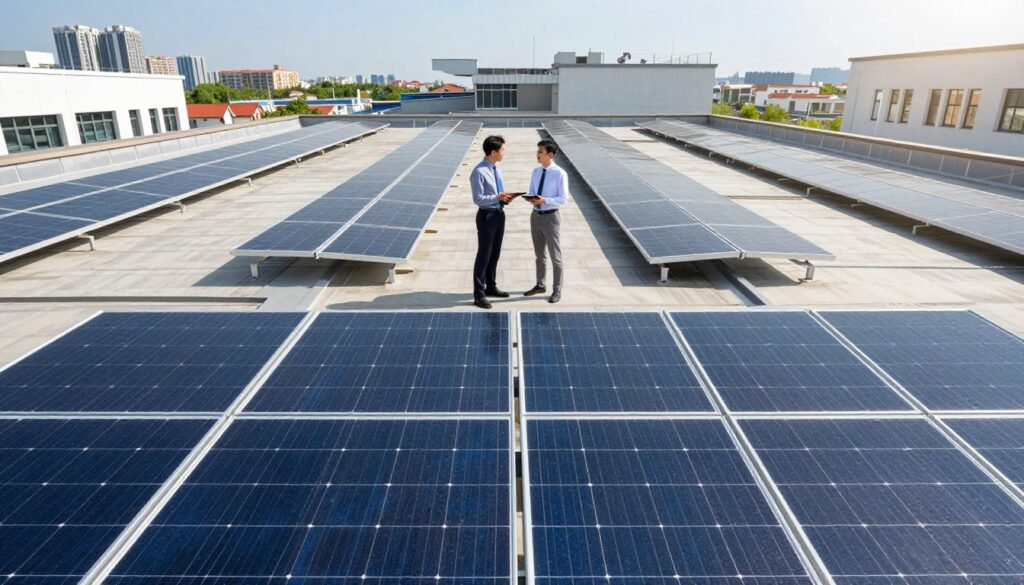
This project turned an unused roof into a solar power asset. It aimed to lower daytime electricity costs and protect against rate changes. It also helped the company meet its environmental goals, like Schutz Canada’s Belleville plant.
Client profile and site selection
The client is a big industrial maker with high energy use during the day. They chose a spot with a big, open roof and short paths to the electrical room to save on costs. They also looked at local incentives like rebates and tax credits.
System scope and technical specifications
The system was designed to meet a big part of the daytime energy needs. It used top-notch panels to get the most energy from each square meter. The inverters were chosen for their smart grid features and ability to work with net metering.
| Item | Specification | Impact on ROI |
|---|---|---|
| Capacity | 10 MW commercial rooftop | Large-scale output shortens payback period |
| Panel technology | Monocrystalline TOPCon / HJT, >22% efficiency | Higher energy yield per area; lower BOS cost per kWh |
| Financing model | CAPEX with accelerated depreciation or OPEX/PPA options | Flexible paths to preserve capital or capture tax benefits |
| Grid interaction | Net metering with export control | Reduces exposure to retail rate volatility |
| Expected payback | 3–5 years | Rapid transition to effectively free generation |
| System life | 25-year performance horizon | Long-term operational savings and asset value |
| Maintenance | Scheduled O&M contract included | Preserves output and ROI over life |
Financial model and incentives considered
Two main finance paths were explored. The CAPEX option used owner financing for quick tax benefits. The OPEX/PPA route looked at developer ownership with a fixed tariff. Both included net metering benefits for long-term financial health.
Cost estimates included the cost of parts, engineering, and upkeep. Savings came from lower bills and tax breaks that sped up cash returns. The team compared different projects to make better financial plans.
The site team worked with experts for all steps, from planning to upkeep. For more on commercial solar, check out a detailed project overview from a leading provider.
Challenges: Grid Volatility, Incentives, and Operational Constraints
Industrial sites face sudden changes in utility rates and carbon costs. These changes can greatly increase their operating costs. High daytime usage makes them more prone to high prices and demand charges. Installing rooftop solar can help by reducing daytime grid usage and securing lower energy costs for years.
Managing utility rate exposure and demand charges
Demand charges can be a big part of a factory’s monthly bill. Using solar to shave peaks can help, but adding energy storage improves it more. This is because storage can shift energy during peak times.
Storage systems with smart BMS and long cycle life help predict peak reduction. This makes monthly bills more stable.
Financial success depends on local tariffs and the ability to save on demand charges. It’s important to model different tariff scenarios to accurately forecast returns.
Site constraints and construction risks
Rooftop shape, condition, and structural limits often limit system size. Installing on older roofs might need reinforcement or phased deployment. Ensuring safety during installation and coordinating with ongoing operations is key to avoid production line downtime.
Logistics like crane access, permit timing, and interconnection windows add schedule risks. Designing systems for easy expansion, using 24 V and 48 V batteries, helps with phased rollouts.
Incentive and rebate coordination
Incentives vary by state and utility and can change during a project. Accurate capture of incentives requires early engagement and timely documentation. Mistakes can delay project completion or reduce expected returns.
Working with suppliers that offer compatible inverters from brands like PYLON, Goodwe, Growatt, Deye, and Solis is helpful. Also, having documented battery specs speeds up approvals. For detailed battery information and reliability specs, see a trusted technical overview from a manufacturer like lithium battery technical guide.
| Challenge | Impact | Mitigation |
|---|---|---|
| Demand charges | Higher monthly energy bills | Solar plus storage for peak shaving |
| Roof constraints | Reduced installable capacity | Structural assessment and phased installation |
| Incentive volatility | Uncertain payback | Early incentive coordination and documentation |
| Construction scheduling | Operational disruption risk | Detailed logistics and night/weekend work |
Approach and Implementation: Turnkey Delivery and Energy Strategy
We started with a clear plan that mixed technical details with timely execution. A detailed study and tariff analysis showed how much solar power would be made, the impact on bills, and the investment return. We provided a site check, structural analysis, and looked at how to connect to the grid.
We also checked if the project could get incentives and made a solid plan for the return on investment. This plan showed when the project would pay for itself and the expected return.
Feasibility study and tariff analysis
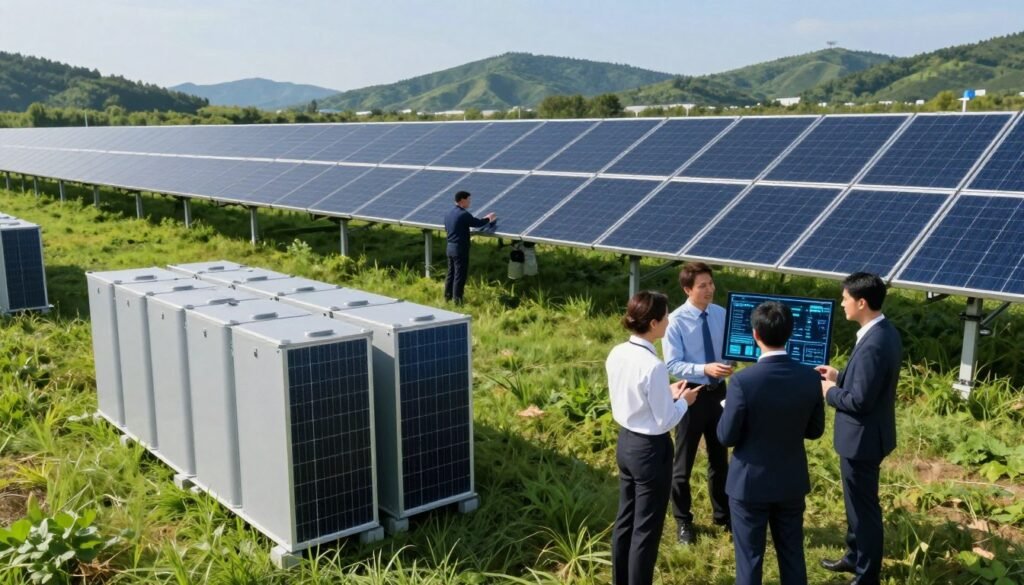
Engineers looked at how much power would be made hourly and compared it to the cost of using electricity. They also looked at joining demand-response programs and used safe assumptions to make a strong financial case. Otter Energy’s “Solar Made Simple” idea helped explain the project to the client and got the support of top executives.
Engineering, procurement, and construction process
Design teams made plans for building the project, including where to put the solar panels and how to connect them to the grid. They focused on buying the best materials to make sure the project lasts a long time. Certified installers worked together to build the project quickly and safely.
Integration with energy storage and resiliency planning
They picked the right size for energy storage to meet the needs for saving energy and backup power. They offered small units to big all-in-one systems with batteries and smart systems for easy control. The plan for energy storage worked with monitoring systems for managing energy, sending power, and keeping things running during power outages.
They looked at different ways to finance the project and how to use incentives to make it work. They worked with the client to make sure the warranties for the project matched a plan for keeping everything running smoothly. For a turnkey experience and more details, see the partner resource at Aisen Solar Energy.
Results: Measurable Energy Cost Reductions and Environmental Impact
This commercial rooftop installation showed great financial and environmental benefits. A 1.58 MW system saved $12,567,428 in utility costs over its lifetime. It also had a 31.10% return on investment and paid back in 3.5 years.
Smaller systems displaced 193,266 kWh yearly, saving over $750,000 in the long run. They had an 8.4-year payback period.
Financial outcomes and payback
Solar energy can quickly pay back when incentives and good tariffs are used. A 1.58 MW rooftop system broke even in about 3.5 years. Other projects took longer, around 8 to 9 years, with less incentives and different rates.
Return on investment depends on local electricity prices, incentives, and system performance. These factors help create reliable projections for lenders and investors. Changing tariffs or performance can affect payback and IRR.
Operational benefits and risk reduction
Solar energy reduces risks from volatile electricity markets. It lowers demand charges and stabilizes costs. Systems with storage can handle peak demand better, saving on monthly bills.
With solar, risks from outages and price spikes decrease. Predictable energy generation replaces grid consumption. This leads to significant savings for owners, like 88,000 kWh annually in some cases.
Environmental and ESG gains
Solar energy replaces fossil fuels, cutting greenhouse gas emissions and pollutants. Switching to solar is like planting 125 trees or avoiding 8,440 pounds of coal yearly. It has almost zero emissions during use, but some during production and recycling.
Efficient panels and lower material use have shortened energy payback times. Data shows EPBT for rooftop panels has decreased over years. In 2020, a 19.9% efficient panel had an EPBT of about 0.95 years, with a 25 to 40 year lifespan.
Using solar supports ESG goals and improves public health by reducing pollutants. For more on lifecycle and health impacts, see energy industry resources.
Conclusion
The Schutz/Otter Energy case highlights the benefits of a 1.58 MW commercial rooftop solar system. It shows how it can cut energy costs and increase financial gains. The system is expected to save $12.57 million over its lifetime, with a 31.1% return on investment and a 3.5-year payback.
Success in this project came from a turnkey EPC delivery, careful tariff analysis, and proactive incentive coordination. By combining federal investment tax credits and regional rebates, projects become more stable and less affected by grid changes.
For businesses thinking about solar, start by checking if your roof is suitable. Then, do a feasibility study with an experienced EPC firm. Include tariff modeling, incentive capture, and battery storage to get the most value. These steps lead to lower costs, less carbon emissions, and better energy security.